
About Le Grand Kallé
Lived 1930 – 1983 (aged 52). Le Grand Kallé was a Congolese singer and musician.
Joseph Athanase Tshamala Kabasele (16 December 1930 – 11 February 1983), popularly known as Le Grand Kallé, was a Congolese singer-songwriter, composer, record executive, and founder of African Jazz. Regarded as the "father of modern Congolese popular music", he shaped the evolution of urban popular music in the Belgian Congo and the post-independence Democratic Republic of the Congo.
Born to a notable Luba family in Pala Bala, and broke new ground by integrating traditional Congolese instruments, such as the Tetela tam-tam, the ngongi drum, and the lokole slit drum, He was the fifth of ten children born to Luba parents André Tshamala and Hortense Malula, the sister of Cardinal Joseph Malula. The name Joseph was chosen to honor his late sister Josephine, and Athanase was added later in keeping with contemporary naming fashions of the time.
Kabasele began his primary education in 1938 at Saint Joseph College (Collège Saint-Joseph) in Gombe, Kinshasa, and continued at Saint Anne middle school. During his studies, he served as a precentor in the Sainte Anne choir and at Saint Peter Church in the early 1940s. These tracks featured guitarists Emmanuel Tshilumba wa Baloji ("Tino Baroza") and Charles Mwamba ("Déchaud"), both of whom were disciples of Zacharie Elenga ("Jhimmy"), as well as Belgian saxophonist Fud Candrix, the first European to accompany Congolese melodies. African Jazz achieved early success with recordings released in November 1953, including "Parafifi", "Nzela mosika", and "African Jazz". Music journalist Audifax Bemba noted that a young "14-year-old pre-teen" Nico Kasanda performed the guitar parts on "Parafifi" and "African Jazz".
In 1955, the Opika label was purchased by Greek entrepreneur Dino Antonopoulos, who went on to establish Les Editions Esengo in January 1957. Around this time, African Jazz found itself competing with the newly formed OK Jazz, which was created in 1956 by former Loningisa label musicians such as Franco Luambo, Philippe Lando Rossignol, Jean Serge Essous, Vicky Longomba, Daniel Loubelo "De La Lune", Ben Saturnin Pandi, Bosuma Dessoin, and Augustin Moniania "Roitelet". OK Jazz quickly gained popularity in Léopoldville for its innovative sound rooted in traditional Congolese music. The label was inaugurated in Brussels, where Kabasele recorded several pieces in collaboration with Cameroonian musician Manu Dibango. Surboum African Jazz allowed Kabasele to produce other bands, including OK Jazz in 1961, which recorded hits such as "Amida Muziki Ya OK", "Nabanzi Zozo", "Maria De Mi Vida", and "Motema Ya Fafa". The latter, meaning "never defeated", was inspired by Jean Lema, a journalist at Radio Congo Belge who provided live commentary during the Congo's independence ceremonies on 30 June 1960 and was a close friend of Kabasele, whose boldness symbolized courage under colonial rule. African Team recorded the album Kallé et L'African Team Vol. 1, which fused Congolese rumba with pachanga, mambo, charanga, and merengue. Kabasele co-wrote tracks with Mujos ("Ma Préférée Irène", "Tozongela Dilanda", "Barubatsie", "Bebe Ilenda"), Edouard Lutula ("Cococo... Qui Est La", "Mokili Ngonga"), Gonzalo Fernandez ("Minueyo Boongalo"), Mujos ("Essous Spiritou"), Dede ("Mokili Ngonga"), and collaborated with Tino Baroza, Tino Baroza, and Manu Dibango on "Nzela Mosika". and in Brazzaville, a bust honoring him stands near Marien Ngouabi's tomb.
Discography
Albums, including compilations Merveilles Du Passé – Hommage Au Grand Kalle Vol. 2 (1984, African) Essous / Kwamy / Mujos / Edo / Casino (1993, Sonodisc) 1966 – 1967 (1993, Grand Kalle/Syllart) Grand Kallé et African Team, Vol. 1 (1993, Grand Kalle/Syllart) Grand Kalle et l'African Jazz 1961–1962 (Merveilles du passé, vol. 2) (1993, Sonodisc) Grand Kalle & L'African Team (1997, Sonodisc) Le Grand Kalle (2013, Le Monde des Artistes) Jolie Nana (2013, Marylebone Records) Joseph Kabasele, Le Grand Kalle: His Life, His Music (2013, Sterns Africa) The History Of Le Grand Kallé, Vol. 1 (2013, Diamond Days) The History Of Le Grand Kallé, Vol. 2 (2013, Diamond Days) The History Of Le Grand Kallé, Vol. 3 (2013, Diamond Days) The History Of Le Grand Kallé, Vol. 4 (2013, Diamond Days) The History Of Le Grand Kallé, Vol. 5 (2013, Diamond Days) Butsana Mama: Le Grand Kallé & His Songs, Vol. 1 (2013, Supreme Media) Butsana Mama: Le Grand Kallé & His Songs, Vol. 2 (2013, Supreme Media) Butsana Mama: Le Grand Kallé & His Songs, Vol. 3 (2013, Supreme Media) Butsana Mama: Le Grand Kallé & His Songs, Vol. 4 (2013, Supreme Media) Butsana Mama: Le Grand Kallé & His Songs, Vol. 5 (2013, Supreme Media)
Notable singles "Parafifi" (1953, Opika; reissued ~1961, Surboum African Jazz)
Contributing artist The Rough Guide to Congo Gold (2008, World Music Network) Authenticité Vol. 2 (2014, Eben Entertainment)
As bandleader of African Jazz (see that page)
Don’t just read it —
keep it.
Full-length biographies made to live with: read them, listen on the way to work, watch them tonight.
- E-book
- Audio
- Video
Instant download · yours to keep · every purchase keeps this site free
Important facts
People in Le Grand Kallé's life
Named in this biography and alive at the same time
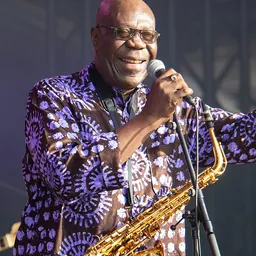







Related people
Same field, nearest in time

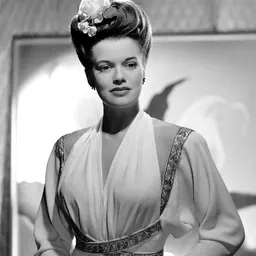
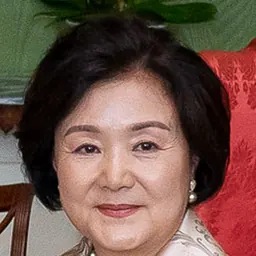

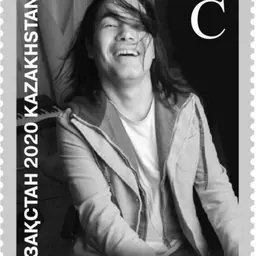
Contemporaries
People whose lives overlapped Le Grand Kallé's


Frequently asked questions
Who was Le Grand Kallé?
Congolese singer and bandleader, considered the father of modern Congolese music
When was Le Grand Kallé born?
Le Grand Kallé was born on 16 December 1930 in Matadi.
When did Le Grand Kallé die?
Le Grand Kallé died on 11 February 1983 in Paris.
What was Le Grand Kallé's occupation?
Le Grand Kallé was a singer and musician.
What nationality was Le Grand Kallé?
Le Grand Kallé was Congolese.
Sources & further reading
Cite this page
APA: Biography.guide. (2026). Le Grand Kallé. https://biography.guide/le-grand-kalle/
MLA: "Le Grand Kallé." Biography.guide, https://biography.guide/le-grand-kalle/.
Chicago: "Le Grand Kallé." Biography.guide. https://biography.guide/le-grand-kalle/.
Data last updated: 2026-09-20 · Spot an error? Report a correction.
Page generated 2026-09-27 05:25 UTC