
About Peng Yulin
Lived 1816 – 1890 (aged 73–74). Peng Yulin was a Chinese politician.
Peng Yulin(Chinese:彭玉麟)(January 30, 1817 – April 24, 1890), also written as Yulin, courtesy name Xueqin(also Xueqin), art name Tuisheng An(Other uses for ), was originally from Zhajiang, Hengyang, Hunan. He was a late Qing dynasty general of the Xiang Army.Born as a , he rendered meritorious service in the suppression of the Taiping Heavenly Kingdom. He successively served as Viceroy of Liangjiang and Minister of War, was Posthumous name the title of , and received the posthumous nameGangzhi.Peng Yulin, together with Zeng Guofan and Zuo Zongtang, was known as the “Three Great Figures of the Qing Dynasty.” He was also counted among the “Four Famous Officials of the Qing Restoration” alongside Zeng Guofan, Zuo Zongtang, and Hu Linyi (in some accounts, Peng Yulin is replaced by Li Hongzhang). .
Life
Early years Peng Yulin’s father was Peng Mingjiu, a native of Zhajiang, Hengyang, Hunan, who later went to Hefei, Anhui, to serve as a xunjian (patrol officer) of Liangyuan. Peng Yulin’s mother was from Anqing, Anhui . In the 21st year of the Jiaqing reign (1816), Peng Yulin was born in Anqing, Anhui .
In 1849, during the 29th year of the Daoguang Emperor's reign, the Li Yuanfa uprising broke out in Xinning, Hunan. Peng Yulin participated in its suppression together with the Hengzhou Brigade of the Green Standard Army. When military merits were later evaluated, the responsible officials mistakenly regarded Peng as a military shengyuan and appointed him only as a waiwei (external officer) of the Linwu Battalion. Peng declined the appointment. .
Career in the Hunan Army In 1853, Peng Yulin, following Zeng Guofan, established the Xiang Army navy and fought against the Taiping forces. The following year, he defeated the Taiping Heavenly Kingdom at the Battle of Xiangtan and was appointed County magistrate.
He later took part in the capture of Yuezhou and was promoted to tongzhi (subprefect, fifth rank). He repeatedly defeated the Taiping naval forces at Wuhan and Tianjiazhen. In February 1855, he was defeated by Shi Dakai at Hukou in Jiangxi. Thereafter, he reorganized the navy and, in coordination with land forces, defeated the Taiping troops at Zhangshu and Linjiang in 1856, for which he was promoted to daotai (circuit intendant) of the Huichaojia Circuit in Guangdong.
Illness and death On the 6th day of the 3rd month of the 16th year of the Guangxu reign (April 24, 1890), he died of illness at Tuisheng An on the eastern bank of the Xiang River in Hengzhou. He was posthumously granted the title of Taizi Taibao, given the posthumous name Gangzhi, and honored with the construction of a dedicated shrine. Yu Yue composed the Stele Inscription for the Spirit Way of Lord Peng Gangzhi.
Conduct Peng Yulin was locally renowned as an incorruptible official. From the 5th year of the Xianfeng reign to the 1st year of the Tongzhi reign, he was entitled to more than 21,500 taels of yanglian yin (honesty allowance), all of which he turned over to the state treasury as military funds. In the 7th year of Tongzhi (1868), he wrote in a memorial: "I have never been fond of sensual pleasures or family comforts, nor inclined toward ease. In more than ten years of leading troops, I have never built even a single house or acquired a single mu of land to shelter my wife and children. Though grievously wounded and afflicted by accumulated illness, I have never once requested leave to return home for recuperation. All year round, I have remained amid wind, waves, and flying arrows and stones; even when severely ill, I have not spent a single day ashore." His uprightness and probity were as well known locally as the Neo-Confucian moral teachings found in Zeng Guofan's family letters. In 1864, Peng Yulin had Liu Shoutian, a close subordinate of Zeng, punished by ear-cutting and dismissal, prompting Zeng to write in reproach: "If it is said this was not an intentional provocation, who would believe it?" and "If such actions were applied to you by others, could you accept them?" In his later years, while inspecting the Yangtze region, Peng impeached more than one hundred officials. He ordered the execution of Hu Kaitai, a deputy general in Anqing who had summoned a prostitute and murdered his wife, and of Tan Zhulun, a deputy general in Hubei, who had raped Liu, the wife of Zhang Qingsheng, and killed her to silence her.
Peng was also deeply distressed by the mass killing of civilians attributed to Zeng Guoquan, the brother of Zeng Guofan. On two occasions—the Siege of Anqing in 1861 and the Siege of Nanjing in 1864—he wrote to Zeng Guofan urging that his brother be executed for the sake of justice. Zeng, however, replied in his brother’s defense: “My younger brother shows no signs of Rebellion of the Three Guards; on what grounds should he be executed? I do not know what offense he has given you to provoke such resentment,” and further insisted that there had been no breach of military discipline . The collection, prefaced and edited by the Qing dynasty scholar Yu Yue, contains more than 400 poems that largely reflect the major events of Peng’s life. In 2007, Tang Longping, president of the Hengyang Collectors Association, discovered a Guangxu 17 (1891) Suzhou-printed edition of the work in Hengyang County, consisting of two volumes in eight juan .
Peng’s paintings are especially noted for ink depictions of plum blossoms; his plum blossoms and the bamboo paintings of Zheng Banqiao are regarded as two outstanding achievements of Qing painting .
Peng Yulin's artistic works did not begin to attract wider public attention until the 21st century. Although their market prices were initially modest, their value rose significantly in recent years. In 2011, his Seven-character Couplet in Running Script was sold for 313,600 yuan at Moshengjia, while Four Panels of Plum Blossoms fetched 322,000 yuan at Shanghai Baolong. In 2012, Calligraphy Screen was sold for 504,000 yuan at Sichuan Jiacheng. . He also created a “Red Plum Blossom Stele at Yu Tower” in Hangzhou, depicting plum trees in varied density, inscribed with the words “Qiaoren Xueqin of the Seventy-two Peaks also records this” .
Contributions to cultural development
Construction of Chuanshan Academy: In 1878, while serving as Minister of War, Peng Yulin supported Zhang Xianhe in establishing Chuanshan Academy in the Wang clan ancestral hall at Wangyaping in Hengyang. After the academy declined, Peng rebuilt it in 1885 on Dongzhou Island and personally invited the renowned scholar Wang Kaiyun to serve as its head . Compilation of the Hengyang County Gazetteer: The Tongzhi-era Hengyang County Gazetteer (published in the 11th year of Tongzhi, 1872) was prefaced and compiled under Peng Yulin’s direction . Restoration of Yingjiang Temple: During his tenure as Governor of Anhui and Naval Commander, Peng raised funds to restore Yingjiang Temple in Anqing . Peng Yulin also sponsored the restoration of Shizhong Mountain. The mountain originally housed a stone stele of the Record of Stone Bell Mountain by Su Shi, which had been destroyed during the Taiping Rebellion. Peng later ordered the stele to be recarved and restored.He also constructed scenic sites on Shizhong Mountain, including Baochi Chanlin and Huanxiang Villa. Peng personally explored the caves of the mountain in his research and subsequently wrote the essay Shizhong Dong Xu (“Preface to the Cave of Stone Bell Mountain”). .
Personal life
Family
Father: Peng Mingjiu, inspector of Liangyuan in Hefei, Anhui.
Wife: Zou Shi .
Descendants: Peng Shuduan, married to Chu Tunan, former chairman of the Central Committee of the Democratic League and former vice chairman of the National People's Congress .
Emotion Peng Yulin fell in love with his maternal grandmother's adopted daughter, Meigu (verified by Luo Ergang in 1946, Meigu's real name was Zhubin ), but due to Meigu's seniority as Peng Yulin's aunt, the two could not marry and each married separately. Later, Meigu died due to childbirth difficulties. Peng Yulin spent his whole life painting plum blossoms in memory of Mei Gu
Peng Yulin Tomb: Located halfway up Pengzu Mountain in Nantang Village, Zhangmu Township, Hengyang County. The cemetery faces north in the south, and the square garden is more than 100 meters long, with white jade carvings of Han Dynasty such as stone horses and stone sheep. It is a cultural relic protection unit in Hengyang County .
Hangzhou Provincial Retreat Temple: Peng Yulin established the Provincial Retreat Temple in West Lake, Hangzhou, which is now located at the current San Tan Yin Yue scenic spot.
Hengyang Provincial Retreat Temple: After returning to Hengzhou in the spring of 1869, Peng Yulin built the Peng Family Garden, also known as the Provincial Retreat Temple, which no longer exists. The Hengyang Municipal Government rebuilt the Yang Family Temple.
Peng Yulin's Zhajiang Former Residence: Peng Yulin's hometown is located in Hehe Village, Zhajiang Town, Hengyang County. He lived here in his early years, but the former residence is now dilapidated. Peng Yulin's Peng family members raised funds together to restore Peng Yulin's former residence, which was first opened to the public on December 24, 2013.
Peng Yulin's Former Residence in Anqing: Peng Yulin's father, Peng Mingjiu, was once selected to be a patrol inspector in Sanqiao Town, Huaining County, Anqing Prefecture, Anhui Province. Peng Yulin was born in Huaining County, his mother was from Anqing, and his maternal grandfather lived on Huangjiapo (Huangjia Mountain)
Peng Yulin's Statue of Integrity: There is a statue of Peng Yulin carved in the Hengyang City Integrity Culture Sculpture Park.
Commemorative event In 2016, the 200th anniversary of Peng Yulin’s birth was commemorated with various activities organized by different sectors of society. In the New Year of 2017, China Post issued a greeting card titled “Commemorating the 200th Anniversary of the Birth of Peng Yulin, Successor to Chuanshan” .
Beginning on January 4, 2017, a calligraphy and painting exhibition marking the bicentenary of Peng Yulin’s birth was held at the Hengyang Museum . On January 11, 2017, Hengyang City hosted an academic symposium to commemorate the 200th anniversary of his birth
Reference
Don’t just read it —
keep it.
Full-length biographies made to live with: read them, listen on the way to work, watch them tonight.
- E-book
- Audio
- Video
Instant download · yours to keep · every purchase keeps this site free
Important facts
more
Tuishenganzhuren, Gujindiyichiren, Yu?, Yinxiangguan, Tuishengsanren, Meihuawaizi, NanyueshanqiaoPeople in Peng Yulin's life
Named in this biography and alive at the same time
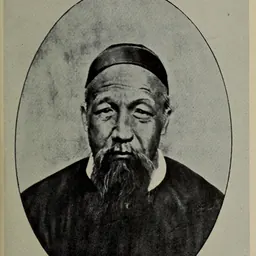
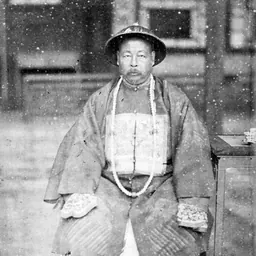






Related people
Same field, nearest in time






Contemporaries
People whose lives overlapped Peng Yulin's



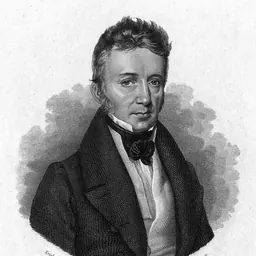
Frequently asked questions
Who was Peng Yulin?
Qing dynasty politician
When was Peng Yulin born?
Peng Yulin was born in 1816.
When did Peng Yulin die?
Peng Yulin died in 1890.
What was Peng Yulin's occupation?
Peng Yulin was a politician.
What nationality was Peng Yulin?
Peng Yulin was Chinese.
Sources & further reading
Cite this page
APA: Biography.guide. (2026). Peng Yulin. https://biography.guide/peng-yulin/
MLA: "Peng Yulin." Biography.guide, https://biography.guide/peng-yulin/.
Chicago: "Peng Yulin." Biography.guide. https://biography.guide/peng-yulin/.
Data last updated: 2026-09-20 · Spot an error? Report a correction.
Page generated 2026-09-27 05:21 UTC