
Pedro Pablo Abarca de Bolea, 10th Count of Aranda
Spanish diplomat 10th Count of Aranda
About Pedro Pablo Abarca de Bolea, 10th Count of Aranda
Lived 1719 – 1798 (aged 78). Pedro Pablo Abarca de Bolea, 10th Count of Aranda was a Spanish diplomat, politician, military personnel, military officer and army officer.
Pedro Pablo Abarca de Bolea y Jiménez de Urrea, 10th Count of Aranda (18 December 1718 – 9 January 1798) was a Spanish statesman and diplomat who signed for the Spanish Empire the Peace of Paris of 1783.
Early life Aranda came from an old and rich Aragonese family. He began ecclesiastical studies in the seminary of Bologna but when he was 18 he changed to the Military School of Parma. In 1740, he was captain of the Spanish Army and fought in the War of the Austrian Succession. As he had been severely wounded in combat in 1743 (he was left for dead on the battlefield), he temporarily left the military and traveled through Europe. He studied the Prussian Army, later introducing its system of drill into the Spanish army,
Due to Prime Minister Ricardo Wall's sponsorship, Ferdinand VI appointed him in 1755 ambassador to Portugal and in 1757 director general of Artillery, a post that he soon resigned, along with his military rank, because he was forbidden to pursue corrupt contractors.
The Spanish ambassador was not satisfied with this tactic, as he believed that the only way to ensure the goodwill of those who could be influential neighbors in North America was to establish a mutual commitment. This had to be done while the new state had not yet overcome its difficulties. “If something advantageous is to be achieved, it should not be through the hidden means of secret and insufficient aid, because these are neither of great merit nor likely to attract the other party.”
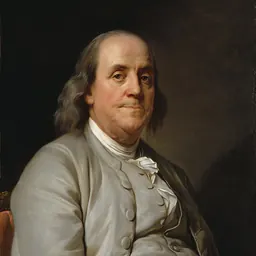
As evidence of the political acumen of the Aragonese nobleman, in January 1777, during the second meeting between Aranda and Benjamin Franklin—now with the assistance of an interpreter—the Spanish ambassador understood that the conflict between Great Britain and its colonies offered Spain a unique, perhaps unrepeatable opportunity to defeat and perhaps humiliate its historic adversary, since “in centuries there would not be an occasion similar to the present to reduce it.” Overcoming his initial reluctance, Aranda urged the Court of Madrid to officially recognize the delegates of the Congress, who could become the leaders of a powerful nation in North America, and suggested that Spain declare war on England, although his proposal did not receive the king's support.
Aranda might have made a 1783 proposition to turn Spanish overseas territories into separate countries in a controlled way to prevent a violent secession like the American Revolutionary War in their own domains. His authory on this is disputed, although in 1786 he also wrote a better documented proposition for the kings of Spain and Portugal to turn their empires into three Ibero-American kingdoms.
Chief Minister
In 1792, he returned to Spain to replace José Moñino, 1st Count of Floridablanca as secretary of State (Prime minister). After the imprisonment of Louis XVI (August, 1792) and the proclamation of the Republic in France (September), Aranda's Enlightenment leanings seemed incompatible with the total war that several European monarchies were about to declare against revolutionary France. Aranda was therefore replaced by Manuel Godoy in November. After the defeat of Spanish Army in Roussillon, Godoy and Aranda publicly quarreled in the Council of State. That same night Aranda was arrested and confined to Jaén. A year later he was indulted and retired to his estates in Aragon.
He was buried in the monastery of San Juan de la Peña.
Family In 1749 he married Doña Ana, daughter of the 9th duke of Híjar, by whom he had one son, who died young, and a daughter.
Don’t just read it —
keep it.
Full-length biographies made to live with: read them, listen on the way to work, watch them tonight.
- E-book
- Audio
- Video
Instant download · yours to keep · every purchase keeps this site free
Important facts
more
conde de Aranda Pedro Pablo Abarca de Bolea, Pedro Pablo Abarca de Bolea y Ximenez de Urrea, Count of Aranda, Pedro Pablo Abarca de Bolea ArandaPeople in Pedro Pablo Abarca de Bolea, 10th Count of Aranda's life
Named in this biography and alive at the same time

Related people
Same field, nearest in time

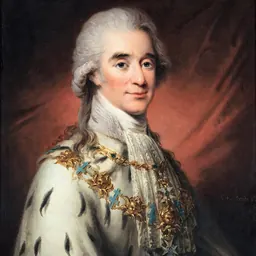

Contemporaries
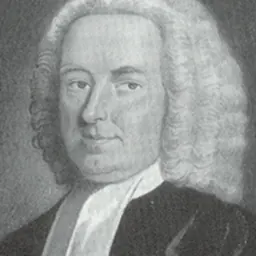
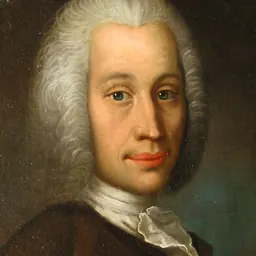
People whose lives overlapped Pedro Pablo Abarca de Bolea, 10th Count of Aranda's




Frequently asked questions
Who was Pedro Pablo Abarca de Bolea, 10th Count of Aranda?
Spanish diplomat 10th Count of Aranda (1719-1798)
When was Pedro Pablo Abarca de Bolea, 10th Count of Aranda born?
Pedro Pablo Abarca de Bolea, 10th Count of Aranda was born on 1 August 1719 in Castillo del conde de Aranda.
When did Pedro Pablo Abarca de Bolea, 10th Count of Aranda die?
Pedro Pablo Abarca de Bolea, 10th Count of Aranda died on 9 January 1798 in Palacio de los condes de Aranda.
What was Pedro Pablo Abarca de Bolea, 10th Count of Aranda's occupation?
Pedro Pablo Abarca de Bolea, 10th Count of Aranda was a diplomat, politician, military personnel, military officer and army officer.
What nationality was Pedro Pablo Abarca de Bolea, 10th Count of Aranda?
Pedro Pablo Abarca de Bolea, 10th Count of Aranda was Spanish.
Sources & further reading
· Wikipedia: Pedro Pablo Abarca de Bolea, 10th Count of Aranda
· DBpedia: Pedro Pablo Abarca de Bolea, 10th Count of Aranda
Cite this page
APA: Biography.guide. (2026). Pedro Pablo Abarca de Bolea, 10th Count of Aranda. https://biography.guide/pedro-pablo-abarca-de-bolea-10th-count-of-aranda/
MLA: "Pedro Pablo Abarca de Bolea, 10th Count of Aranda." Biography.guide, https://biography.guide/pedro-pablo-abarca-de-bolea-10th-count-of-aranda/.
Chicago: "Pedro Pablo Abarca de Bolea, 10th Count of Aranda." Biography.guide. https://biography.guide/pedro-pablo-abarca-de-bolea-10th-count-of-aranda/.
Data last updated: 2026-09-20 · Spot an error? Report a correction.
Page generated 2026-09-27 05:27 UTC