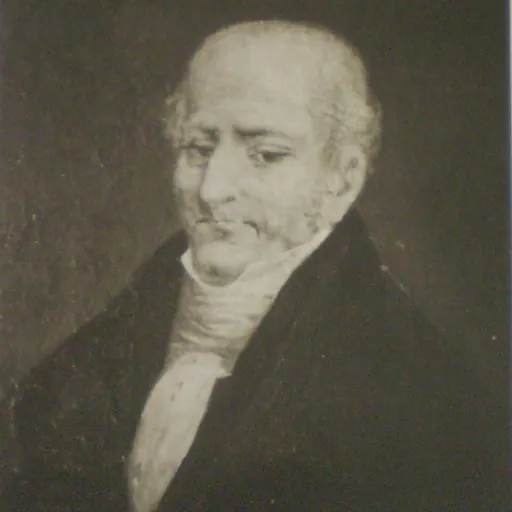
About Pedro Medrano
Lived 1769 – 1840 (aged 71). Pedro Medrano was an Argentine and Uruguayan politician and lawyer.
Pedro de Medrano y Cabrera (26 April 1769 – 3 November 1840) was a Uruguayan-born Argentine statesman, poet and lawyer from the House of Medrano. He was a provisional president and a representative to the Congress of Tucumán which on 9 July 1816 declared the Independence of Argentina.
Early life
Pedro de Medrano y Cabrera was born on April 26, 1769, on Gorriti Island in San Fernando de Maldonado, Uruguay. His birth occurred while his father, Pedro de Medrano y de la Plaza, was temporarily stationed there by Governor Francisco de Paula Bucareli. His father was a Treasury official in Buenos Aires.
His paternal grandfather Pedro de Medrano y Corral, born in 1709 in Navarrete, La Rioja, Spain, was the husband of María de la Plaza Otárola, born in March 1704, also in Navarrete.
Maternal ancestry His maternal grandparents were Lucas de la Plata (born in Otálora de la Plaza in October 1667, Navarrete, La Rioja,) and Doña Ana de Marcos Mayoral Ruiz de Villalba, born in March 1670, in Navarrete, La Rioja, Spain. Notable descendants are Pedro de Medrano and his son Martin de Medrano y Arandia from the late 16th century; followed by his son Pedro de Medrano y Nestares, and his son Pedro de Medrano y Fernández Majarres. His son Pedro de Medrano y Gómez del Valle from the 17th century follows the line. Likewise, his son Pedro de Medrano y Corral follows, along with his son Pedro de Medrano y de la Plaza Otálora from the 18th century, who was the father of Pedro Jose de Medrano y Cabrera, Mariano José de Medrano y Cabrera (8 September 1767) bishop of Buenos Aires [ es], and Capitán Don Martín José de Medrano y Cabrera, who had numerous offspring.
Poet Aside from his legal and political achievements, Medrano was also noted for his contributions to poetry and oratory. His works include the political romance "Carta de Celio a Armesto," which criticized unitarians and the December 1, 1828, revolution. He also authored "La Martiniana" and an introduction to "Poema y la gloriosa Expedición a los Desiertos del Sud" in 1833 and 1834, though the latter remained incomplete.
Ideology Politically, he was a supporter of the Federalist Party and a personal friend of Juan Manuel de Rosas.
Don’t just read it —
keep it.
Full-length biographies made to live with: read them, listen on the way to work, watch them tonight.
- E-book
- Audio
- Video
Instant download · yours to keep · every purchase keeps this site free
Important facts
Related people
Same field, nearest in time



Contemporaries
People whose lives overlapped Pedro Medrano's





Frequently asked questions
Who was Pedro Medrano?
Argentine politician (1769-1840)
When was Pedro Medrano born?
Pedro Medrano was born on 26 April 1769 in Gorriti Island.
When did Pedro Medrano die?
Pedro Medrano died on 3 November 1840 in Buenos Aires.
What was Pedro Medrano's occupation?
Pedro Medrano was a politician and lawyer.
What nationality was Pedro Medrano?
Pedro Medrano was Argentine and Uruguayan.
Sources & further reading
Cite this page
APA: Biography.guide. (2026). Pedro Medrano. https://biography.guide/pedro-medrano/
MLA: "Pedro Medrano." Biography.guide, https://biography.guide/pedro-medrano/.
Chicago: "Pedro Medrano." Biography.guide. https://biography.guide/pedro-medrano/.
Data last updated: 2026-09-23 · Spot an error? Report a correction.
Portrait: Wikimedia Commons · author & licence
Page generated 2026-09-27 05:06 UTC