
About Pedro J. González
Lived 1895 – 1995 (aged 99). Pedro J. González was a Mexican singer.
Pedro J. González (April 28, 1895 – March 17, 1995) was a Mexican activist, singer, songwriter, guitarist and radio personality. He hosted one of the first Spanish radio broadcasts in California and in the U.S. Through his popular broadcasts, González had strong political influence in the Hispanic community in Los Angeles, which he used to advocate against the mass repatriation of Mexicans and Mexican Americans in the U.S. under Herbert Hoover. González also came to be known for his band, Los Madrugadores, whose songs were played on his radio broadcast.
González would be imprisoned under false charges due to this political influence, his court case politicizing the Mexican and Mexican American community on the issue of discriminatory law-enforcement practices. Villa gave González two options: work under Villa as a telegraph operator for the División del Norte or be executed; González chose the first option without hesitation.
During his time working for Villa, González and some of Villa's men were also captured by the Mexican army in the pro-Villa town of Camargo, Chihuahua, Mexico and were going to be executed. In 1921, he would return to work for the Ferrocarriles Nacionales de México. González quickly became highly recognized within the Spanish-speaking community through the radio station on KMPC, reaching hundreds of thousands of people as far as Texas, especially Mexican laborers.
Music and culture His program consisted of Los Madrugadores (The Dawn Risers), who premiered on KMPC in December, 1929. This wake-up radio show was broadcast live from Teatro Hidalgo in Mexican Barrio. It was aimed at the growing Latino/a community, and specifically the Mexican labor community who worked early hours, throughout the Southwest. Los Madrugadores became one of the most prominent groups amongst Mexican artists in LA during the 1930s. In regards to their music, they catered to the musical tastes of the Mexican community in the form of corridos and canción mexicana. González aired live music, including romantic ballads that he sang alongside Los Madrugadores. These included classics such as "Sonora Querida" and “Mañanitas Tapatías” which were recorded and released by the Columbia Records label. ) to help María González's family with the burial cost. Perceiving this gathering as an uprising, they begin to arrest some of the workers.
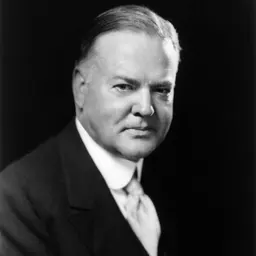
As about half a million Mexican immigrants and Mexican Americans were deported under these repatriation policies, González was one of the few people who extensively reported on the repatriation and warned the Mexican community of the raids. "They say that this government campaign is to secure jobs for North American citizens. It's a trick. It isn't true. It's really nothing more than a racist attack against all Mexicans. We are neither illegals nor undesirables," said González in one of his broadcasts. He was also vocal about his criticism of Buron Fitts' anti-Mexican sentiment. As a result, he was also unjustly incarcerated like many Mexican American people at the time, with his release from prison depending on the very policy of repatriation he had protested.
Arrest and life in prison By 1933, González started being perceived as a threat to the Anglo establishments in LA.
González's court case drew large Mexican and Mexican American crowds and received extensive coverage in Spanish language publications like La Opinión, which included several pictures of González entering the court with his family, listening to the jury's decision, and crowds waiting to get inside the courtroom.
Life in prison and prison reform At San Quentin, prison conditions were cramped with thousands of Mexican immigrants being imprisoned. Other American prison conditions made life difficult for the incarcerated Mexican immigrants. At the time, letters that were written from the prison, and received by the prison had to be in English. After experiencing the horrible treatment inmates were subjected to, González organized a hunger strike. He aimed to not only make punishments less inhumane, he also demanded that he and other Mexican prisoners be given the "right to write and receive letters in Spanish" and have "Mexican cultural events".
Release and life after prison Soon after his imprisonment, the young woman González was found guilty of raping recanted her testimony, stating that she had been pressured by the Los Angeles Police Department and the district attorney's office to provide that testimony. The judge refused to accept her affidavit and González remained in prison. Meanwhile, defense committees working towards González's release were created in California as well as in southwest and northern Mexico. González, along with other prisoners, contacted the Mexican Consul, requesting to be included in the deportation and repatriation movements of the 1930s, citing that it was better to be deported to Mexico than to stay in prison in the United States. The Mexican Consul in Los Angeles—referencing to González's request for deportation and alluding to González's prominence for Mexicans north of the border—appealed for his release.
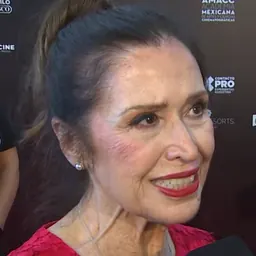
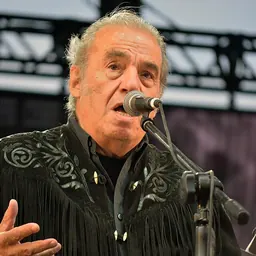
Artenstein also directed a feature-length documentary film on González's life, Break of Dawn, in 1988. It focuses on his life and achievements in Los Angeles as well as his time and activism in prison. González was played by Mexican actor, Óscar Chávez, and his wife, María, was played by Mexican actress, María Rojo.
His legacy lives as the mayors of Los Angeles and San Diego proclaimed a Pedro J. González Day in 1985.
Discography Pedro J. González and Los Madrugadores (Arhoolie CD 7035)
Don’t just read it —
keep it.
Full-length biographies made to live with: read them, listen on the way to work, watch them tonight.
- E-book
- Audio
- Video
Instant download · yours to keep · every purchase keeps this site free
Important facts
People in Pedro J. González's life
Named in this biography and alive at the same time


Related people
Same field, nearest in time


Contemporaries
People whose lives overlapped Pedro J. González's


Frequently asked questions
Who was Pedro J. González?
Mexican singer
When was Pedro J. González born?
Pedro J. González was born on 28 April 1895 in Chihuahua (state), Mexico.
When did Pedro J. González die?
Pedro J. González died on 17 March 1995 in Lodi.
What was Pedro J. González's occupation?
Pedro J. González was a singer.
What nationality was Pedro J. González?
Pedro J. González was Mexican.
Sources & further reading
· Wikipedia: Pedro J. González
Cite this page
APA: Biography.guide. (2026). Pedro J. González. https://biography.guide/pedro-j-gonzalez/
MLA: "Pedro J. González." Biography.guide, https://biography.guide/pedro-j-gonzalez/.
Chicago: "Pedro J. González." Biography.guide. https://biography.guide/pedro-j-gonzalez/.
Data last updated: 2026-09-22 · Spot an error? Report a correction.
Page generated 2026-09-27 05:32 UTC