
About Pedro Fernandes de Queirós
Lived 1565 – 1614 (aged 48–49). Pedro Fernandes de Queirós was an explorer and navigator, known for Pacific Ocean.
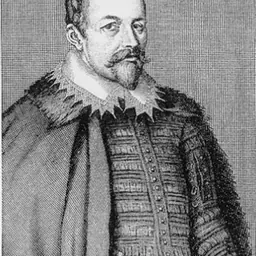
Pedro Fernandes de Queirós (; 1563–1614) was a Portuguese navigator in the service of Spain. He is best known for leading several Spanish voyages of discovery in the Pacific Ocean, in particular the 1595–1596 voyage of Álvaro de Mendaña y Neira, and for the 1605–1606 expedition that crossed the Pacific in search of Terra Australis.
Early life Queirós (or Quirós as he signed) was born in Évora, Portugal in 1563.
In January 1606, the expedition came upon Henderson Island and Ducie Island, and then Rakahanga (Northern Cook Islands), and the Buen Viaje Islands (Butaritari and Makin) in the present-day island nation of Kiribati. It is also probable that his expedition sighted Tahiti and other islands in the Tuamotu archipelago. Queirós narrowly missed the Marquesas as well as New Zealand, thanks to a change in his planned itinerary. In his printed memorials, notably the Eighth (which was published in Italy, Holland, France, Germany and England), this was altered to Austrialia del Espíritu Santo (The Australian Land of the Holy Spirit), a pun on "Austria", in honor of King Philip III, who was of the House of Hapsburg or 'Austria' in Spanish. The island is still called Espiritu Santo. Here, he stated his intention to establish a colony, to be called Nova Jerusalem. He seems to have identified Australia/Austrialia del Espíritu Santo with the huge northward extension of the Austral continent joining it to New Guinea, as depicted in maps like those of Gerard de Jode and Petrus Plancius. For, as he said in his Tenth Memorial (page 5): “New Guinea is the top end of the Austral Land of which I treat".
Two weeks later, his second-in-command, Luis Váez de Torres, after searching in vain for Queirós and assuming Queirós (or rather the crew of his ship) had decided to go their own way, left Espiritu Santo. Torres successfully reached Manila, the capital of the Spanish East Indies in May 1607, after charting the southern coastline of New Guinea on the way and in doing so sailing through the strait that now bears his name, between Australia and New Guinea. Torres was unaware of his proximity to Australia's northern coast, just over the horizon from his route.
Accounts of Queirós's voyage There are a number of documents describing the Queirós – Torres voyages still in existence. Most significant are Queirós' many subsequent Memorials to the King Philip III regarding the voyage, Torres' letter to the King of Spain from 12 July 1607, Diego de Prado's narrative and 4 charts of New Guinea, Juan Luis Arias de Loyola's memorial to King Philip IV (written about 1630 and based on discussions between Queirós and Loyola).
1617 may be the date of the first English translation of one of Queirós’ memorials, as Terra Australis Incognita, or A New Southerne Discoverie. A short account of Queirós’ voyage and discoveries was published in English by Samuel Purchas in 1625 in Haklvytvs posthumus, or, Pvrchas his Pilgrimes, vol. iv, p. 1422-1432. This account also appears to be based on a letter by Queirós to the King in 1610, the eighth on the matter.
Memorials Queirós sent at least 50, memorials to the King between 1607 and 1614. Although most were written manuscripts, Queirós paid to have fourteen printed and presented to the King. Copies of thirteen of these memorials are known to have survived. A short account of Queirós's voyage and discoveries was published in English by Samuel Purchas in 1625 in Haklvytvs posthumus, or, Pvrchas his Pilgrimes, vol. iv, p. 1422-1432. This account also appears to be based on a letter by Queirós to the King in 1610, the eighth on the matter. !! Date !! Dunn !! Kelly !! Zaragoza !! Mander-Jones !! Notes Señor : PEDRO Fernandez Quiros digo: Que gouernãdo el Peru el Marques de Cañete el año de 1595... In his memorial of February 1608, Queirós refers to a memorial sent in December 1607. Señor : el capitan Pedro Fernandez de Quiros, digo : que para descubrir la parte incognita del Sur ... Queirós here describes his 1605-1606 expedition and lists some requirements for establishing a settlement. Señor : el capitan Pedro Fernandez de Quiròs : despues q puse en pratica el descubrimiento de las tierras incognitas del Sur ... In this memorial Queirós responds to five objections against establishing a settlement on Terra Australis. Senor : el capitan Pedro Fernandez de Quiros, que por mãdado de V. M. ... In this memorial Queirós gives five reasons for establishing a settlement on Terra Australis. Señor : el capitan Pedro Fernandez de Quiros, con este son ocho los memoriales que a V.M. he presentado en razon de las poblacion q se deue hazer en las tierras que V.M. mandò que descubriesse en la parte Austral incognita ... Queirós describes the lands he visited on his expeditions and the peoples he encountered. Señor : ya he dicho a V. Magestad que de la parte del Sur, esta oculta la quarta parte del globo ... Señor : el capitan Pedro Fernandez de Quiros : suplico a V.M. sea seruido ... Queirós compares his voyages and suggested settlement on Terra Australis with the Spanish colonization of the Americas. Señor : el capitan Pedro Fernandez de Quiros : de mostrar V.M. al mundo, quanto dessea, y procura la mas honra y gloria de Dios nuestro señor, en la poblacion que V.M. mãda q yo vaya a hazer, en las tierras q de la parte Austral por orden de V.M. descubri ... This memorial was the first to be translated into other languages, after it was distributed beyond the Spanish court. Señor : el capitan Pedro Fernádez de Quiros : de mostrar V.M. al mundo, quanto dessea, y procura la mas honra y gloria de Dios nuestro señor, en la poblacion que V.M. mãda q yo vaya a hazer, en las tierras q de la parte Austral por orden de V.M. descubri ... Queirós explains how the 500,000 ducats required for the expedition will be spent, and describes the preparations for his earlier expedition. Señor : el Capitan Pedro Fernandez de Quiros : V.M. ordena y manda a su Consejo de Indias que me despachos a mi satisfacion para que el Virrey del Piru me de lo que fuere menester a la poblacion de las tierras Australes adonde V.M. se sirue mandarme ir. In this memorial Queirós summarises the previous memorials and repeats his request for funding. Señor : el capitan Pedro Fernandez de Quiros : cincuenta meses ha que estoy en esta Corte, suplicande a V.M. se sirua mandar me vaya a poblar las tierras que V.M. me mandò descubrir. Queirós complains that he has now spent over four years at court waiting for permission and funding for his expedition. Señor : el capitan Pedro Fernandez de Quiros : la parte incognita Austral es justamente quarta del Globo, sin saberse si es tierra, o si es agua, o que partes tiene de las dos ... Queirós, having been told by the King to wait for a year, notes that this time has now elapsed and outlines his plans again. Señor : capitan Pedro Fernandez de Quiros : V. Wagestad me mandò despachar dos vezes, la sequnda a mi satisfacion, juntamente esperar un año y son passados casi dos ... In this memorial Queirós complains that he has now spent six years waiting at court. He outlines different ideas for funding the expedition and begs the King to consider them. Señor : el capitan Pedro Fernandez de Quiros, a V.M. pido licencia para quexarme ... Queirós continues to express his frustration at the King's failure to respond to his requests. This is the last known printed memorial.
Theory that Queirós discovered Australia In the 19th century, some Australians claimed that Queirós had in fact discovered Australia in advance of Willem Janszoon, Abel Tasman, and James Cook. The Catholic Archbishop of Sydney from 1884 to 1911, Patrick Francis Moran, asserted this to be a fact, and it was taught in Australian Catholic schools for many years. Moran claimed that the real site of Queirós' New Jerusalem was near Gladstone in Queensland, supported by elements of Queirós' description of the land he had discovered, such as his assertion that "its length is as much as all Europe and Asia Minor as far as the Caspian and Persia, with all the islands of the Mediterranean and the ocean which encompasses, including the two islands of England and Ireland. That hidden part is the fourth corner of the world".
Queirós in modern literature
The Australian poet James McAuley wrote an epic poem called Captain Quiros (1964), describing the expeditions of Queirós in his search for the Great South Land. It is considered an important contribution to the voyager theme in Australian literature.
The Australian writer John Toohey published a novel, Quiros, in 2002.
The British writer Robert Graves describes the 1595 expedition in his historical novel, The Islands of Unwisdom, published in 1949.
Namesake
The Spanish Navy gunboat Quirós, commissioned in 1896, was named for Queirós, using the Spanish form of his surname. After she was sold to the United States, she retained the name as in United States Navy service from 1900 to 1923.
In popular culture Queirós was the subject of the 1982 television opera, Quiros, by Australian composer Peter Sculthorpe. Sculthorpe later reworked the opera into the 2013 oratorio The Great South Land, premiered at the Canberra International Music Festival.
Queirós is mentioned in the 1976 movie King Kong as discovering Skull Island and encountering Kong after being blown south from Tematagi in 1605.
Queirós is the namesake of many space stations in the 2014 video game Elite Dangerous.
Don’t just read it —
keep it.
Full-length biographies made to live with: read them, listen on the way to work, watch them tonight.
- E-book
- Audio
- Video
Instant download · yours to keep · every purchase keeps this site free
Important facts
People in Pedro Fernandes de Queirós's life
Named in this biography and alive at the same time


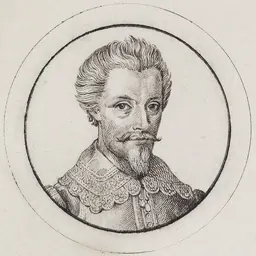
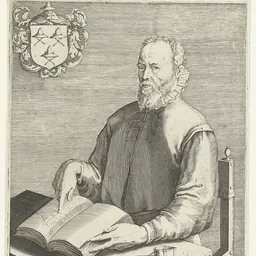

Related people
Same field, nearest in time


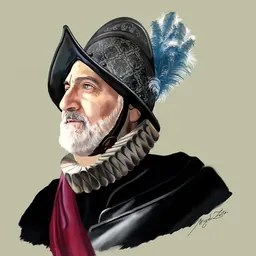

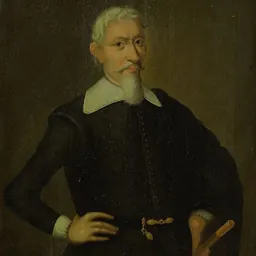
Contemporaries
People whose lives overlapped Pedro Fernandes de Queirós's



Frequently asked questions
Who was Pedro Fernandes de Queirós?
Portuguese explorer
When was Pedro Fernandes de Queirós born?
Pedro Fernandes de Queirós was born in 1565 in Évora.
When did Pedro Fernandes de Queirós die?
Pedro Fernandes de Queirós died in 1614 in Panama City.
What was Pedro Fernandes de Queirós's occupation?
Pedro Fernandes de Queirós was an explorer and navigator.
What was Pedro Fernandes de Queirós known for?
Pedro Fernandes de Queirós was known for Pacific Ocean.
What nationality was Pedro Fernandes de Queirós?
Pedro Fernandes de Queirós's recorded nationality: Kingdom of Portugal, Portuguese people.
Sources & further reading
· Wikipedia: Pedro Fernandes de Queirós
· DBpedia: Pedro Fernandes de Queirós
Cite this page
APA: Biography.guide. (2026). Pedro Fernandes de Queirós. https://biography.guide/pedro-fernandes-de-queiros/
MLA: "Pedro Fernandes de Queirós." Biography.guide, https://biography.guide/pedro-fernandes-de-queiros/.
Chicago: "Pedro Fernandes de Queirós." Biography.guide. https://biography.guide/pedro-fernandes-de-queiros/.
Data last updated: 2026-09-22 · Spot an error? Report a correction.
Page generated 2026-09-27 05:18 UTC