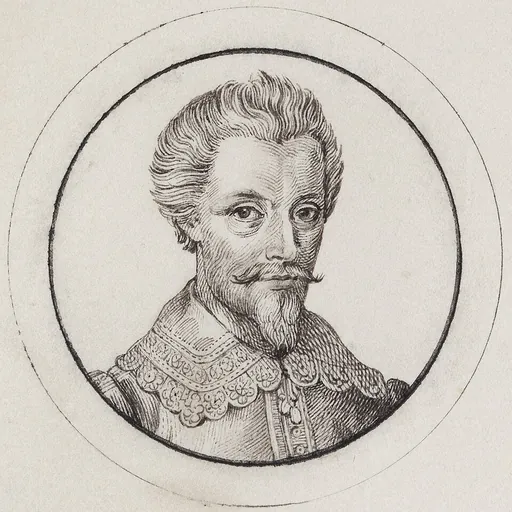
About Abel Tasman
Lived 1603 – 1659 (aged 55–56). Abel Tasman was a Dutch explorer, seafarer, author, map drawer and navigator.
Abel Janszoon Tasman (; 160310 October 1659) was a Dutch seafarer and explorer, best known for his voyages of 1642 and 1644 in the service of the Dutch East India Company (VOC). He was the first European to reach New Zealand, which he named Staten Landt. He also discovered and was the eponym of Tasmania.
Likely born in 1602 or 1603 A proclamation of his second marriage, given in December 1631 at Amsterdam, describes him as a widower and sailor.
In 1633, Tasman sailed from Texel in the Netherlands to Batavia (now Jakarta), using the southern Brouwer Route. While based in Batavia, he later joined a voyage to Seram Island, in what is now Indonesia's Maluku Province. The expedition was sent after local traders sold spices to European merchants other than the Dutch. Tasman docked to find wood for repairs and was separated from the other ships; a fight broke out with local villagers and at least two of Tasman's men were killed.
By August 1637, Tasman had returned to Amsterdam, and in 1638 he signed on for another ten years and took his wife with him to Batavia via a six-month journey.
One of the objectives was to obtain knowledge of "all the totally unknown" Provinces of Beach. This was a purported yet phantom island said to have plentiful gold, which had appeared on European maps since the 15th century, as a result of an error in some editions of Marco Polo's works. The expedition was to use two small ships, Heemskerck and Zeehaen.
Mauritius Tasman sailed from Batavia on 14 August 1642 and reached Mauritius 22 days later, on 5 September 1642, according to the captain's journal. He named his discovery Van Diemen's Land, after Antonio van Diemen, Governor-General of the Dutch East Indies.
He tried to work his two ships into Adventure Bay on the east coast of South Bruny Island, but he was blown out to sea by a storm. This area he named Storm Bay. Two days later, on 1 December, Tasman anchored to the north of Cape Frederick Hendrick just north of the Forestier Peninsula. On 2 December, two ship's boats under the command of the Pilot, Major Visscher, rowed through the Marion Narrows into Blackman Bay, and then west to the outflow of Boomer Creek where they gathered some edible "greens". Tasman named the bay, Frederick Hendrik Bay, which included the present North Bay, Marion Bay and what is now Blackman Bay. (Tasman's original naming, Frederick Henrick Bay, was mistakenly transferred to its present location by Marion Dufresne in 1772). Tasman formally claimed the land on 3 December 1642.
For two more days, he continued to follow the east coast northward to see how far it went. When the land veered to the north-west at Eddystone Point, he tried to follow the coast line but his ships were suddenly hit by the Roaring Forties howling through Bass Strait. Tasman was on a mission to find the Southern Continent not more islands, so he abruptly turned away to the east and continued his continent-hunting.
New Zealand
The expedition endured a rough voyage and in one of his diary entries Tasman claimed that his compass was the only thing that had kept him alive.
On 13 December 1642 Tasman and his crew became the first Europeans to reach New Zealand when they sighted the north-west coast of the South Island. Tasman named it Staten Landt "in honour of the States General" (Dutch parliament). He wrote, "it is possible that this land joins to the Staten Landt but it is uncertain", referring to Isla de los Estados, a landmass of the same name at the southern tip of South America, encountered by the Dutch navigator Jacob Le Maire in 1616. However, in 1643 Brouwer's expedition to Valdivia found out that Staaten Landt was separated by sea from the hypothetical Southern Land. Tasman continued: "We believe that this is the mainland coast of the unknown Southland." Tasman thought he had found the western side of the long-imagined Terra Australis that stretched across the Pacific to near the southern tip of South America. On 14 December 1642, Tasman's ships anchored 7 km offshore c. 20km south of Cape Foulwind near Greymouth. The ships were observed by Māori who named a place on this coast Tiropahi (the place were a large sailing ship was seen).
After sailing north then east for five days, the expedition anchored about from the coast off what is now Golden Bay. A group of Māori paddled out in a waka (canoe) and attacked some sailors who were rowing between the two Dutch vessels. Four sailors were clubbed to death with patu.
Don’t just read it —
keep it.
Full-length biographies made to live with: read them, listen on the way to work, watch them tonight.
- E-book
- Audio
- Video
Instant download · yours to keep · every purchase keeps this site free
Important facts
People in Abel Tasman's life
Named in this biography and alive at the same time
Related people
Same field, nearest in time
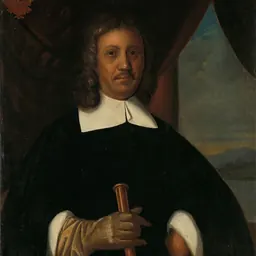
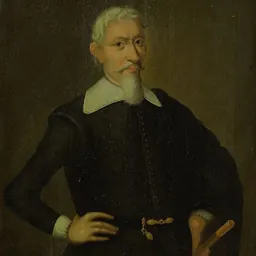


Contemporaries
People whose lives overlapped Abel Tasman's





Frequently asked questions
Who was Abel Tasman?
Dutch seafarer, explorer and merchant (1603–1659)
When was Abel Tasman born?
Abel Tasman was born in 1603 in Lutjegast.
When did Abel Tasman die?
Abel Tasman died on 10 October 1659 in Jakarta.
What was Abel Tasman's occupation?
Abel Tasman was an explorer, seafarer, author, map drawer and navigator.
What nationality was Abel Tasman?
Abel Tasman was Dutch.
Sources & further reading
Cite this page
APA: Biography.guide. (2026). Abel Tasman. https://biography.guide/abel-tasman/
MLA: "Abel Tasman." Biography.guide, https://biography.guide/abel-tasman/.
Chicago: "Abel Tasman." Biography.guide. https://biography.guide/abel-tasman/.
Data last updated: 2026-09-23 · Spot an error? Report a correction.
Portrait: Wikimedia Commons · author & licence
Page generated 2026-09-27 05:08 UTC