
About Peder Soerensen
Lived 1542 – 1602 (aged 59–60). Peder Soerensen was a Danish physician, chemist and alchemist.
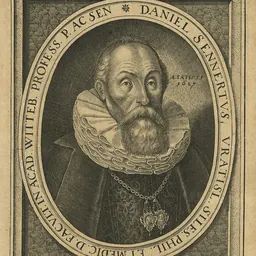
Peder Sørensen (1542–1602), widely known by his Latinized name, Petrus Severinus, was a Danish physician, and one of the most significant followers of Paracelsus. His works include the major treatise Idea medicinae philosophicae (Ideal of Philosophical Medicine), which asserted the superiority of the ideas of Paracelsus to those of Galen. Severinus was a member of Denmark's intellectual elite. His education was supported by the Danish crown and his eventual appointment as royal physician conferred status and authority to his work and opinions. He was a contemporary and intellectual and personal associate of Tycho Brahe who likewise is associated with the evolution of chemistry during the seventeenth century. Daniel Sennert, a professor at Wittenberg wrote in 1619 that most chemical physicians followed the lead of Severinus and even referred to a “Severinian School” of medical theory, which was based on the philosophy of Paracelsus. Scholars including Jole Shackelford and Hiro Hirai (Le concept de semences dans les théories de la matière à la Renaissance, 2005) have claimed that Severinus was an important predecessor of both Johann Baptista von Helmont and Pierre Gassendi.
Early life Peder Sørensen, later known by his Latinized name Petrus Severinus, was born in the Danish town of Ribe on the west coast of Jutland in either 1542 or 1540. Both years are cited in seventeenth century texts. Ribe was a flourishing town on a major trade route between the farmers of Jutland and their markets to the south. It was also a harbor town that supported regular trade with Holland, England, and other port towns of the Frisian coast. Ribe was also an administrative center with the cathedral at Ribe governed by one of the most important sees in sixteenth century Denmark.
Severinus and Paracelsianism Severinus very early in his career was drawn to the teachings and writing of the German medical reformer Theophrastus Paracelsus (1493–1541). Severinus’ Idea medicinæ philosophicae (1571) is his most important written work, which interprets the teachings of Paracelsus. Although Paracelsus’ writings are difficult to discern, his primary contribution to the study of medicine rests on his assertions that medicine could only be learned and improved through a study of nature grounded in Christian principles. Paracelsus also stressed a reliance on chemistry to prepare certain formularies for the treatment of disorders.
While a medical student, Severinus began to hear of the success of certain Paracelsian medicines and began to read Paracelsus’ writings. While these writings were rather obscure, Severinus persisted in understanding the concepts through his own empirical experiments and by applying the teachings of ancient Greeks in matters of theory and observation. Severinus increasingly found traditional Aristotelian and Galenic medical methods unsatisfactory and likewise began to embrace chemistry and the teachings of Paracelsus to create efficacious drugs. The compounds most often relied on were those with “strong manifest qualities” such as smell, which were believed to be an indication of their effectiveness. The toxicity of certain compounds would be addressed by applying chemical principles to negate the toxic qualities. The controversy with such a method, however, was that it was not always known whether a compound was toxic until it was ingested.
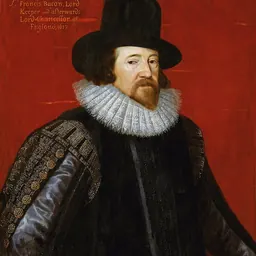
The Idea medicinæ philosophicæ of Severinus Severinus' best known writing is Idea medicinæ, published in Basel in 1571. The volume provides Severinus’ interpretation of the metaphysical and physical foundations of medicine and natural change. It is believed this is Severinus’ only work that fully illustrates his acceptance of Paracelsian writings. But it was deemed sufficiently important in the seventeenth century to produce two more editions and three extensive commentaries. Thomas Erastus, Andreas Libavius and other anti-Paracelsianists however served to minimize Severinus’ legacy. Libavious in particular attacked the occult sciences of any variety but crusaded especially against Paracelsus and any writings that supported him, including Severinus. On the other hand, Idæ medicinæ’s impact on English natural philosophers can be discerned in the writings of Thomas Moffett (1553-1604), and Francis Bacon (1561-1626) who on the one hand vilified Paracelsus but admired the important synthesis contributed by Petrus Severinus.
Don’t just read it —
keep it.
Full-length biographies made to live with: read them, listen on the way to work, watch them tonight.
- E-book
- Audio
- Video
Instant download · yours to keep · every purchase keeps this site free
Important facts
People in Peder Soerensen's life
Named in this biography and alive at the same time


Related people
Same field, nearest in time


Contemporaries
People whose lives overlapped Peder Soerensen's

Frequently asked questions
Who was Peder Soerensen?
Danish physician (1542-1602)
When was Peder Soerensen born?
Peder Soerensen was born in 1542 in Ribe.
When did Peder Soerensen die?
Peder Soerensen died on 28 July 1602.
What was Peder Soerensen's occupation?
Peder Soerensen was a physician, chemist and alchemist.
What nationality was Peder Soerensen?
Peder Soerensen was Danish.
Sources & further reading
Cite this page
APA: Biography.guide. (2026). Peder Soerensen. https://biography.guide/peder-soerensen/
MLA: "Peder Soerensen." Biography.guide, https://biography.guide/peder-soerensen/.
Chicago: "Peder Soerensen." Biography.guide. https://biography.guide/peder-soerensen/.
Data last updated: 2026-09-20 · Spot an error? Report a correction.
Page generated 2026-09-27 05:34 UTC