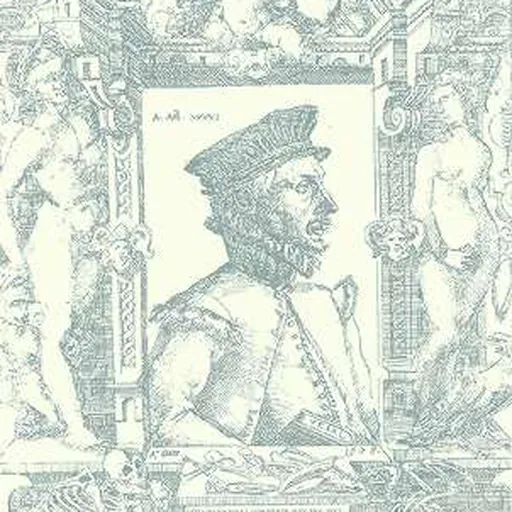
About Felix Platter
Lived 1536 – 1614 (aged 77). Felix Platter was a Swiss physician, anatomist, botanist, university teacher, psychiatrist and physician writer.
Felix Platter (also Plater ; ; Latinized: Platerus; 28 October 1536 – 28 July 1614) was a Swiss physician, botanist, and diarist. He is known for his research in several areas of medicine, including ophthalmology, psychiatry and paleopathology.
Biography Felix Platter was the son of Protestant humanist, schoolmaster, and printer, Thomas Platter, and the half-brother of Thomas Platter the Younger. In 1552, at the age of sixteen, Platter travelled by pony from Basel to the University of Montpellier to start a course of study under Guillaume Rondelet. He lodged in the house of Laurent Catalan, a pharmacist and a Marrano or Christian Jew. Platter's studies took place against a background of religious persecution; the French Wars of Religion would start within a decade.
Returning to Basel in 1557, Platter was awarded the medical doctorate by the University of Basel and established himself as a successful doctor. He became city physician and a professor of practical medicine. As part of his teaching, he carried out hundreds of dissections of the human body.
In 1602 and 1604, his book Praxeos (translated into English in the 1660s as Golden Practice of Physick ) gave a rational classification of diseases, based on their symptoms and postmortem findings.
During the plague of 1563-1564 in Basel, Platter stayed to attend the ill while other physicians fled. Four thousand people, a quarter of the city's population, died of the plague. Platter treated plague victims again during the epidemics of 1576, 1582, 1593, and 1609. hypertrophy of the thalamus, the broad tapeworm, and Dupuytren's contracture of the hand.
Finally, Platter did important work on ophthalmology. He identified the retina rather than the lens as the visual receptor of the eye. He observed congenital cataracts and was the first to recognize that people who worked near a fire (such as alchemists) were vulnerable to cataracts, now called glassblower's cataracts.
He had a strong inclination toward music; he played the lute and translated songs into the Basel dialect. His friends in the scholarly world included Conrad Gessner and Theodor Zwinger.
Platter amassed a famous collection of curiosities at his house, including art, musical instruments, precious stones, and biological specimens. Part of his herbarium is preserved at the University of Bern, including 813 specimens from Switzerland, France, Italy, Spain, and Egypt. Michel de Montaigne, on a visit to Basel in 1580, admired Platter's collection: "it was his practice, instead of painting like other botanists the plants according to their natural colors, to glue the same upon paper with so great care and dexterity that the smallest leaves and fibres should be visible, exactly as in nature.... At this house, and in the public school as well, we saw entire skeletons of men."
Platter's diary gives a vivid account of his childhood, his life as a medical student at Montpellier, and his travels in France.
Don’t just read it —
keep it.
Full-length biographies made to live with: read them, listen on the way to work, watch them tonight.
- E-book
- Audio
- Video
Instant download · yours to keep · every purchase keeps this site free
Important facts
People in Felix Platter's life
Named in this biography and alive at the same time


Related people
Same field, nearest in time



Contemporaries
People whose lives overlapped Felix Platter's




Frequently asked questions
Who was Felix Platter?
Swiss physician (1536-1614)
When was Felix Platter born?
Felix Platter was born on 28 October 1536 in Basel.
When did Felix Platter die?
Felix Platter died on 28 July 1614 in Basel.
What was Felix Platter's occupation?
Felix Platter was a physician, anatomist, botanist, university teacher, psychiatrist and physician writer.
What nationality was Felix Platter?
Felix Platter was Swiss.
Sources & further reading
Cite this page
APA: Biography.guide. (2026). Felix Platter. https://biography.guide/felix-platter/
MLA: "Felix Platter." Biography.guide, https://biography.guide/felix-platter/.
Chicago: "Felix Platter." Biography.guide. https://biography.guide/felix-platter/.
Data last updated: 2026-09-20 · Spot an error? Report a correction.
Portrait: Wikimedia Commons · author & licence
Page generated 2026-09-27 04:58 UTC