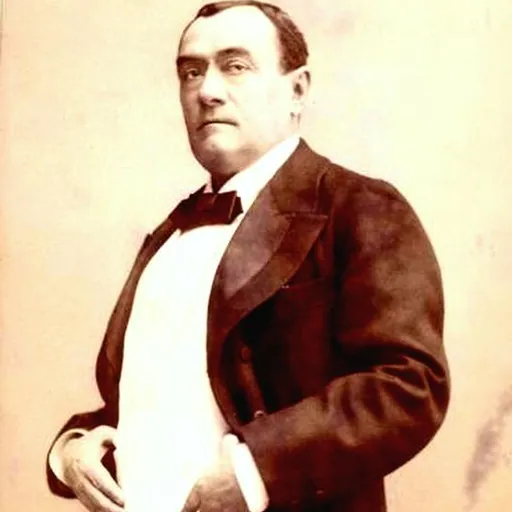
About Paulus
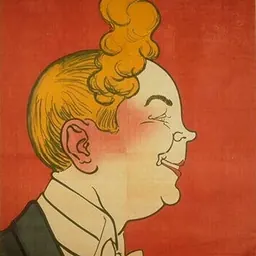
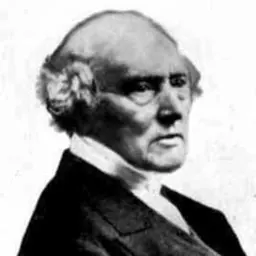
Lived 1845 – 1908 (aged 63). Paulus was a French singer.
Jean-Paulin Habans, known as Paulus (6 February 1845 - 1 June 1908), was a French singer, entertainer and theatre entrepreneur of the Belle Époque. Paulus created a complete transformation in popular singing style and in doing so he became the most popular male singer in Paris in the 1870s and 1880s. His career clearly marked a turning point in the history of French chanson: the start of the era of stardom.
Early life and career Jean-Paulin Habans was born in Saint-Esprit, a suburb of Bayonne. While he maintained all his life that he was born into a family of small shopkeepers, in reality and according to his birth certificate his father was unknown and Habans the name of his mother, born Jeanne-Marie Habans, with no profession. He grew up in Bordeaux. After a brief education and some odd jobs as employee of a lottery agency and as clerk in a bailiff's office, he embarked upon a singing career while frequenting the goguettes.
Around 1871, Paulus introduced a "new thrill" to the caf'conc'''; a new singing style with continual frenetic movement, grimaces, and gesticulation. The new genre was typified by "a frantic, disjointed movement that was seen as [...] epileptic and puppet-like" that the theatre critic Francisque Sarcey termed gambillard in relation to the mimicking of the gesticulations and dislocations of puppets, in which the performer mainly used his legs while hopping, striding, jumping. As chanteur agité (agitated singer), Paulus created a complete transformation in popular singing style – "there had to be movement, always more movement" – and in doing so he became the most popular male singer in Paris in the 1870s and 1880s.
In his memoirs, Trente ans de Café-concert, Paulus said he was inspired by a group of male comic dancers, Les Clodoches – very much in fashion in the late 1860s – and by Thomas Holden's marionettes. He had seen the Clodoches at the Alcazar and Eldorado in Paris and when, in 1869, engaged at the Jardin Oriental in Toulouse, he performed an old favourite song Les Pompiers de Nanterre, mimicking one of the Clodoches (Flageollet). Whirling about wildly, he was accompanied by a chorus replicating the Clodoches' frenzied dance act. Around 1880 Paulus had fine-tuned the gambillard act, and by 1886 his popularity would reach its peak. (Returning from the revue) that had opened that year at the Alcazar d'Été. The title referred not a theatrical performance, but to a military review, and became the anthem of the Boulangist movement that many feared could have taken over power through a coup d'état. Paulus might have been one of the first variety stars to mix in politics and was one of the many fervent supporters of General Boulanger at the time.
In 1887, he founded the journal La Revue des Concerts, together with the songwriters and composers Lucien Delormel and Léon Garnier, where he gave free rein to his vindictive character causing it to close in less than two years. From 1889 onwards, he toured the European capitals, Russia and New York. Because Paulus refused to perform outdoors, some thirty arc and mercury lamps had to be used in Méliès provisional studio near the Paris Opera, one of the first times artificial light was used for cinematography. Paulus sang five of his songs, including Derriere l'omnibus and Coquin de Printemps, which were subsequently projected as Paulus Chantant at the Ba-Ta-Clan. There, Paulus sat behind the cinema screen and sang the songs – thus giving the illusion of cinema with sound – only appearing on stage to sing the last verse. By this time Paulus was aged and tired, and it is suggested that the films would spare him performing live; or that he tried to win back audiences by combining film and live stage performance.
On 19 December 1906, a gala evening was organised for him by the daily newspaper Le Figaro at the Théâtre de la Gaîté, in which the greatest artists took part. A year and a few months later, on the first of June 1908, aged 63, he died of arteriosclerosis and was buried in the Cimetière Sud de Saint-Mandé, which is part of the commune but located in the 12th arrondissement of Paris.
Just before his death, with the help of the songwriter Octave Pradels, he had collected his memories. They were published in the form of 33 illustrated booklets, accompanied by reproductions of the characters mentioned, and scores. These memories are full of anecdotes about the café-concert, its contemporaries and some legendary figures: Thérésa, Gustave Nadaud, Eugénie Fougère, Céleste Mogador, Virginie Déjazet, Marius Richard, Polin, Harry Fragson, Yvette Guilbert, Félix Mayol, Aristide Bruant, Dranem and the soprano Hortense Schneider.
According to the magazine Les Chansons de Paris in 1903, Paulus created 2,500 songs during his 30 years of success.
Don’t just read it —
keep it.
Full-length biographies made to live with: read them, listen on the way to work, watch them tonight.
- E-book
- Audio
- Video
Instant download · yours to keep · every purchase keeps this site free
Important facts
People in Paulus's life
Named in this biography and alive at the same time




Related people
Same field, nearest in time

Contemporaries
People whose lives overlapped Paulus's

Frequently asked questions
Who was Paulus?
French singer (1845-1908)
When was Paulus born?
Paulus was born on 6 February 1845 in Bayonne.
When did Paulus die?
Paulus died on 1 June 1908 in Saint-Mandé.
What was Paulus's occupation?
Paulus was a singer.
What nationality was Paulus?
Paulus was French.
Sources & further reading
Cite this page
APA: Biography.guide. (2026). Paulus. https://biography.guide/paulus-singer/
MLA: "Paulus." Biography.guide, https://biography.guide/paulus-singer/.
Chicago: "Paulus." Biography.guide. https://biography.guide/paulus-singer/.
Data last updated: 2026-09-21 · Spot an error? Report a correction.
Portrait: Wikimedia Commons · author & licence
Page generated 2026-09-27 05:00 UTC