
About Paulo de Carvalho
Born 1947. Paulo de Carvalho is a Portuguese singer and composer.
Paulo de Carvalho (born 15 May 1947) is a Portuguese singer.
Career Carvalho co-founded the band The Sheiks in 1965. He sang and played the drums. He also played an instrumental role, either as a founder or a guest, of many other important Portuguese bands of the 1960s, among them Fluido, Banda 4 and Thilo's Combo. The Sheiks was Portugal's answer to The Beatles. During the 1960s, Portugal was ruled by an authoritarian dictatorship. This band came as a result of the climate in Portugal and captured the national mood. The people wanted the brightness of the Beatles sound and the Sheiks provided. The band sang songs such as "Summertime", "Missing You" and "Tell Me Bird". Though the band eventually broke up and Carvalho moved into contemporary Fado, the Sheiks have regrouped and performed in recent years.
In 1974, as a solo performer, Carvalho won the Festival RTP da Canção with the song "", which allowed him to in the Eurovision Song Contest 1974. "" was used as the passcode at the beginning of the coup which toppled Portugal's dictatorship (in what has become known as the Carnation Revolution), giving Carvalho a permanent place in his country's history. In 1977, as part of Os Amigos, he won again the Festival RTP da Canção with the song "", and represented Portugal in the Eurovision Song Contest 1977. Later that year, as a solo artist, he represented Portugal in the OTI Festival 1977 with the song "". During the 1970s and early 1980s, Carvalho won many international performance awards in Bulgaria, Poland and Belgium and was a strong participant in other music festivals in Chile, Argentina and Spain. This trend is visible throughout his career in fado. Carvalho takes from the wider world of ballads and adds elements of jazz, pop, or whatever else he sees fit into his songs, yet still maintains the result as fado.
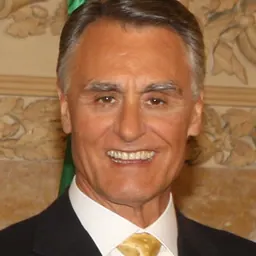
Awards Carvalho was awarded with medal of Ordem da Liberdade by Aníbal Cavaco Silva, President of Portugal, on 10 June 2009.
Discography 1969: Paulo de Carvalho; 1971: Eu; 1975: Não de Costas, Mas de Frente; 1976: MPCC; 1977: Paulo de Carvalho; 1978: Volume 1; 1979: Cantar de Amigos; 1980: Até me Deva Jeito; 1981: Cabra Cega; 1982: Cabra Cega; 1985: Desculpem Qualquer Coisinha; 1986: Homem Portugues; 1987: Terras da Lua Cheia; 1991: Gostar de Ti; 1994: Alma; 1995: 33 Vivo; 1996: Fados Meus; 1999: Mátria; 2002: Antologia; 2004: Cores do Fado; 2006: Vida; 2008: Do Amor; 2011: Vivo: 50 Anos de Carreira; 2012: Duetos de Lisboa; 2017: Duetos;
Don’t just read it —
keep it.
Full-length biographies made to live with: read them, listen on the way to work, watch them tonight.
- E-book
- Audio
- Video
Instant download · yours to keep · every purchase keeps this site free
Important facts
People in Paulo de Carvalho's life
Named in this biography and alive at the same time

Related people
Same field, nearest in time




Contemporaries
People whose lives overlapped Paulo de Carvalho's



Frequently asked questions
Who is Paulo de Carvalho?
Portuguese singer
When was Paulo de Carvalho born?
Paulo de Carvalho was born on 15 May 1947 in Lisbon.
What is Paulo de Carvalho's occupation?
Paulo de Carvalho is a singer and composer.
What nationality is Paulo de Carvalho?
Paulo de Carvalho is Portuguese.
Sources & further reading
· Wikipedia: Paulo de Carvalho
Cite this page
APA: Biography.guide. (2026). Paulo de Carvalho. https://biography.guide/paulo-de-carvalho/
MLA: "Paulo de Carvalho." Biography.guide, https://biography.guide/paulo-de-carvalho/.
Chicago: "Paulo de Carvalho." Biography.guide. https://biography.guide/paulo-de-carvalho/.
Data last updated: 2026-09-25 · Spot an error? Report a correction.
Page generated 2026-09-27 05:12 UTC