
Aníbal Cavaco Silva
Portuguese politician (born 1939)
About Aníbal Cavaco Silva
Born 1939. Aníbal Cavaco Silva is a Portuguese economist, politician and university teacher.
Aníbal António Cavaco Silva (; born 15 July 1939) is a Portuguese economist and politician who served as the president of Portugal from 2006 to 2016, and as prime minister of Portugal, from 1985 to 1995. As prime minister, his style and policies came to be known as Cavacoism.
Early life and career Aníbal António Cavaco Silva was born in Boliqueime, Loulé, Algarve, and Maria do Nascimento Cavaco. He was initially an undistinguished student. As a 12-year-old, he failed the 3rd grade of the Commercial School, and his grandfather put him working on the farm as punishment. After returning to school, Cavaco Silva went on to become an accomplished student. Cavaco Silva then went to Lisbon, where he took a vocational education course in accounting from Instituto Comercial de Lisboa (Instituto Superior de Contabilidade e Administração de Lisboa (ISCAL), today) in 1959. In parallel, he was admitted for university education at the Instituto Superior de Ciências Económicas e Financeiras de Lisboa (ISCEF) of the Technical University of Lisbon (UTL) (currently the Instituto Superior de Economia e Gestão (ISEG) of the University of Lisbon), and obtained in 1964, with distinction, a degree in economics and finance (he scored a mark of 16 out of 20). While studying in Lisbon, Cavaco Silva was an athlete of CDUL athletics department from 1958 to 1963. Between 1963 and 1964, he was drafted into the Portuguese Army Artillery for compulsory 11-month military service, serving in a battalion in Lourenço Marques in Portuguese Mozambique. Cavaco Silva studied a graduate course at the University of York in England.
Cavaco Silva has published several academic works in economics, including in subfields like monetary policy and monetary unions. He received an Honorary Doctorate from Scotland's Heriot-Watt University in 2009.
Political career Early years Cavaco Silva joined the Social Democratic Party in 1974. Between 1980 and 1981, he was finance minister under Prime Minister Francisco Sá Carneiro's government. Five years later, in 1985, Cavaco Silva was elected party leader. At the time, it was also the largest majority that a Portuguese party had ever won in a free election.
Although the occurrence of economic growth and a public debt relatively well-contained as a result of the number of civil servants was increased from 485,368 in 1988 to 509,732 in 1991, which was a much lower increase than that which took place in the following years until 2011 marked by irrational and unsustainable State employment, from 1988 to 1993, during the government cabinets led by Cavaco Silva, the Portuguese economy was radically changed. As a result, there was a sharp and rapid decrease in the output of tradable goods and a rise in the importance of the non-tradable goods sector in the Portuguese economy.
In the 1991 election Cavaco Silva's party had a majority even larger (50.6 per cent) than the one of four years earlier. After 10 years in office, he decided not to run for another term as party leader, not contesting the 1995 election, and the PSD, lacking a leader of his stature, lost 48 seats and the election to the Socialists.
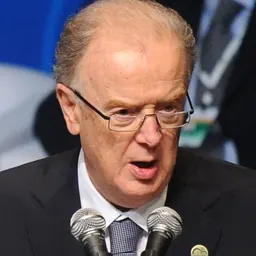
Post-premiership Cavaco Silva contested the 1996 presidential election but was defeated by the Mayor of Lisbon, Jorge Sampaio, the Socialist candidate. Retiring from politics, he served for several years as an advisor to the board of the Banco de Portugal (Bank of Portugal) but retired from this position in 2004. He then became a full professor at the School of Economics and Management of the Catholic University of Portugal, where he taught the undergraduate and MBA programs.
He is a member of the Club of Madrid and an honorary member of the International Raoul Wallenberg Foundation.
President of the Republic President Cavaco Silva meets the president of Brazil, Lula da Silva, in 2007. On 20 October 2005, Cavaco Silva announced his candidacy for the 2006 presidential election. He was elected President of the Republic on 22 January 2006 with 50.6% of votes cast, avoiding a run-off. He is the first elected center-right president in Portugal since 1974. He is also the second former prime minister to be elected president, after Mário Soares.
He was sworn in on 9 March 2006, becoming Portugal's first right-of-centre head of state in three decades. He is also the president of the Portuguese Council of State.
Cavaco Silva's term was initially marked by a mutual understanding with the government led by Socialist José Sócrates, which he referred to as "strategic cooperation".
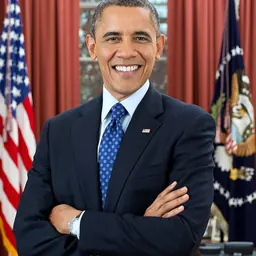
The most controversial moment of his presidency was when the Assembly of the Republic passed a bill for the holding of a pre-legislative referendum on the legalization of abortion in Portugal without any restrictions in the first 10 weeks of pregnancy. After the parliamentary approval of the bill summoning the referendum, Cavaco Silva referred the matter to the Portuguese Constitutional Court, which declared both the proposed legalization and the referendum constitutional by a narrow 7–6 margin. Cavaco Silva, who could still have vetoed the referendum bill, decided to sign it into law and thus allowed the referendum. The majority of the Portuguese electorate abstained from the referendum, but the vote for legalization prevailed among those who chose to cast their ballot. President Aníbal Cavaco Silva with U.S. president Barack Obama in Lisbon, 2010. Cavaco Silva was reelected president of Portugal on 23 January 2011 with 52,92% of the vote, and he took office for his second five-year term on 9 March 2011.
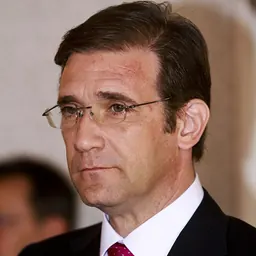
2015 constitutional crisis At the general election on 4 October 2015 to the Assembly of the Republic, the unicameral Portuguese parliament, the right-wing government of Prime Minister Pedro Passos Coelho lost its majority, with centre-left and far-left opposition parties gaining more than half of the seats. As Passos Coelho's own Social Democratic Party remained the largest in parliament, and still had the support of the much smaller CDS – People's Party, Cavaco Silva allowed Passos Coelho to continue as prime minister, giving him the first chance to form a new government. Passos Coelho was unable to find any new partners and was widely expected to stand down, but on 22 October Cavaco Silva invited him to form a new government, even if it were a minority government. On 24 October Cavaco Silva explained his thinking:
In 40 years of democracy, no government in Portugal has ever depended on the support of anti-European forces, that is to say forces that campaigned to abrogate the Lisbon Treaty, the Fiscal Compact, the Growth and Stability Pact, as well as to dismantle monetary union and take Portugal out of the euro, in addition to wanting the dissolution of NATO.
Family Cavaco Silva married Maria Alves da Silva at the Church of the Monastery of São Vicente de Fora, São Vicente de Fora, Lisbon, on 20 October 1963. The couple had a daughter Patricia, and a son Bruno. He has five grandchildren, four of whom were born to his daughter. One of them, António Montez, is a professional footballer.
Aníbal Cavaco Silva had two brothers: António Cavaco Silva (1947–2010), and Rogério Cavaco Silva (1934–2025). Rogério Cavaco Silva was a businessman and a victim of the Dominion of Melchizedek scam.
Honours National honours Source:
Foreign honours
Grand Star of the Decoration of Honour for Services to the Republic of Austria (31 August 2009) Grand Decoration of Honour in Gold with Sash of the Decoration of Honour for Services to the Republic of Austria (14 July 1997) Grand Collar of the Order of the Southern Cross (22 April 2008) Grand Cross of the Order of the Southern Cross (4 February 1991) Grand Cross of the Order of Rio Branco (8 October 1991) Grand Cross of the Order of the National Congress (4 February 1991) First Class of the Order of the Stara Planina (8 June 2015) First Class of the (14 July 2010) Collar of the Order of Merit (15 November 2007) Grand Cross of the Order of Merit (20 July 2007) Grand Cross of the Order of Bernardo O'Higgins (16 November 2010) Grand Collar of the Order of Boyacá (14 November 2012) Grand Cross of the Order of Boyacá (23 May 1988) Grand Cross of the Order of Makarios III (20 November 1990) Grand Collar of the Order of Timor-Leste (6 August 2012) Grand Cross of the National Order of Merit (25 January 1991) Collar of the Order of the Cross of Terra Mariana (13 October 2008) Grand Cross of the Order of the White Rose of Finland (8 March 1991) Grand Cross Special Class of the Order of Merit of the Federal Republic of Germany (26 May 2009) Grand Cross of the Order of Merit of the Federal Republic of Germany (25 January 1991) Grand Cross of the Order of Honour (15 May 1990) Grand Cross of the (4 February 1991) Knight with the Collar of the Order of Pope Pius IX (30 August 2010) Collar of the Order of Al-Hussein bin Ali (28 May 2009) Grand Cordon with Brilliants (Special Class) of the Supreme Order of the Renaissance (10 December 2009) Grand Cross of the Cross of Recognition (22 November 2010) Grand Cross with Golden Chain of the Order of Vytautas the Great (25 July 2007) Knight of the Order of the Gold Lion of the House of Nassau (9 September 2010) Grand Cross of the Order of the Oak Crown (4 February 1991) Honorary Companion of Honour with Collar of the National Order of Merit (11 December 2008) Collar of the Order of the Aztec Eagle (2 June 2014) Grand Cordon of the Order of Ouissam Alaouite (13 February 1995) Grand Officer of the Order of Ouissam Alaouite (17 May 1991) First Class of the Order of Friendship and Peace (7 October 2014) Knight Grand Cross of the Order of Orange-Nassau (25 March 1992) Grand Cross of the Order of St Olav (5 November 2008) Grand Cordon of the Order of the Star of Palestine (19 July 1995) Collar of the Order of Manuel Amador Guerrero (30 July 2013) Grand Collar of the Order of the Sun of Peru (19 November 2012) Knight of the Order of the White Eagle (22 June 2012) Grand Cross of the Order of Polonia Restituta (1 October 2008) Collar of the Order of Merit (10 December 2009) Collar of the Order of the Star of Romania (16 June 2015) Grand Cross of the Order of the White Double Cross (4 September 2008) Collar of the Order pro Merito Melitensi (23 November 2010) Grand Cross, Special Class of the Order pro Merito Melitensi (25 January 1991) Collar of the Order of Isabella the Catholic (24 September 2006) Knight Grand Cross of the Order of Isabella the Catholic (8 September 1993) Knight of the Royal Order of the Seraphim (9 May 2008) Commander Grand Cross of the Order of the Polar Star (9 February 1987) Grand Cordon of the Order of the Republic (18 November 1993) Grand Cordon of the Order of 7 November (18 November 1993) Recipient of the Order of the State of the Republic of Turkey (24 November 2009) Grand Cordon of the Order of the Liberator (18 November 1987)
State visits
Cavaco Silva made state visits to countries in Europe, Africa, Asia and the Americas. In September 2006, on his first state visit, he visited Portugal's neighbour, Spain.
Electoral history Cavaco during his 2011 visit to the U.S.; pictured with John T. Chambers and Helder Antunes.
PSD leadership election, 1985
Legislative election, 1985
Candidate Votes
Legislative election, 1987
Candidate Votes
Legislative election, 1991
Candidate Votes
Presidential election, 1996
Votes
Presidential election, 2006
Votes
Presidential election, 2011
Votes
Don’t just read it —
keep it.
Full-length biographies made to live with: read them, listen on the way to work, watch them tonight.
- E-book
- Audio
- Video
Instant download · yours to keep · every purchase keeps this site free
Important facts
Family & relationships
People in Aníbal Cavaco Silva's life
Named in this biography and alive at the same time





Related people
Same field, nearest in time


Contemporaries
People whose lives overlapped Aníbal Cavaco Silva's



Frequently asked questions
Who is Aníbal Cavaco Silva?
Portuguese politician (born 1939)
When was Aníbal Cavaco Silva born?
Aníbal Cavaco Silva was born on 15 July 1939 in Boliqueime.
What is Aníbal Cavaco Silva's occupation?
Aníbal Cavaco Silva is an economist, politician and university teacher.
What nationality is Aníbal Cavaco Silva?
Aníbal Cavaco Silva is Portuguese.
Sources & further reading
· Wikipedia: Aníbal Cavaco Silva
· DBpedia: Aníbal Cavaco Silva
Cite this page
APA: Biography.guide. (2026). Aníbal Cavaco Silva. https://biography.guide/anibal-cavaco-silva/
MLA: "Aníbal Cavaco Silva." Biography.guide, https://biography.guide/anibal-cavaco-silva/.
Chicago: "Aníbal Cavaco Silva." Biography.guide. https://biography.guide/anibal-cavaco-silva/.
Data last updated: 2026-09-25 · Spot an error? Report a correction.
Page generated 2026-09-27 05:11 UTC