
About Jorge Sampaio
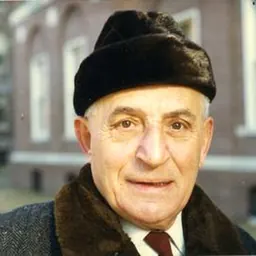
Lived 1939 – 2021 (aged 81). Jorge Sampaio was a Portuguese politician, lawyer and jurist.
Jorge Fernando Branco de Sampaio (; 18 September 1939 – 10 September 2021) was a Portuguese lawyer and politician who was the president of Portugal from 1996 to 2006. Sampaio was a member of the Socialist Party, a party which he led between 1989 and 1992. He served as the Mayor of Lisbon from 1990 to 1995 and High-Representative for the United Nations' Alliance of Civilizations between 2007 and 2013.
Sampaio was an opponent of the Estado Novo dictatorship, participated in the student movement of the 1960s, and played an active role in the political movements that led to the Carnation Revolution of April 25, 1974. Subsequently, he worked as a lawyer for political prisoners.
As president of Portugual, he used international diplomacy to raise the profile of the cause of Timor-Leste, supported the 1999 referendum and used Portugal's diplomatic channels to champion Timorese freedom during this transition as he sought to foster peace in the country. He was present during the transition and formal independence in 2002, and paid a historic visit to the country in 2000. Sampaio oversaw the handover of Macau to China, after a 442 years of Portuguese rule; two months after his re-election, he was confronted with the collapse of the Entre-os-Rios bridge in March 2001.
Early life Sampaio was born in born into a liberal middle-class family in Lisbon on 18 September 1939. He was the eldest son of Fernanda Bensaúde Branco (1908-2000), a Lisbon native and private English teacher, and António Arnaldo de Carvalho Sampaio (1908-1984), a native of Guimarães, a physician specializing in Public Health and a major promoter of the National Vaccination Program. The Sampaio family lived in the United States and the United Kingdom for some years due to the professional activity of his father. His maternal grandmother, Sara Bensliman Bensaúde, belonged to a Sephardic family, who came from Morocco and settled in Portugal in the early 19th century. She converted to Catholicism and married Sampaio's maternal grandfather (1880–1940), an officer of the Portuguese Navy and Foreign Minister of Portugal. Sampaio's maternal great-granduncle was the businessman (1835–1922).
In an interview for the daily newspaper Público, Sampaio said he recalled his parents "putting tapes on the windows, because it was feared that Hitler would come down that way [to Portugal]". In the 1947–1948 school year, the Sampaio family—except Daniel—moved to the United States and settled in Baltimore, where his father taught at Johns Hopkins University. Sampaio enrolled at the YMCA, where he practiced boxing and swimming; he also attended piano lessons at the Peabody Institute and participated in its orchestra. At the end of the school year, Sampaio returned to his aunt's and uncle's house in Lisbon, and soon after to Sintra when his parents returned from the US. In 1949, Jorge Sampaio attempted to enroll at Colégio Militar, but failed, so he enrolled at Liceu Pedro Nunes. After finishing the fifth grade, Sampaio chose a set of subjects that gave him access to the law course at Liceu Passos Manuel.
Political career Jorge Sampaio started his political career as a student of the Faculty of Law of the University of Lisbon. In the 1970s, he was a co-founder of Movimento de Esquerda Socialista (MES).
Carnation Revolution and political beginnings On 25 April 1974, during the Carnation Revolution, Sampaio was awakened by a friend's telephone call; he went to his office to gather information but returned home when the Armed Forces Movement ordered via radio no-one should leave their homes. Sampaio originated the slogan "25 de Abril, sempre!" ("Always the 25 of April!").
In May 1974, Sampaio co-founded the Movement of Socialist Left ("Movimento de Esquerda Socialista (MES)") but soon after abandoned the political project when, in the first MES congress in December, he strongly opposed its Marxist-Leninist ideology.
Sampaio was first elected to the Assembly of the Republic in the 1979 legislative election as a deputy for Lisbon, an office he successively held until 1991. Between 1987 and 1988, he was president of the parliamentary bench of the PS.
Presidency (1996–2006) First term: 1996–2001 President Sampaio with Galician Regional President Manuel Fraga, 1996. The electoral campaign began on 31 December 1995; throughout the campaign, polls favored Sampaio over the other candidate, former Prime Minister Aníbal Cavaco Silva. Sampaio won the election with 3,035,056 votes (52.66%) and was sworn in on 9 March 1996 in a ceremony at the Assembly of the Republic, succeeding Mário Soares. There was also a historic coincidence: it was the first time the sitting president and prime minister were members of the same political party. In May 1998, Sampaio inaugurated Expo '98 in Lisbon. President Sampaio and his wife Maria Rodrigues welcome Indian President K. R. Narayanan to Lisbon, September 1998 In 1998, Sampaio became the first president to call referendums: the first was held on 28 June about abortion and the second was held on 8 November about regionalization. Sampaio supported the independence of East Timor. The plebescite was held on 30 August 1999 and was followed by a campaign of extreme violence and terror by pro-Indonesian militias, and Portugal put pressure on the international community, especially the administration of U.S. President Bill Clinton, to take a position.
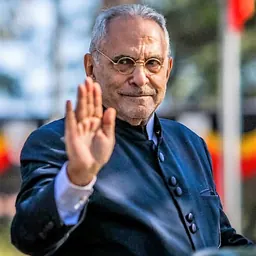
Former President of East Timor José Ramos-Horta said Sampaio "was a great defender of the East Timorese cause and played a crucial role in the political and diplomatic solution that led to independence". Sampaio returned to East Timor in 2002 following the country's Independence with Xanana Gusmão as president. Sampaio's participation in the ceremony was doubtful in March of that year because Sampaio refused to take part without the resolution of questions about the territory's future.
Second term: 2001–2006 President Sampaio welcomes President Clinton to Lisbon in front of the Belém Tower and the Belém Presidential Palace, 30 May 2000. It was the first visit by a U.S. president to Portugal in 15 years. 2000
On 19 October 2000, Sampaio announced his candidacy
In 2001, while the September 11 attacks on the United States were underway, Sampaio was having lunch with a guest at Belém Palace and had to immediately cancel.
The defeat of the Socialist Party in the municipal elections of 2001 ended the government of António Guterres, who resigned. Instead of appointing the new leader of the PS Eduardo Ferro Rodrigues as head of government, after a round of consultations with the parliamentary parties, Sampaio dissolved the Assembly and called elections for March 2002.
In February 2002, in an interview for the BBC, Sampaio said Portugal would hold a new referendum to decriminalize abortion. In the same interview, he defended the government's decision to decriminalize the use of certain drugs, a proposal several European leaders criticized. Sampaio also stated Europe should commit itself more energetically to resolve the crisis in the Middle East, and that the Palestinians and Israelis should return to negotiations.
On 4 April 2002, Sampaio said he welcomed the peace accords that ended the Angolan Civil War, saying it "opens the way to reconciliation among Angolans and general elections".
In October 2003, Sampaio invited the presidents of Finland and Germany, and the soon-to-be EU members Hungary, Latvia, and Poland to Arraiolos to discuss the consequences of the 2004 enlargement of the European Union and plans for a Constitution for Europe.
In 2004, Sampaio refused to hold an early election following the resignation of Social Democratic Party Prime Minister Durão Barroso. Sampaio's refusal was met with protests from all left-wing parties and the resignation of socialist leader Ferro Rodrigues. Sampaio appointed Pedro Santana Lopes as Prime Minister on 9 July 2004. Following the PS's absolute majority in this election, Sampaio appointed José Sócrates Prime Minister. Aníbal Cavaco Silva, who Sampaio defeated in 1996, succeeded him on 9 March 2006. During his ten years in office, Sampaio convened the Portuguese Council of State 22 times, mainly to manage the Macau issue. , it is the highest number of conventions of any Portuguese president.
Post-presidential career
As a former President, Jorge Sampaio became a member of the Portuguese Council of State in 2006. He was also member of the Club de Madrid, an organization of more than 80 former democratic statespersons.
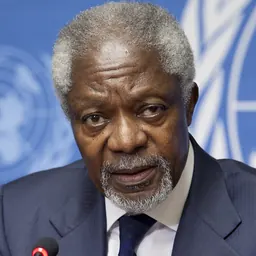
In May 2006, United Nations Secretary-General Kofi Annan appointed Sampaio as his first Special Envoy for the Global Plan to Stop Tuberculosis. On 26 April 2007, new UN Secretary-General Ban Ki-moon designated Sampaio as High Representative for the Alliance of Civilizations, a position he held until February 2013, when Nassir Abdulaziz Al-Nasser succeeded him.
In 2010, Sampaio participated in the jury for Fondation Chirac's Conflict Prevention Prize. From 2013, he led the Global Platform for Syrian Students to boost the academic training of young people in Syria after the outbreak of the country's civil war and refugee crisis. On 26 August 2021, in an article in the newspaper Público, Sampaio announced the Global Platform for Syrian Students was creating academic training for female Afghan students amid the Taliban's seizure of power in Afghanistan.
Personal life Jorge Sampaio married twice. In 1967, he married Karin Schmidt Dias, a physician and daughter of anthropologist Jorge Dias and German-born pianist Margot Dias (née Schmidt), with whom he had no children. The couple divorced in 1971. and André Ritta de Sampaio was born in 1980.
Sampaio played piano from childhood and was a member of Sporting CP, in which his membership number was 3,109. He supported bullfighting, and collected records and paintings. He was shy, cried easily, was discreet, had a poor temper, and was altruistic. He also had a British accent and red hair he inherited from a paternal great-grandfather. where he died of respiratory failure on 10 September 2021, eight days before his 82nd birthday. On that day, the Council of Ministers decreed three days of national mourning would begin on 11 September. The next day, the funeral procession transited Lisbon City Hall, where the mayor Fernando Medina received him. The final destination was the Royal Riding Arena of the National Coach Museum, where the mortuary chapel was installed and his coffin was flanked with wreaths of red carnations.
On Sunday 12 September, Sampaio's state funeral was held at Jerónimos Monastery and was attended by the highest national institutions, including UN Secretary-General and former Prime Minister António Guterres. Also present were foreign leaders such as the King of Spain Felipe VI, the Prime Minister of Cape Verde Ulisses Correia e Silva, the President of the Parliament of East Timor Aniceto Guterres Lopes, and delegates of the Community of Portuguese Language Countries. Later, in a private ceremony, Sampaio was buried at Alto de São João Cemetery, Lisbon.
Electoral history PS leadership election, 1989
Lisbon City Council election, 1989
Candidate
Legislative election, 1991
Candidate Votes
Lisbon City Council election, 1993
Candidate
Presidential election, 1996
Votes
Presidential election, 2001
Votes
Honours and awards
In 2004, Sampaio received the Charles V European Award. In 2015, he, along with Dr. Helena Ndume, was a recipient of the Nelson Rolihlahla Mandela Prize in recognition of his role in the campaign for the restoration of democracy in Portugal, the pro bono defense of political prisoners, and for raising awareness of tuberculosis as the UN Secretary-General's first Special Envoy to Stop Tuberculosis.
National honours
Grand Collar of the Order of the Southern Cross (9 December 1997) Knight of the Order of the Gold Lion of the House of Nassau (15 June 2010) Gold Medal of the Order of Freedom of the Republic of Slovenia (31 March 2000) Collar of the Order of Isabella the Catholic (3 March 1998) Grand Cordon of the Order of the Republic (12 July 1994) Honoris causa from the University of Coimbra (2010) Honoris causa from the University of Lisbon (2010) Honoris causa'' from King's College London (2014)
Don’t just read it —
keep it.
Full-length biographies made to live with: read them, listen on the way to work, watch them tonight.
- E-book
- Audio
- Video
Instant download · yours to keep · every purchase keeps this site free
Important facts
People in Jorge Sampaio's life
Named in this biography and alive at the same time

Related people
Same field, nearest in time





Contemporaries
People whose lives overlapped Jorge Sampaio's




Frequently asked questions
Who was Jorge Sampaio?
President of Portugal from 1996 to 2006
When was Jorge Sampaio born?
Jorge Sampaio was born on 18 September 1939 in Lisbon.
When did Jorge Sampaio die?
Jorge Sampaio died on 10 September 2021 in Santa Cruz Hospital.
What was Jorge Sampaio's occupation?
Jorge Sampaio was a politician, lawyer and jurist.
What nationality was Jorge Sampaio?
Jorge Sampaio was Portuguese.
Sources & further reading
Cite this page
APA: Biography.guide. (2026). Jorge Sampaio. https://biography.guide/jorge-sampaio/
MLA: "Jorge Sampaio." Biography.guide, https://biography.guide/jorge-sampaio/.
Chicago: "Jorge Sampaio." Biography.guide. https://biography.guide/jorge-sampaio/.
Data last updated: 2026-09-25 · Spot an error? Report a correction.
Page generated 2026-09-27 05:06 UTC