
About Paul Warnke
Lived 1920 – 2001 (aged 80–81). Paul Warnke was an American diplomat, lawyer and jurist.
Paul Culliton Warnke (January 31, 1920 – October 31, 2001) was an American diplomat.
Early life and education Warnke was born in Webster, Massachusetts, but spent most of his childhood in Marlborough, Massachusetts, where his father managed a shoe factory. He attended Yale University then served in the U. S. Coast Guard for five years during World War II. While in the Coast Guard, he was on a subchaser, tanker and a landing ship tank (LST), and served in the Atlantic Ocean and Pacific Theater. He rose to the rank of lieutenant. After completing his military service, he entered Columbia Law School, graduating in 1948.
Career In 1948, he joined the law firm Covington & Burling, run by Dean Acheson. He became a partner in 1956.
He hoped for a good job in the John F. Kennedy administration, but did not receive any appealing offers. However, he was offered the position of General Counsel to the Secretary of Defense in 1967 during the Lyndon Johnson Administration. He took that position and served under Robert McNamara, moving on to become Assistant Secretary of Defense for International Security Affairs from 1967 to 1969 under McNamara and then Clark Clifford.
During his time in the Defense Department, Warnke played a critical role in opposing expansion of the Vietnam War. In 1967, when Johnson asked Nicholas Katzenbach to gather a group of advisors to find “a way to peace in Vietnam,” Katzenbach invited Warnke to participate in weekly, off-the-record discussions with Cyrus Vance, Paul Nitze, Richard Helms, Averell Harriman and others. In that group, Warnke argued that the war was unwinnable. The discussions convinced Katzenbach to advise the president that negotiations were the only way short of unilateral withdrawal to get the United States out of Vietnam. After the Tet Offensive in early 1968, Warnke led an effort by civilian leaders in the Pentagon to educate the new Secretary of Defense, Clark Clifford, about the difficult military situation and the need to consider peace negotiations.
While serving as the General Legal Counsel of the Secretary of Defense, he expressed doubt as to Israel’s explanation of the 1967 USS Liberty incident: “I found it hard to believe that it was, in fact, an honest mistake on the part of the Israeli air force units. I still find it impossible to believe that it was. I suspect that in the heat of battle they figured that the presence of this American ship was inimical to their interests, and that somebody without authorization attacked it.”
Under President Jimmy Carter he was chief SALT negotiator and Director of the Arms Control and Disarmament Agency. He helped negotiate the unratified SALT II agreement with the Soviet Union and was a tireless advocate of slowing the arms race. Warnke saw arms control as a step-by-step process, like "trying to get down from the top of a tall tree. If you go down a branch at a time, you're gonna end up on solid ground. If you try and do it in a single step, you're gonna make one hell of a mess."
Unlike many of his critics, most famously Paul Nitze, Warnke didn't believe in the late 1970s that the Soviets had a desire to attack the United States or that they would succeed if they did. Warnke believed that the United States, with a "triad" of strong defenses-in the air, on land, in the sea-had a strong enough military to deter any Soviet assault.
After leaving the Carter administration, he returned to private law practice and his work with Clark Clifford, forming Clifford & Warnke. He also stayed active in political issues as a member of the Committee for National Security, and he was elected to the Common Cause National Governing Board in 1983. After the elderly Clifford became entangled in the BCCI scandal and was unable to practice, Warnke and many of the other lawyers in the firm moved to Howrey & Simon.
Warnke died in Washington, D.C.
Apes on a Treadmill essay After serving briefly under Richard Nixon in the same position, he joined the law firm of his former boss, which became known as Clifford, Warnke, Glass, McIlwaine & Finney. During this period he served as an adviser to presidential candidate George McGovern and also wrote a noteworthy article in Foreign Policy magazine, "Apes on a Treadmill". That piece criticized the current buildup of nuclear weapons by both sides and suggested that the United States unilaterally stop developing the B-1 bomber and the Trident submarine for six months. His hope was that the Soviets would respond with "reciprocal restraint".
Don’t just read it —
keep it.
Full-length biographies made to live with: read them, listen on the way to work, watch them tonight.
- E-book
- Audio
- Video
Instant download · yours to keep · every purchase keeps this site free
Important facts
People in Paul Warnke's life
Named in this biography and alive at the same time


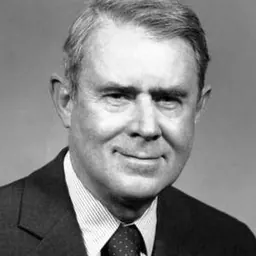
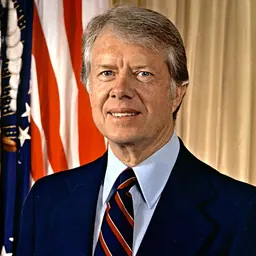
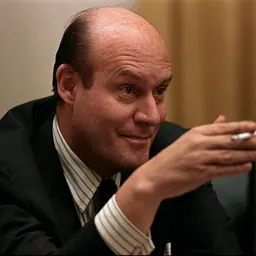
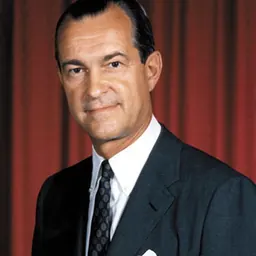
Related people
Same field, nearest in time

Contemporaries
People whose lives overlapped Paul Warnke's





Frequently asked questions
Who was Paul Warnke?
American diplomat and lawyer (1920–2001)
When was Paul Warnke born?
Paul Warnke was born in 1920 in Webster.
When did Paul Warnke die?
Paul Warnke died in 2001 in Washington, D.C..
What was Paul Warnke's occupation?
Paul Warnke was a diplomat, lawyer and jurist.
What nationality was Paul Warnke?
Paul Warnke was American.
Sources & further reading
Cite this page
APA: Biography.guide. (2026). Paul Warnke. https://biography.guide/paul-warnke/
MLA: "Paul Warnke." Biography.guide, https://biography.guide/paul-warnke/.
Chicago: "Paul Warnke." Biography.guide. https://biography.guide/paul-warnke/.
Data last updated: 2026-09-25 · Spot an error? Report a correction.
Page generated 2026-09-27 05:07 UTC