
About Paul Metcalf
Lived 1917 – 1999 (aged 81). Paul Metcalf was an American poet and writer.
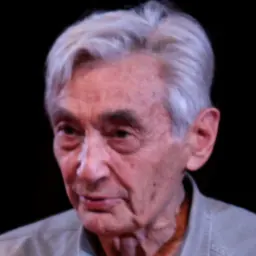
Paul C. Metcalf (7 November 1917 – 21 January 1999) was an American writer. He wrote in verse and prose. Devoted admirers included Robert Creeley, William Gass, Wendell Berry, Guy Davenport, Howard Zinn, and Bruce Olds. His books include Will West, Genoa (1965), Patagoni (1971), Apalache (1976), The Middle Passage (1976), Zip Odes (1979), and U.S. Dept. of the Interior (1980). He was the great-grandson of one of his major literary influences, Herman Melville.
Biography Paul Metcalf was born in 1917 in East Milton, Massachusetts. He attended Harvard but disliked it and dropped out in the first year. In 1942, he married Nancy Blackford of South Carolina. Over the next two decades the couple spent long periods in the South.
Material, preoccupations, form Metcalf's work draws on a wide range of material, including history, anthropology and folklore, travel narratives, geography, Indian lore, geology, and physiology. His work is difficult to classify according to the conventional categories of essay, journal, and fiction; thus his label as an "experimental" writer.
Form and structure are of utmost importance to his art. Characteristic of his method is the assemblage of texts from a variety of sources fused into a new whole, and much of his work melds these several voices with that of his own. His earliest works used common fictional devices (storyline, characterization, dialogue), but soon Metcalf began pushing past such conventions. His novel Genoa (1965), subtitled "A Telling of Wonders," is a portrait of two physically deformed brothers, one a vagabond / murderer, and the other, a mediocre doctor and the narrator of the story. Interleaved with their story are passages from Melville and the journals of Christopher Columbus, dropped into the mind of the narrator. These serve to mythologize the events of the novel. The writer Guy Davenport described Genoa as being a "built" thing: "an architecture of analogies, similitudes, and Melvillean metaphor."
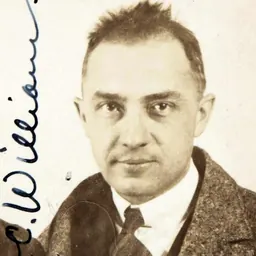
In later works, Patagoni (1971), for instance, and especially by Apalache (1976), the semblance of story is gone. Apalache is a collage of texts taken from early American journals, exploration narratives, and newspaper articles that Metcalf uses to reconstruct American history in epic scope and form. Like William Carlos Williams before him, Metcalf freely mixes verse and prose.
Waters of Potowmack (1982), a documentary history of the Potomac River, and other works such as U.S. Dept. of the Interior (1980) and I-57 (1988), continue Metcalf's preoccupation with "juxtaposition" and documentary forms. Other Metcalf works include The Island (1982), Golden Delicious (1985), and Huascaran(1997).
In describing his technique, Metcalf uses the word "juxtaposition": the union of seemingly disparate or disjointed elements. These elements, what the poet Donald Byrd refers to as "immense rhymes," are the building blocks of Metcalf's books. Greater than single words, they are often whole passages from other texts. "The difference is simply the size and proportion of the units I use: instead of words, I use whole lives, concepts, episodes, epochs." Metcalf quotes a remark of Edgar Allan Poe as it applies to his own work, "To originate, is carefully, patiently, and understandingly to combine." He emphasizes the organizing intelligence as opposed to random association and the "cut-ups" that are a hallmark of writers such as William Burroughs." "polyphonic," emphasizing the multitude of voices within that blend into one. His work was influenced by Ezra Pound (especially the Cantos), William Carlos Williams (Paterson, In the American Grain), and Charles Olson (Call Me Ishmael, parts of the Maximus Poems).
Honors His papers from 1917 to 1999 are held in the Henry W. and Albert A. Berg Collection of English and American Literature, New York Public Library.
Works Will West. Asheville: Jonathan Williams, 1956. Genoa. Penland, NC: The Jargon Society, 1965. (Most recent edition of interest: Minneapolis: Coffee House Press, 2015.) Patagoni. Penland, NC: The Jargon Society, 1971. The Middle Passage: A Triptych of Commodities. Highlands, NC: The Jargon Society, 1976 Apalache. Berkeley, CA: Turtle Island Foundation, 1976. Zip Odes. Lawrence, KS: Tansy Press, 1979. Willie's Throw. San Francisco: Five Trees Press, 1979. U.S. Dept. of the Interior. Frankfort, KY: Gnomon Press, 1980. Both. [no location given]: The Jargon Society, 1982. Waters of Potowmack. San Francisco: North Point Press, 1982. The Island. Lawrence, KS: Tansy Press, 1982. Louis the Torch. Flushing, NY: CrossCountry Press, 1983. Golden Delicious. Tucson: Chax Press, 1985. Where Do You Put the Horse? Essays. Elmwood, IL: Dalkey Archive Press, 1986. Firebird. Minneapolis/Tucson: Chax Press & Granary Books, 1987. I-57. New Haven: LongRiver Books, 1988. Headlands: The Marin Coast at the Golden Gate. (Text by Metcalf; original photography, archival research, and book design by Miles DeCoster, Mark Klett, Mike Mandel and Larry Sultan, respectively.) Albuquerque: U of New Mexico P, 1989. “Winslow Homer and His Era.” Winslow Homer at the Addison. Andover, MA: The Addison Gallery of American Art, 1990. Pp. 33-70. Enter Isabel: The Herman Melville Correspondence of Clare Spark and Paul Metcalf. Edited and annotated by Metcalf. Albuquerque: University of New Mexico Press, 1991. Mountaineers Are Always Free! Flint, MI: Bamberger Books, 1991. Araminta and the Coyotes. Highlands, NC: The Jargon Society, 1991. “... and nobody objected.” Providence, RI: Paradigm Press, 1992. Three Plays. North Carolina Wesleyan College Press, 1993. (Containing An American Chronicle: A Two-Act Documentary Drama, The Confidence-Man, and The Players: A Documentary Comedy-Drama.) Collected Works. Vol. I: 1956-1976. Vol. II: 1976-1986. Vol. III 1987-1997. Introduction by Guy Davenport. Minneapolis: Coffee House Press. 1996-97. (Containing two previously unpublished works: Huascarán (a poem sequence), and “The White Whale of Kansas” (essay).) Merrill Cove. Minneapolis: Rain Taxi, 1998. (Limited edition chapbook, composed in 1956 and 1957.) From Quarry Road: Uncollected Essays and Reviews of Paul Metcalf. Edited and with an introduction by Robert Buckeye; preface by Jonathan Williams. East Middlebury: Amandla Publishing, 2002. Working the Stone: The Natural, Social, and Industrial History of the Village of Farnams, Town of Cheshire, County of Berkshire, Commonwealth of Massachusetts. With Lucia Saradoff. San Diego: San Diego State University Press, 2003.
Don’t just read it —
keep it.
Full-length biographies made to live with: read them, listen on the way to work, watch them tonight.
- E-book
- Audio
- Video
Instant download · yours to keep · every purchase keeps this site free
Important facts
People in Paul Metcalf's life
Named in this biography and alive at the same time




Related people
Same field, nearest in time

Contemporaries
People whose lives overlapped Paul Metcalf's

Frequently asked questions
Who was Paul Metcalf?
American writer (1917–1999)
When was Paul Metcalf born?
Paul Metcalf was born on 7 November 1917.
When did Paul Metcalf die?
Paul Metcalf died on 21 January 1999.
What was Paul Metcalf's occupation?
Paul Metcalf was a poet and writer.
What nationality was Paul Metcalf?
Paul Metcalf was American.
Sources & further reading
Cite this page
APA: Biography.guide. (2026). Paul Metcalf. https://biography.guide/paul-metcalf/
MLA: "Paul Metcalf." Biography.guide, https://biography.guide/paul-metcalf/.
Chicago: "Paul Metcalf." Biography.guide. https://biography.guide/paul-metcalf/.
Data last updated: 2026-09-20 · Spot an error? Report a correction.
Page generated 2026-09-27 05:01 UTC