
About Paul Martin
Lived 1883 – 1932 (aged 48). Paul Martin was an American illustrator and tennis player.
Paul Martin (June 6, 1883 – March 19, 1932) was an American commercial artist and illustrator. He designed the world's largest sign, which spanned a city block in Times Square from 1917 to 1924. He drew a poster supporting the war effort in 1918. His artwork appeared on twenty covers of Collier's between 1923 and 1927. Martin won Parents' Magazine "Cover of the Year" award from 1928 to 1930. He reshaped the long-running Fisk tire mascot in early 1930. This new character promptly appeared in thirteen issues of The Saturday Evening Post. Martin created the official poster for the Girl Scouts in 1931. It was displayed at their troop meetings from 1931 to 1937.
He played in sanctioned tennis tournaments around the New York metropolitan area from 1909 to 1931. This included the U.S. National Championships (now US Open) of 1920, 1921, and 1924. The Paul Martin singles tournament was held for eighty-four years, between 1932 and 2019. He played doubles with Franklin P. Adams, collaborated on a book with Howard R. Garis, and was an interclub teammate of Vincent Richards. His WWI poster has been displayed at the Tennis Hall of Fame since 1965.
Background The Golden Age of Illustration began in the 1880s. It coincided with major advancements in printing techniques. These included breakthroughs in the halftone process, which made commercial image printing more economical, feasible, and realistic. Consequently, the strenuous and time-consuming process of wood engraving was replaced with the highly accurate photoengraving. Howard Pyle—an artist, writer, teacher, and innovator—is often regarded as the "Father of American Illustration." Other Golden Age luminaries included Charles Dana Gibson, J. C. Leyendecker, Maxfield Parrish, Norman Rockwell, and N. C. Wyeth. However, most illustrators received little recognition. Critics perceived their artwork as commercially rather than creatively inspired. This was in direct contrast to fine art. Nevertheless, these illustrators communicated and documented people's aspirations, concerns, customs, humor, ideals, labor, morals, and social interests.
Major advancements in photographic equipment and technology occurred during the 1930s. This resulted in a decades-long shift from illustrated to photographic covers, Ultimately, the internet revolution forced numerous periodicals to either shut down or transition to digital formats. These shifts ended the era of hand-drawn covers.
Life He was born to Hannah A. (née Morrow) and Robert C. Martin (a brick merchant) in New York City on June 6, 1883. He was the second youngest of nine children, three of whom did not reach adulthood. The Martins resided on 31st St. in Manhattan, between 8th and 9th Aves., throughout the 1880s. They moved northward to Central Harlem on Edgecombe Ave. in 1890. Paul lost two sisters, aged one and sixteen, between 1891 and 1893. The family relocated to another section of Central Harlem at 129th St. and 5th Ave. in 1898. They belonged to the Twenty-fourth Street M. E. Church (until 1890) and Calvary Church (until 1908). His father was the superintendent of their Sunday schools.
Martin enjoyed drawing as a boy. His first regular job was as a brokerage clerk at age 16. He studied commercial art at the National Academy of Design between 1902 and 1906. His instructors included Charles Louis Hinton, Francis Coates Jones, George W. Maynard, and Edgar Melville Ward. His first career job was with the New-York Tribune in 1905. He succeeded the Tribune Stephen H. Horgan as art manager from 1906 to 1912. Martin continued to live at home during this time. The family moved from Upper Manhattan to rural Maplewood, New Jersey, in 1908. They lived near a train station, which allowed them to commute into Manhattan. Their new church was located two blocks away. He joined the local tennis club on centrally located Baker St. in 1909. His first two sanctioned tournaments were at Nyack and Morristown. His opening matches were played on August 31 and September 13, 1909. His older brother Ralph also debuted at Nyack, though one day earlier on August 30. Ralph was related to muralist Charles Yardley Turner through marriage. Paul's doubles partner while residing in Maplewood was a neighbor, Harry Balch, from 1909 to 1912.
Martin married Lauretta Willey at the First M. E. Church on Washington St. in Hoboken, New Jersey, in 1912. The Rev. Henry J. Johnston officiated. The couple had first met years earlier at . Lauretta's siblings were schoolteacher Emma and accountant Walter, who later owned the Willey Book Co. Their first home together was an apartment in the Bronx (University Heights neighborhood) from 1912 to 1915. They relocated one block east to another rental in 1915. The Martins actively participated in tennis tournaments, both with their local club and on the circuit. He worked for the innovative O. J. Gude Company from 1912 to 1919. It was the industry leader in outdoor advertising. His O. J. Gude office was first located at 935 Broadway (1912–13). It then moved to the Candler Building in Times Square, at 220 West 42nd (1913–19). He worked for the advertising firm Gotham Studios from 1919 to 1920. Its operations moved from 1133 Broadway (St. James Building) to East 24th St., near 4th (now Park) Ave., on January 1, 1920. Martin went freelance in August and rented a small studio in September 1920. It was located on East 27th St., between Lexington and 3rd Avenues. He could now work independently, with flexible hours and creative control. The drawback was income uncertainty. He joined the Artists' Guild
Paul and Lauretta moved from the Bronx to a rural, secluded, wooded section of Millwood, New York, in August 1925. Their first home doubled as an upstairs working studio from 1925 to 1932. The workplace included a darkroom and dedicated areas for easels and props. Natural northern light came in through the large side window. He occasionally used family members as models. His niece, Edna, is shown writing down the license plate number of a boy's wagon The Martins attended Highland (Ossining United) Methodist Church in downtown Ossining.
Martin underwent an operation for a stomach ulcer at Ossining Hospital on March 12, 1932. He died from complications one week later at age 48. The service was held at Highland Methodist Church. He was survived by three brothers and one sister. He was known in tennis circles for his athletic ability, active participation, friendliness, and sportsmanship. The following is a retrospective from the Bronxville Press in August 1932: "His presence was always felt by topnotchers [and regulars]. Paul Martin was a synonym for all that was clean and wholesome in the game." His wife Lauretta later lived in Mount Vernon, New York, from 1935 to 1972.
Collier's General-interest magazines flourished before the advent of television. One of them was the historically significant Collier's, which experienced a resurgence under editor William L. Chenery in 1925. Martin drew twenty covers for the magazine between 1923 and 1927. These included the Christmas issues of 1924 and 1926. Some artists created a niche for themselves by focusing on drawing comical situations, domestic follies, political satire, pretty women, or simple pleasures. Martin's recurring theme featured a boy engaged in various lighthearted moments. This youth appeared on eighteen covers of Collier's: bobbing for apples, loading up on desserts, shooting marbles, playing the flute, sporting a straw hat, shoveling snow, winding up a spinning top, carrying schoolbooks, eating holiday turkey, catching a baseball, playing football, going down a water slide, sleigh riding, gleefully swimming, saying grace, getting a buzz cut, working as a messenger, and daydreaming about fishing. Martin rarely veered off course. The most striking departure was a self-portrait. He depicted himself as a well-dressed, vocal spectator at the horse races.
His drawing style was simple yet bold, and nostalgically captured the bright, carefree innocence of youth. It resonated with people who had just lived through a catastrophic world war and an influenza pandemic. Martin excluded nonessential details such as extra figures, scenery, structures, and trees, which allowed viewers to make an instant connection. His paintings are often easily recognizable, since their themes and styles remained fairly consistent. They sometimes gave the illusion of three-dimensional depth. This effect was achieved by using techniques such as color intensity variation, linear perspective, and overlapping. His cover art almost always had a holiday or seasonal theme, or otherwise reflected the magazine's image. It only once directly corresponded to an inside article. The ones accepted came back with or without modification requests, while those rejected were sometimes submitted elsewhere. He then hired mostly local boys for photo sessions. Afterward, the film was developed into prints in a darkroom. He drew the preliminary and final versions, using these prints as guidelines. This process gave him more options and flexibility compared to using real-life models. It was also more practical, given children's natural tendency to be active and impatient. He interacted with them from behind the camera to capture the right facial expressions. His wife helped by preparing the models for their scenes.
Collier's advertising and circulation revenues steadily declined after World War II, primarily driven by the rapid rise of television. Collier's was forced to cease publication in December 1956. It covered a full city block in Times Square, between 43rd and 44th Streets. This panoramic light show was a major tourist attraction for seven years. The Wrigley name was synonymous with large-scale advertising through such massive displays. Martin created a poster with a double meaning for War Camp Activities in 1918. However, the title carried a broader meaning aligned with the War Camp Community Service's mission. It encouraged women to entertain off-duty soldiers, sailors, and marines by joining them in activities such as dancing, dining, sightseeing, socializing, and attending theater shows. A silkscreen version of the poster has been on display at the Tennis Hall of Fame since 1965. They depicted the Catskills of Sullivan County as a lively and refreshing vacation spot. He designed greeting cards for William Edwin Rudge, Inc., of Mount Vernon, New York. Martin drew a cheerful boy eating Heinz Baked Beans while confidently declaring, "I Know Beans," in 1927. He also created two posters for the American Junior Red Cross in 1929–30. The first was titled The Flag of Service the World Around. It featured children in festive costumes behind the globe, with one holding up a large Red Cross flag. The second was titled Juniors Helping Everywhere, with twenty miniature scenes. It showed children worldwide in various supportive roles.
Martin painted three advertisements for General Electric's distinctive, all-steel "Monitor Top" refrigerator in 1930. The first and most elaborate featured two boys running a lemonade stand. Their mother looked on with approval through the open kitchen window. It appeared simultaneously as a full-page ad in more than twelve magazines. The following complimentary review appeared in Printers' Ink, 1930: "Electric , 5 cents per glass,' reads the sign of the youthful shopkeepers. And the lads are soliciting trade in a strenuous manner, as a friendly dog enters into the spirit of the event with challenging barks. ... t is a picture filled with action and story-telling strength. But because the advertised product has been worked in so adroitly, the illustration seems doubly effective and relevant." —W. Livingston Larned. His other "Monitor Top" ads featured a girl playing with building blocks, and two dressed-up girls listening to an enthusiastic sales boy. One showed a young, banged-up football player, full of confidence after eating oats for breakfast. The other two emphasized the cereal's healthiness and deliciousness. These large 25-by-12-foot ads appeared on poster panels, which attracted the attention of passing motorists and pedestrians. Another showed a boy struggling to comprehend scientific theories.
Martin painted a contest-winning poster for the Girl Scouts in 1931. It was titled Usefulness Beauty Health Truth Knowledge. The contest was conducted by the Art Alliance of America. This organization brought together craftspeople and advertisers. There were two to three hundred submissions. The judging panel consisted of Ray Greenleaf, Rockwell Kent, John La Gatta, Neysa McMein, Edward A. Wilson, and W. T. Benda, who replaced Charles Dana Gibson. Martin's model for the poster was 14-year-old Barbara Smith of Darien, Connecticut, Her parents and Martin were lifelong friends. He served as best man at their wedding back in 1904. The Girl Scouts' national director, Josephine Schain, presented the top three winners with checks for $100, $200, and $300. These ceremonial exchanges took place at the Scouts' national headquarters at 670 Lexington Avenue in Manhattan. The three award recipients then posed together behind their entries. National president Birdsall Otis Edey was one of three consultants, along with executives Anne Hyde Choate and Genevieve Garvan Brady. The poster was placed in window displays for promotion. It also appeared on the covers of Girl Scout Equipment for Fall 1932 and Spring 1933. All printed images showed a modified version with three raised fingers instead of a salute. Martin remarked at the award ceremony, "Barbara seems the personification of all that Girl Scouting means. She is the very spirit of radiant, happy, and wholesome young girlhood, and my mind naturally turned to her immediately when I learned of the competition."
He was mentioned in a magazine for war veterans as follows: "The cover design on this issue of Foreign Service It was so named because former soldiers used that word when remembering their killed in WWI. "The original was painted in oil by the late Paul Martin, noted New York poster artist, who died suddenly on March 19th following a serious operation. The poster has been pronounced as one of the most striking and appropriate designs ever used ... to depict the symbolism of the Buddy Poppy." This red artificial flower was worn in honor of the fallen Allied soldiers. "It was completed shortly before the artist's death and is believed to have been his last important assignment. Those familiar with Paul Martin's career as an artist declare the 1932 Buddy Poppy poster to be one of his best creations." It was featured nationally in newspapers from 1932 to 1933.
Fisk tire boy
The Fisk Rubber Company was manufacturing tires for automobiles, bicycles, and carriages by 1901. Its factory was located along the riverfront in Chicopee Falls, Mass. The plant produced about 230,000 tires in August 1921. Fisk struggled financially before and during the Great Depression. It was acquired by U.S. Rubber (maker of the U.S. Royal brand) in 1940. Its worldwide subsidiaries—then under various names—adopted the unifying name of Uniroyal (1966). This mega-company merged with another to form Uniroyal Goodrich (1986). Its tire division was sold to Michelin (1990). Affiliated dealers of Fisk tires included Kmart (1962–78) and Discount Tire (1996–2015). There was an inactive period from 1981 to 1995.
Martin completely reshaped a once-famous and whimsical character in American advertising. It was the Fisk Rubber Company's "bedtime boy," who shouldered an oversized tire while tilting a lighted candle. It was introduced with the motoring message "Time to Re-tire," which debuted in 1910. This catchphrase relied on a simple double meaning. The lad's original prodigious yawn changed to a smile in early 1929. Martin was then commissioned late that year to create a slightly older, modern-day figure. The aim was to update the heavily publicized trademark while maintaining its . The boy's one-piece sleeper became a two-piece pajama set, enhanced with stylish zip-up slippers. His four-year-old nephew served as the model from the neck down. The essential props now featured the latest tread design and a more fashionable, less-tilted candleholder."
The publicity manager at Fisk provided an early review in March 1930: "a happy, smiling, 100 percent American boy in his little two-piece pajama, radiating good cheer, ruddy-cheeked and tousle-headed, snappy and wide awake, standing in the old-time pose." Many newspapers ran a story that complimented the new look from May to June 1930. The youngster was described as more energetic, robust, and modern ("in keeping with the times").
This updated character appeared in thirteen issues of The Saturday Evening Post, between February 8 and August 23, 1930. These ads promoted the newly introduced "Air-Flight" tires. A full-length, colorful print of the boy was publicly offered. The cheerful mascot showed up on various items, both with and without facial touch-ups. Three signed variants are pictured. It was featured on the front covers and endpapers of eight children's fairy tale or folktale books in 1931. The titles are Candy Land, Jack and the Bean Stalk, Little Black Sambo, Peter Rabbit, Pied Piper, , Three Little Kittens, and Three Little Pigs. They were generically subtitled Time to Re-tire: A Bedtime Story. The mascot also appeared on ashtrays, bridge score pads, cigarette cases, electric clocks, jigsaw puzzles, matchbooks, posters and rubber heel replacements for shoes. These were complimentary items for existing or potential customers. Martin's lively figure was depicted on retailers' data books, letterheads, mailing envelopes, and store windows. A miniature version showed up in The American Boy, Boys' Life, automotive magazines, and hundreds of newspapers from 1930 to 1934.
However, Fisk advertisements were fairly rare from 1931 to 1936. Roughly two-thirds of the Fisk dealers lost their franchises in November 1930. They failed to meet a new financial requirement. This drastic corporate downsizing aimed to reduce operating costs. It followed three consecutive years of declining sales and mounting debts. Martin's symbol was never firmly established through a strong promotional campaign. It would have involved significant—yet necessary—expenditures. Fisk ultimately defaulted on interest payments to bondholders and entered receivership on January 3, 1931. The restructuring process concluded with the naming of a new management team in May 1933. Based on public sentiment, they decided to bring back the original character in late 1934. This reversal was unusual, as other companies had successfully modernized their mascots despite the inherent risks.
Timeline: Transitional Overlaps: The previous character occasionally lingered after a changeover. Minor touch-ups were made in various years.
He built a reputation for drawing boys, which earned him the coveted commission.
Magazine cover illustrator His signature (or printed name) appears on all the covers. It remained fairly consistent—with a slanted t-crossbar, curved "P" and "M," an underline mark, and the first name stacked above the last name.
His cover artwork for Foreign Service was initially sold to Parents in 1930. However, the piece went unused and was subsequently sold to American Lithographic and then to Foreign Service. The 25th anniversary issue of Parents was dated October 1951. This silver jubilee cover featured miniatures of twenty-five previous covers (one for each year from 1926 to 1950). The composite included three paintings by Martin: October 1928, August 1929, and October 1930. He thus unofficially won Parents' Magazine "Cover of the Year" honors for 1928–30. Additionally, the publication's long-standing, two-word title debuted with that August 1929 issue.
Business Men's Lunch: cream pie, chocolate cake, rice pudding, and an ice cream sundae. Collier's, 1924 The following list contains thirty-seven known credits, including three from September 1925. These are all consumer magazines.
The American Girl (1917–1979): Oct 1931 Collier's (1888–1957): May 26, 1923; Feb 2, 1924; Jun 28, 1924; Jan 1, 1926; Feb 13, 1926; May 22, 1926; Dec 25, 1926; Feb 26, 1927; Farm & Fireside / Country Home (1877–1939): Nov 1923; Aug 1930 The Farmer's Wife (1897–1939): Jan 1931 Foreign Service (1914–present): May 1932 Die Hausfrau (1904–present): Apr 1936 Liberty (1924–1950): Sep 12, 1925 Feb 1929; May 1929; Aug 1929; Oct 1929; Feb 1930; Oct 1930 People's Home Journal (1885–1929): May 1928; Nov 1928 Good Hardware, Progressive Grocer, and Silent Hostess. Coincidentally, Martin's final model for Parents later became one of Progressive Grocer two associate editors from 1956 to 1961.
Book illustrator His artistic contributions to short stories include the following:"Short Turns and Encores" by Dorothy Parker and others, Saturday Evening Post, Jul 29, 1922, p. 16. "The Blanket" by Floyd Dell, Collier's, Oct 16, 1926, p. 18. "The Unfairway" by Burford Lorimer (son of George Horace Lorimer), Collier's, Dec 25, 1926, pp. 22–23. "Tragedy" by Eve Bernstein, Scribner's Magazine, Apr 1928, p. 479. "On the Dark Trail" by Franklin Holt (pseudonym of Russell M. Coryell), Scribner's Magazine, Jul 1928, p. 71.
The first six entries are fictional or semi-fictional children's books. The sixth is a collaboration with Howard R. Garis. This genre often required a more animated, imaginative, and whimsical drawing style (yet still in sync with the story). Artwork credits are given in parentheses.
Philus, the Stable Boy of Bethlehem, Edmund J. Cleveland, with a foreword by The Rt. Rev. Charles L. Slattery, Sep 1927 (dust jacket, frontispiece, facing pp. 52, 66, 124). It contains eleven moralistic, pseudo-narrative short stories spanning the church year. In the opener, a stable boy is present at the Nativity. Puck Chasers, Incorporated, Charles G. Muller, Sep 1927 (dust jacket, frontispiece, facing pp. 36, 89, 164, 176). Students popularize a sport by overcoming obstacles. The setting is the Fisk School for Boys, East Grand Rapids, Michigan. This book is one of the earliest about ice hockey. Its predecessors largely focused on a variety of winter sports. Araminta, Helen Cady Forbes, Nov 1927 (, , facing pp. 134, 212). Araminta turns eleven years old and finds an abandoned baby, who turns out to have been kidnapped. The Prince and the Pig's Gate, Robert Hugh Morris, May 1928 (DJ, FP, facing pp. 48, 134, 166). This collection has twenty-seven allegorical tales designed to teach moral lessons. The Baseball Detective, Charles G. Muller, Aug 1928 (DJ, FP, facing pp. 22, 132, 250). There are elements of baseball, competition, friendship, and mystery at an all-boys school. Chad of Knob Hill, Howard R. Garis, Sep 1929 (DJ, FP, pp. 14, 60, 85, 97, 163, 187, 213, 281). A Boy Scout troop marches past Chad, an overworked farmhand. He promptly decides to take their oath to become a Lone Scout. Garis also created stories about Uncle Wiggily, a gentlemanly rabbit afflicted with rheumatism. Stories of and Yesterday, Frederick Houk Law, editor, Feb 1930 (frontispiece). This instructional guide teaches older students how to read, write, and appreciate short fiction effectively. The Bookshelf for Boys and Girls, Clara Whitehill Hunt, , fall 1930 and fall 1931 (dust jackets, both sides). This authoritative catalog selects the best books for children.
Tennis
Martin debuted on the circuit in 1909. Martin was also ranked among the top thirty tennis players in the New York metropolitan area from 1920 to 1925 and 1928. Formal evaluation of metro players did not begin until 1920. He broke into the top twenty in 1923 and 1924. His forte was hitting accurate shots from the backcourt. Martin collected numerous awards in singles, doubles, and mixed doubles (with Lauretta) between 1919 and 1931. He won singles at the Sunningdale Country Club in 1920. This tournament was held in Scarsdale for the first time that year. Martin won the Lake George and Lake Mohonk singles championships of 1924. His opponents included future Hall of Famers Fred Alexander, Jean Borotra, Francis Hunter, Gerald Patterson, Vincent Richards, Bill Tilden, John Van Ryn, and Marie Wagner. Martin was a doubles partner and longtime clubmate of newspaper columnist Franklin P. Adams, who wrote "Baseball's Sad Lexicon." He was a teammate of 14-year-old Vincent Richards, the reigning national boys' champion.
Martin and Bill Tilden competed in the same tournament at least fifteen times, including the U.S. National Championships of 1920–21 and 1924. The latter was played at Forest Hills Stadium (opened in 1923) and on its outside courts from August 25 to September 2, 1924. Martin's second-round opponent was former co-world No. 1 Gerald Patterson of Australia. There was a two-day rain delay after the third set. Forty-one-year-old Martin won a set but lost the match, 4–6, 4–6, 9–7, 0–6. He later competed in four consecutive (ages 45 and over) at Forest Hills from 1928 to 1931.
He was a standout singles and doubles player for both the University Heights (Bronx, ) and County (Hartsdale, NY) tennis clubs. Martin was caught up in the fallout of a ruling in 1924. It prohibited players from writing for profit after a specified date. The distinction between amateurism and professionalism was hotly contested and debated from February to December 1924. Martin did not sign a circulated protest petition, but instead came out "in favor of a reconsideration of the matter," due to public dissatisfaction. He often acted as the referee for women's matches. He organized youth tournaments while serving on the Briarcliff Lodge Sports Club committee.
Ranked tennis players were surveyed for a magazine article in December 1929. They were asked, "Do you favor playing over all net cord shots, which occur during rallies?" Martin replied, "The outcome of many a match has been decided (more or less) by a net cord shot—for instance, Tilden and Johnston." [This alludes to their final match at Newport in 1919.] "No good sport enjoys winning in this way—and I don't believe the gallery enjoys it, either. We would not think of stopping a match in the middle of an important point and tossing a coin to see who wins the point. That is about what a net cord shot amounts to."
The Westchester County Tennis League was formed with six clubs in 1926. It staged the annual Paul Martin singles tournament eighty-four times between 1932 and 2019. This event was initiated by player-executive Fenimore Cady in June 1932. The winners had their names engraved on the base of a trophy-turned-cup donated by Lauretta in 1934. She and Paul both played in the (now US Open). They regularly teamed up in mixed doubles. His WWI poster was originally displayed in the main gallery of the Tennis Hall of Fame. Its gift shop offered reproductions on coffee mugs and postcards.
The following list includes only open or invitational tournaments sanctioned by the United States Lawn Tennis Association, with one exception. Their results largely determined player rankings and who qualified for the Nationals. Martin reached 30 of these finals, which are categorized below by the hosting club.
Keeping fit to do our bit. Poster in card form. Signed and dated in print, 1918.
Wins (12) Singles 1920: Sunningdale (Scarsdale, )
Doubles 1922: New York Athletic Club 1924: Lake George 1924: Lake Mohonk 1925: Lake George 1925: West Side (for veterans over age 39) 1930: Lake George 1931: Lake George
Mixed Doubles 1920: New York TC (with Lauretta; for married couples)
Runners-up (18) Singles 1919: Woodmere Club 1922: Essex County CC ; Powelton Club (Newburgh, N.Y.) 1923: Amackassin Club (Yonkers); Harlem TC (Manhattan) 1924: Oritani Field Club (Hackensack, N.J.) 1924: Stamford Yacht Club (Conn.) 1925: Lake George; Lake Mohonk 1930: Lake George
Doubles 1921: Greenwich ; Milford Field Club 1925: Lake Mohonk 1926: South Yonkers 1931: Lake Mohonk
Mixed Doubles 1921: Milford (Pa.) 1925: Lake George (with Lauretta) 1930: Lake George (with Lauretta)
Notes: These are the known finals. Results in mixed doubles were often not recorded. Martin also won many other tournaments, which were open only to members of the County Tennis Club in Hartsdale. The Martins sometimes played on the circuit while taking road trips.
Grand Slams (majors)
Memberships These spans were compiled from periodical and newspaper accounts: Maplewood (N.J.), 1909–12. County of Westchester (Hartsdale), 1926–32. Martin played on the circuit for 23 consecutive years, 1909–31. His older brother Ralph participated in tournaments in 1909, 1911, and 1921–22. The brothers were doubles partners at Woodmere in 1911. Excerpts from a firsthand account by sportswriter Allison Danzig:
Photo gallery
Don’t just read it —
keep it.
Full-length biographies made to live with: read them, listen on the way to work, watch them tonight.
- E-book
- Audio
- Video
Instant download · yours to keep · every purchase keeps this site free
Important facts
Family & relationships
People in Paul Martin's life
Named in this biography and alive at the same time




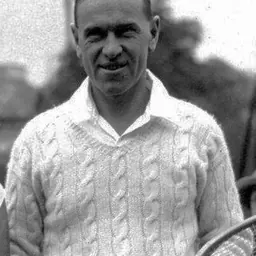

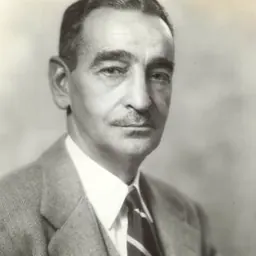

Related people
Same field, nearest in time




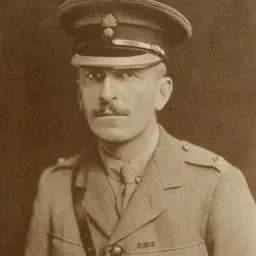
Contemporaries
People whose lives overlapped Paul Martin's

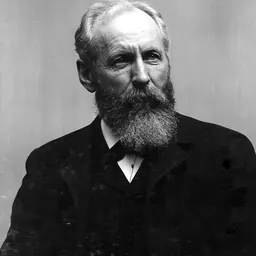

Frequently asked questions
Who was Paul Martin?
American commercial artist and illustrator (1883–1932)
When was Paul Martin born?
Paul Martin was born on 6 June 1883 in New York City.
When did Paul Martin die?
Paul Martin died on 19 March 1932 in Ossining.
What was Paul Martin's occupation?
Paul Martin was an illustrator and tennis player.
What nationality was Paul Martin?
Paul Martin was American.
Sources & further reading
· DBpedia: Paul Martin (illustrator)
Cite this page
APA: Biography.guide. (2026). Paul Martin. https://biography.guide/paul-martin-illustrator/
MLA: "Paul Martin." Biography.guide, https://biography.guide/paul-martin-illustrator/.
Chicago: "Paul Martin." Biography.guide. https://biography.guide/paul-martin-illustrator/.
Data last updated: 2026-09-22 · Spot an error? Report a correction.
Page generated 2026-09-27 05:18 UTC