
About Paul M. Bator
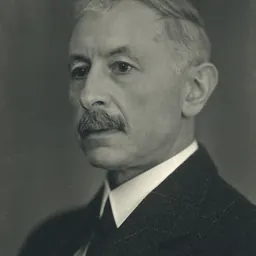
Lived 1929 – 1989 (aged 59). Paul M. Bator was an American academic.
Paul Michael Bator (June 2, 1929 – February 24, 1989) was a Hungarian-born American legal scholar, Supreme Court advocate, and academic expert on United States federal courts. He taught for almost 30 years at Harvard Law School and the University of Chicago Law School. He also served as the United States Deputy Solicitor General during the Reagan administration, in which capacity he argued and won the landmark administrative law case Chevron U.S.A. v. Natural Resources Defense Council. From 1984 to 2024, the Chevron doctrine governed the judicial interpretation of Congressional statutes that authorized federal regulators to make law.
He clerked for Justice John Marshall Harlan II of the United States Supreme Court.
Early life and education Bator was born in 1929 in Budapest, Hungary, to Victor and Franciska Bator. His father was an expert in banking law and taught at the University of Budapest. He had two siblings: his twin brother Peter, also an attorney, and Francis, an economist.
Bator moved with his parents to the United States in 1939, where his father managed the Amerikai-Magyar Nepsava, a Hungarian-language newspaper.
He attended Groton School, as did his two brothers. He went on to Princeton University, where he was the valedictorian, graduating in 1951 with an A.B., summa cum laude.
Career
Harvard Law School Following a brief period of private practice at the law firm Debevoise & Plimpton, Bator began teaching at Harvard Law School in 1959. While teaching his recommendation of students for clerkships carried a lot of weight with Harlan. He was promoted to full professor in 1962 and associate dean in 1971, serving in the latter capacity until 1975. He also co-authored the second (1973) and third (1988) editions of Hart & Wechsler's "The Federal Courts and the Federal System," a leading text on federal jurisdiction. Grove City College v. Bell, which applied provisions of Title IX of the Civil Rights Act narrowly; Clark v. Community for Creative Non-Violence, which denied that protesters' First Amendment rights were violated by a law prohibiting overnight sleeping in Washington, D.C. memorial parks; and Reagan v. Wald, which allowed the government to impose currency restrictions on travelers to Cuba. His most famous victory was Chevron U.S.A. v. Natural Resources Defense Council. Under the Chevron doctrine, when a regulated party claimed that a regulatory agency's ambiguous governing statute did not authorize a particular agency rule or adjudication, courts would defer to that agency's construction (if reasonable) of its own governing statute. The Chevron doctrine lasted for forty years until the Supreme Court overruled it in Loper Bright Enterprises v. Raimondo (2024).
In 1984, President Ronald Reagan nominated Bator to the United States Court of Appeals for the D.C. Circuit, but he withdrew his name due to illness.
University of Chicago Bator returned to Harvard in 1984, but departed due to "what he felt was an increasing factionalization at the law school and what he saw as its dominance by left-leaning faculty members."
In 1986, Bator joined the University of Chicago Law School, where he became the John P. Wilson Professor of Law. Bator simultaneously served as associate counsel with the firm Mayer, Brown & Platt, where he practiced appellate law. He also wrote an op-ed supporting Bork in the New York Times, explaining that it would not be "good for the country, in the long run, to encourage Senators to subject all [judicial] appointments to an ideological test." He opined that "conservative attacks on the 'extremist' and 'radical' Justice [Louis] Brandeis are this century's closest precedent for the attacks on Judge Bork today." In 2018, the award was replaced with the Joseph Story Award.
Past Bator Award recipients Year Professor 1990 Stephen L. Carter 1991 Randy Barnett 1992 Geoffrey Miller 1993 Akhil Amar 1994 Robert P. George 1995 Jonathan Macey 1996 Michael Stokes Paulsen 1997 John McGinnis 1998 Paul Cassell 1999 Eugene Volokh 2000 John F. Manning 2001 John Yoo 2002 Roderick Hills Jr. 2003 Adrian Vermeule 2004 Jonathan H. Adler 2005 Ernest A. Young 2006 Caleb Nelson 2007 Orin Kerr 2008 Saikrishna Prakash 2009 Nicole Stelle Garnett 2010 M. Todd Henderson 2011 Brian T. Fitzpatrick 2012 Eugene Kontorovich 2013 Nita A. Farahany 2014 Joshua D. Wright 2015 Joshua Kleinfeld 2016 Tara Leigh Grove 2017 William Baude
Don’t just read it —
keep it.
Full-length biographies made to live with: read them, listen on the way to work, watch them tonight.
- E-book
- Audio
- Video
Instant download · yours to keep · every purchase keeps this site free
Important facts
People in Paul M. Bator's life
Named in this biography and alive at the same time





Related people
Same field, nearest in time





Contemporaries
People whose lives overlapped Paul M. Bator's



Frequently asked questions
Who was Paul M. Bator?
American legal academic (1929-1989)
When was Paul M. Bator born?
Paul M. Bator was born on 2 June 1929 in Budapest.
When did Paul M. Bator die?
Paul M. Bator died on 24 February 1989 in Chicago.
What was Paul M. Bator's occupation?
Paul M. Bator was an academic.
What nationality was Paul M. Bator?
Paul M. Bator was American.
Sources & further reading
Cite this page
APA: Biography.guide. (2026). Paul M. Bator. https://biography.guide/paul-m-bator/
MLA: "Paul M. Bator." Biography.guide, https://biography.guide/paul-m-bator/.
Chicago: "Paul M. Bator." Biography.guide. https://biography.guide/paul-m-bator/.
Data last updated: 2026-09-20 · Spot an error? Report a correction.
Page generated 2026-09-27 05:06 UTC