
Paul Loudon
American athlete and sports coach
About Paul Loudon
Lived 1892 – 1953 (aged 61). Paul Loudon was a basketball player, american football player and baseball player.
Paul Witmer "Red" Loudon ( 1892 – December 1, 1953) was an American athlete and sports coach. After playing multiple sports in college for Dartmouth, Loudon started a coaching career, spending several years with his alma mater as well as the College of St. Thomas (now known as the University of St. Thomas) and the University of Minnesota. He later served as the president of several hockey leagues.
Early life and education
Loudon was born in 1892, and grew up in Troy, New York. He attended Dartmouth College, starring in football, baseball, and basketball. He played from 1910 to 1913 at end in football and was "regarded as one of the greatest ends in the history of the gridiron sport at the Hanover [Dartmouth] school," being selected to Walter Camp's All-America team according to one source. He was described by one newspaper as a "human battering ram."
As a senior in football, Loudon was listed as a first-team All-American in an article published by The Washington Times. He was also team captain in both basketball and baseball in his senior year.
After graduating, Loudon was given an award for being the best all-around student-athlete at Dartmouth. His name was later inscribed on the award.
Coaching career In June 1914, Loudon was named head basketball coach as well as assistant football coach at Dartmouth. He later became the freshman baseball coach.
After his first season at Dartmouth, it was reported that Rensselaer Polytechnic Institute (RPI) had offered Loudon a contract to be athletic director. The school later denied the report.
In February 1916, Loudon severed his relations with Dartmouth to enter the banking business in Minneapolis. In April, it was announced by Reverend John Dunphy that Loudon had accepted a position as head football coach at the College of St. Thomas (now known as the University of St. Thomas) in Minnesota. He was the successor to Earle T. Pickering. A six-game schedule was announced, with games against North Dakota, North Dakota Agricultural, Marquette, DePaul, Macalester, and St. Joseph's. He was succeeded by Bob Saxton as St. Thomas coach.
In 1919, Loudon returned to his alma mater, Dartmouth, to become an assistant coach. After the football season ended, he returned to Minnesota to serve as the basketball coach at St. Thomas. He later came back to Dartmouth as ends coach for the 1920 football season.
1922 Washburn-Crosby team. Top row, first from the left is Loudon.
In the 1921–1922 basketball season, Loudon coached Washburn-Crosby, leading them to the Minneapolis city championship game against Emerson.
Loudon started the training season with Dartmouth in 1922, but left in September to be named head assistant football coach at the University of Minnesota. Associated Press (AP) reports stated that he was going to coach the ends and assist with the backfield. Loudon helped Minnesota compile a record of 3–3–1 in his first year with the team. In July 1923, he resigned, stating he wanted to devote full time to his business affairs. "I dislike very much to give up my football duties at Minnesota for football is a hobby with me and I enjoy coaching," Loudon said. He requested a team be based in the city and was "so certain ... that Minneapolis [would] be permitted to enter the league that he rounded up a list of stars which should make an impressive show." In October 1924, Loudon was elected to the USAHA board of executives to a three-year term. The league disbanded following the 1924–25 season.
In 1926, Loudon became the head of the Central Hockey League (CHL). Around that time, he was named president of the Northwest Skating Association (NSA). In 1928, he was named vice president of the American Hockey Association (AHA). At the same time, Loudon served as an owner, president, and director of the Minneapolis Millers. He left the Millers after the 1929–30 season.
In the 1930–31 season, Loudon became the president of the Northwest Amateur Hockey Association (NAHA). In 1931–32, he became the president of the Central Hockey League (CHL). A February 1933 article in The Minneapolis Tribune was titled "Paul Loudon Proves Real Leader" and stated "the National Hockey league thrives because Frank Calder rules with an 'iron hand.' The Central Hockey league will thrive for the same reason as long as it chooses to keep Paul Loudon as its head." He remained president through the league's final year in 1934–35.
In the late 1930s, Loudon served as president of the Minneapolis Hockey Association, Inc. Loudon was elected president of the AHA in June 1944, succeeding Lyle Wright. The league was renamed the United States Hockey League (USHL) shortly afterwards. Although most of the teams supported his re-election in 1947, Loudon stated he did not wish to be league president again. The league's championship trophy was later named after him.
According to an article in the Star Tribune, it was through the "untiring efforts of such fine sportsmen as ... Paul Loudon" that hockey became one of the most popular sports in Minneapolis. He later became the president. He served as a member of the Board of Trustees of Carleton College in 1931 and was a member of Dartmouth's athletic board by 1935.
In August 1934, Loudon "utilized an old-time flying tackle" to capture a burglar in his home.
In 1941, Loudon became the Minnesota representative on Investment Bankers of America (IBA). The following year, he was elected executive manager of the Ninth Federal Reserve District victory fund committee. In 1943, he was a member of the county war finance committee. In 1946, Loudon was elected president of the Minneapolis Civic Council, succeeding William D. Naffziger.
On December 1, 1953, Loudon died at the age of 61, at the Northwestern Hospital in Hennepin County, following a two-week illness. An article in The Minneapolis Star said "It didn't make any difference whether it was baseball, football, hockey, tennis or golf, he always was on hand enjoying every minute of every competitive activity. He was a student of all of them. His tremendous enthusiasm, his fine leadership and his willingness to help all sports will be sorely missed in these parts." An article in the Minneapolis Morning Tribune said the following:
Don’t just read it —
keep it.
Full-length biographies made to live with: read them, listen on the way to work, watch them tonight.
- E-book
- Audio
- Video
Instant download · yours to keep · every purchase keeps this site free
Important facts
People in Paul Loudon's life
Named in this biography and alive at the same time



Related people
Same field, nearest in time

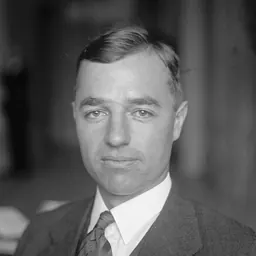
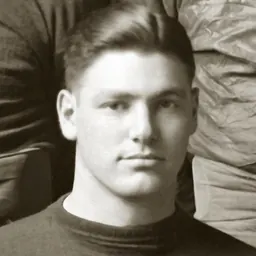
Contemporaries
People whose lives overlapped Paul Loudon's
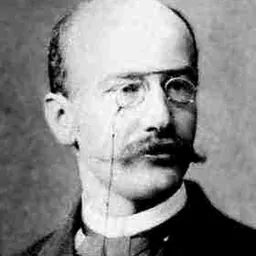
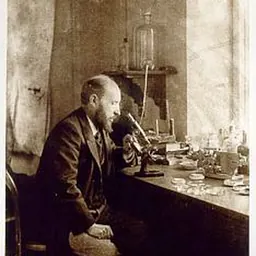



Frequently asked questions
Who was Paul Loudon?
American athlete and sports coach (1892-1953)
When was Paul Loudon born?
Paul Loudon was born on 7 February 1892.
When did Paul Loudon die?
Paul Loudon died on 1 December 1953 in Hennepin County, Minnesota.
What was Paul Loudon's occupation?
Paul Loudon was a basketball player, american football player and baseball player.
Sources & further reading
Cite this page
APA: Biography.guide. (2026). Paul Loudon. https://biography.guide/paul-loudon/
MLA: "Paul Loudon." Biography.guide, https://biography.guide/paul-loudon/.
Chicago: "Paul Loudon." Biography.guide. https://biography.guide/paul-loudon/.
Data last updated: 2026-09-20 · Spot an error? Report a correction.
Page generated 2026-09-27 05:29 UTC