
About Paul Hugh Emmett
Lived 1900 – 1985 (aged 84). Paul Hugh Emmett was an American chemist, engineer, physicist and university teacher, known for BET theory and Catalysis.
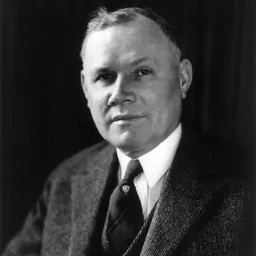
Paul Hugh Emmett (September 22, 1900 – April 22, 1985) was an American chemist best known for his pioneering work in the field of catalysis and for his work on the Manhattan Project during World War II. He spearheaded the research to separate isotopes of uranium and to develop a corrosive uranium gas. Emmett also made significant contributions to BET Theory which explains the relationship between surface area and gas adsorption. He served on the faculty of Johns Hopkins University for 23 years throughout his scientific career.
Early life Paul Hugh Emmett was born on September 22, 1900, in Portland, Oregon to John Hugh Emmett (1864–1943) and Lavina Hutchins (1870–1941). Emmett's father was a railroad engineer. For a year in his early childhood, Emmett's family lived in a rail car while his mother worked as a cook for the rail company. Emmett attended Washington High School where he excelled in language and mathematics classes. Among his acquaintances in high school was Linus Pauling, future two-time Nobel Prize winner. Emmett had a fear of public speaking, so he enrolled in the debate team in both high school and college to gain proficiency. His first high school science classes, physics and chemistry, were taken during his senior year of high school. Emmett's senior year chemistry teacher, William Green, is said to have inspired him to pursue a career in chemistry. Later in life, Emmett expressed that perhaps high schools are "simply not flexible enough for the people in the genius class."
In 1918, Emmett began his studies in chemical engineering at Oregon State University. After completing his bachelor's degree in 1922, Emmett pursued his PhD in physical chemistry at the California Institute of Technology under Arthur F. Benton. At the time, the California Institute of Technology was paying PhD students nearly double what other programs were offering, making the university an enticing choice for Emmett.
Career In 1925, Emmett accepted a teaching position at Oregon State University, but only remained for a year. In 1926, he moved to Washington, D.C. to work at the US Department of Agriculture's Fixed Nitrogen Research Laboratory. For over a decade, Emmett led experiments attempting to incorporate catalysis into the synthesis of ammonia.
Emmett joined Johns Hopkins University in 1937 to establish the Department of Chemical and Gas Engineering alongside Ralph Witt, Charles Bonilla, and Lloyd Logan. He was the chair of the department from 1937 to 1943. During this period, Emmett published his famous work on the Brunauer-Emmett-Teller (BET) Theory, which later earned him a Nobel Prize in Chemistry nomination in 1967.
In 1943, Emmett left Johns Hopkins University to become a division chief on the Manhattan Project at Columbia University under the directive of Harold Urey. For 16 months, Emmett's lab focused on separating uranium isotopes and converting uranium into a corrosive gas.
Death and legacy Emmett had Parkinson's disease and a brain tumor during the later stages of his life. Emmett's thesis was on the autocatalysis of the nickel and iron metal oxide reduction reaction with hydrogen gas. In 1925 while at Caltech, Emmett and Linus Pauling published a paper together on the crystal structure of barium sulfate.
Nitrogen fixation At the Fixed Nitrogen Research Laboratory, Emmett's research goals were to study nitrogen fixation and its applications to the production of fertilizer, food, and explosives. Emmett also studied the synthesis and decomposition of ammonia over iron catalysts and gaseous adsorption during his 11 years at this lab. He used stable nitrogen isotopes to study the mechanisms of the catalytic reactions. The ramifications of this theory are immense in the catalysis field and this theory is still the "most frequently used method for surface area determinations of porous carbons."
Notable publications
Catalysis vol 1-5 (1954 - 1957) Absorption of Gases in Multimolecular Layers (1938) Calculation of Thermodynamic Functions of Adsorbed Molecules from Adsorption Isotherm Measurements: Nitrogen on Graphon (1951) The Catalytic Synthesis of Water Vapor in Contact with Metallic Nickel (1925) The Reduction of Nickelous and Ferric Oxides by Hydrogen (1925) The Crystal Structure of Barite (1925)
Don’t just read it —
keep it.
Full-length biographies made to live with: read them, listen on the way to work, watch them tonight.
- E-book
- Audio
- Video
Instant download · yours to keep · every purchase keeps this site free
Important facts
People in Paul Hugh Emmett's life
Named in this biography and alive at the same time



Related people
Same field, nearest in time


Contemporaries
People whose lives overlapped Paul Hugh Emmett's




Frequently asked questions
Who was Paul Hugh Emmett?
American chemical engineer (1900–1985)
When was Paul Hugh Emmett born?
Paul Hugh Emmett was born on 22 September 1900 in Portland.
When did Paul Hugh Emmett die?
Paul Hugh Emmett died on 22 April 1985 in Portland.
What was Paul Hugh Emmett's occupation?
Paul Hugh Emmett was a chemist, engineer, physicist and university teacher.
What was Paul Hugh Emmett known for?
Paul Hugh Emmett was known for BET theory and Catalysis.
What nationality was Paul Hugh Emmett?
Paul Hugh Emmett was American.
Sources & further reading
Cite this page
APA: Biography.guide. (2026). Paul Hugh Emmett. https://biography.guide/paul-hugh-emmett/
MLA: "Paul Hugh Emmett." Biography.guide, https://biography.guide/paul-hugh-emmett/.
Chicago: "Paul Hugh Emmett." Biography.guide. https://biography.guide/paul-hugh-emmett/.
Data last updated: 2026-09-23 · Spot an error? Report a correction.
Portrait: Wikimedia Commons · author & licence
Page generated 2026-09-27 05:08 UTC