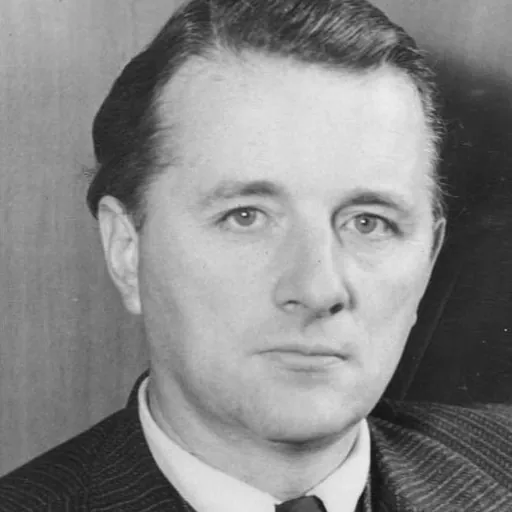
About Paul Harteck
Lived 1902 – 1985 (aged 82). Paul Harteck was an Austrian chemist and nuclear physicist.
Paul Karl Maria Harteck (20 July 190222 January 1985) was an Austrian physical chemist. In 1945 under Operation Epsilon in "the big sweep" throughout Germany, Harteck was arrested by the allied British and American Armed Forces for suspicion of aiding the Nazis in their nuclear weapons program and he was incarcerated at Farm Hall, an English house fitted with covert electronic listening devices, for six months.
Education
Harteck studied chemistry at the University of Vienna and the Humboldt University of Berlin from 1921 to 1924. He received his doctorate at the latter under Max Bodenstein in 1926. From 1926 to 1928 he was Arnold Eucken’s teaching assistant at the University of Breslau.
Career
From 1928 to 1933, Harteck was a staff scientist at the KWI für physikalische Chemie und Elektrochemie (KWIPC) (Kaiser Wilhelm Institute for Physical Chemistry and Elektrochemistry) located in Dahlem-Berlin, where he worked with Karl Friedrich Bonhoeffer on experiments on parahydrogen and orthohydrogen. While at the KWIPC, he completed his habilitation in 1931 at the Humboldt University of Berlin
Upon his return from England in 1934, he became an ordinarius professor and director of the physical chemistry department at the University of Hamburg. From 1937, he was an advisor to the Heereswaffenamt (HWA, Army Ordnance Office). In April 1939, along with his teaching assistant Wilhelm Groth, Harteck made contact with the Reichskriegsministerium (RKM, Reich Ministry of War) to alert them to the potential of military applications of nuclear chain reactions. From that year, his department as a whole did research for the HWA, with emphasis on uranium isotope separation. From 1940, with Hans Suess, his focus was on the use of heavy water as a neutron moderator. In 1941, his department constructed a conversion unit for, then I.G. Farben controlled, Norsk Hydro in German-occupied Norway for the catalytic production of heavy water. The Norwegians were forced to install the plant at their own cost, as their contribution to German war effort. In 1942, with the help of Werner Heisenberg, Harteck circumvented an appointment in Russia. In February 1943, Harteck and his colleague Johannes Jensen suggested a new type of centrifugal isotope separation, which was adopted by the Anschütz Company. Under his supervision Wilhelm Groth conducted the last enrichment experiments with the ultracentrifuge in Celle, a small town 120 km south of Hamburg. In late spring 1945, Harteck was arrested by the allied British and American Armed Forces and incarcerated at Farm Hall for six months under Operation Epsilon. In 1946, upon his return from incarceration, he became director of the chemistry department at the University, a position he held until 1950. In 1937, 1952 and 1972, he was nominated for the Nobel Prize in Chemistry. At the Rensselaer Polytechnic Institute he provided leadership in chemical kinetics, and especially in atom and radiation chemistry. He continued research in nitrogen reactions and the fixation of nitrogen and the new field of research in the investigation of the chemistry and photochemistry of the upper atmosphere, including planetary atmospheres. He retired from Rensselaer in 1982 and died at his home in Santa Barbara, California in 1985.
Honors and awards
Harteck was the recipient of numerous awards during his career and was awarded several honors due to his pioneering work in the study of parahydrogen, production and reactions of oxygen atoms, xenon (photochemical) lamp, gas centrifuge enrichment of isotopes, and photochemical isotope separation. He was the recipient of the Jean Servais Stas Medal (1957) and the Wilhelm Exner Medal (1961). He received an honorary doctoral degree in 1966 from the University of Bonn. In 1977 he was a co-recipient of the Krupp Award (1977) by the Alfried Krupp von Bohlen und Halbach Foundation for his efforts on isotope separation. He was elected as an honorary member of the Société Royale de Chimie Belgique and was awarded the Grand Decoration of Honor of Austria in 1978.
Paul Harteck Lecture Series
After his retirement in 1982, the Rensselaer Polytechnic Institute established the prestigious Paul Harteck Lecture Series, which recognizes internationally exceptional contributions to the advancement of Physical Chemistry. There have been 19 recipients of the lectureship in the period 1982-2026, including five Nobel Laureates.
Lecturers
Year Lecturer Affiliation Lecture title 1982 John C. Polanyi University of Toronto In the Footsteps of Paul Harteck: What We Can Learn from Feeble Luminescence 1983 Peter P. Sorokin IBM Study of Chemical Transients by Time-Resolved Infrared Spectral Photography 1984 Isaac F. Silvera Harvard University Hydrogen and Ultrahigh Pressure New States of Simple Matter 1985 Gerhard Herzberg National Research Council Canada Spectra and Structure of Molecular Ions 1986 Jerome Karle Naval Research Laboratory Structural Chemistry from X-Ray Diffraction 1987 Ivar Giaever Rensselaer Polytechnic Institute and General Electric Research Laboratory Detection of Cells and Enzymes Using an Electric Field 1988 Dudley R. Herschbach Harvard University Electronic Structure in Strange Dimensions 1990 Johannes Georg Bednorz IBM Research – Zurich High Temperature Superconductivity - A Challenge 2000 Andreas C. Albrecht Cornell University The Nonlinear Spectroscopies: Ultrashort Timing and Precise Frequency Measurements with Noisy Light 2006 Richard P. Van Duyne Northwestern University Molecular Plasmonics for Surface Enhanced Sensing and Spectroscopy 2007 Lewis E. Kay University of Toronto Seeing the Invisible by Solution NMR Spectroscopy 2009 Edward I. Solomon Stanford University Spectroscopic Methods in Bioinorganic Chemistry: Blue to Green to Red Copper Sites 2010 James H. Prestegard University of Georgia Carbohydrates as Mediators of Cell-cell Communication 2014 Lene Vestergaard Hau Harvard University Quantum Control of Light and Matter: From the Macroscopic to the Nanoscale 2016 Cynthia M. Friend Harvard University Informing Catalyst Design Through Fundamental Studies 2018 Gregory D. Scholes Princeton University Probing Ultrafast Chemical Dynamics Inspired by the Rhythms of Fireflies 2024 Gabriela Schlau-Cohen Massachusetts Institute of Technology Why Don't Plants Get Sunburn? 2024 Victor S. Batista Yale University Simulating Chemistry on Bosonic Quantum Devices 2026 Dimitrios A. Pantazis Max Planck Society Molecular Principles of Solar Energy Conversion in Photosynthesis
Internal reports
The following reports were published in Kernphysikalische Forschungsberichte (Research Reports in Nuclear Physics), an internal publication of the German Uranverein. The reports were classified Top Secret, they had very limited distribution, and the authors were not allowed to keep copies. The reports were confiscated under the Allied Operation Alsos and sent to the United States Atomic Energy Commission for evaluation. In 1971, the reports were declassified and returned to Germany. The reports are available at the Karlsruhe Nuclear Research Center and the American Institute of Physics.
Paul Harteck, Johannes Jensen, Friedrich Knauer, and Hans Suess Über die Bremsung, die Diffusion und den Einfang von Neutronen in fester Kohlensäure und über ihren Einfang in Uran G-36 (19 August 1940) Paul Harteck Die Produktion von schwerem Wasser G-86 (December 1941) Paul Harteck Die Trennung der Uranisotope G-88 (December 1941) Paul Harteck and Johannes Jensen Der Thermodiffusionseffekt im Zusammenspiel mit der Konvektion durch mechanisch bewegte Wände und Vergleich mit der Thermosiphonwirkung G-89 (18 February 1941) Paul Harteck Die Gewinnung von schwerem Wasser G-154 (26 February 1942) Paul Harteck and Johannes Jensen Berechnung des Trenneffektes und der Ausbeute verschiedener Zentrifugenanordnungen zur Erhöhung des Wirkungsgrades einer einzelnen Zentrifuge G-158 (February 1943) Paul Harteck, Johannes Jensen, and Albert Suhr Über den Zusammenhang zwischen Ausbeute und Trennschärfe bei der Niederdruckkolonne G-159 Paul Harteck Paul Harteck’s Institute Papers, Volume 1-6 G-341
Selected publications
Articles
A. Farkas, L. Farkas, P. Harteck Experiments on Heavy Hydrogen. II. The Ortho-Para Conversion, Proceedings of the Royal Society of London. Series A. Vol. 144, No. 852, pp. 481–493 (29 March 1934) M. L. E. Oliphant, P. Harteck, Lord Rutherford Transmutation Effects Observed with Heavy Hydrogen, Proceedings of the Royal Society of London. Series A. Vol. 144, No. 853, pp. 692–703 (1 May 1934)
Books
K. F. Bonhoeffer and P. Harteck, Grundlagen Der PhotoChemie (Verlag Von Theodor Steinkopff, 1933) Konrad Beyerle, Wilhelm Groth, Paul Harteck, and Johannes Jensen Über Gaszentrifugen: Anreicherung der Xenon-, Krypton- und der Selen-Isotope nach dem Zentrifugenverfahren (Chemie, 1950); cited in Walker, 1993, 278.
Don’t just read it —
keep it.
Full-length biographies made to live with: read them, listen on the way to work, watch them tonight.
- E-book
- Audio
- Video
Instant download · yours to keep · every purchase keeps this site free
Important facts
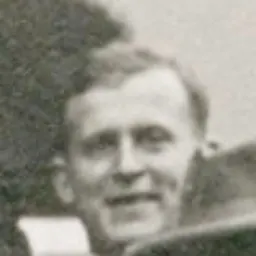
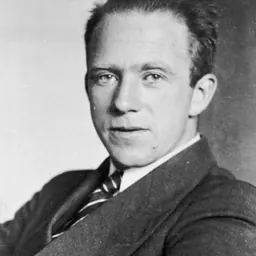
People in Paul Harteck's life
Named in this biography and alive at the same time

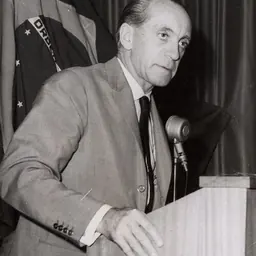

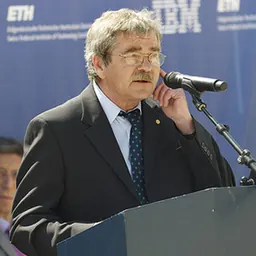
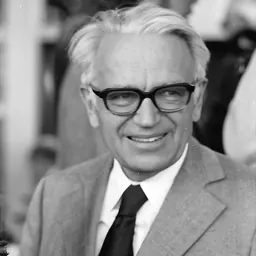

Related people
Same field, nearest in time


Contemporaries
People whose lives overlapped Paul Harteck's




Frequently asked questions
Who was Paul Harteck?
German chemist (1902–1985)
When was Paul Harteck born?
Paul Harteck was born on 20 July 1902 in Vienna.
When did Paul Harteck die?
Paul Harteck died on 22 January 1985 in Santa Barbara.
What was Paul Harteck's occupation?
Paul Harteck was a chemist and nuclear physicist.
What nationality was Paul Harteck?
Paul Harteck was Austrian.
Sources & further reading
Cite this page
APA: Biography.guide. (2026). Paul Harteck. https://biography.guide/paul-harteck/
MLA: "Paul Harteck." Biography.guide, https://biography.guide/paul-harteck/.
Chicago: "Paul Harteck." Biography.guide. https://biography.guide/paul-harteck/.
Data last updated: 2026-09-24 · Spot an error? Report a correction.
Portrait: Wikimedia Commons · author & licence
Page generated 2026-09-27 05:09 UTC