
About Paul Gilmore
Lived 1873 – 1962 (aged 88–89). Paul Gilmore was an American actor, stage actor, screenwriter and film actor.
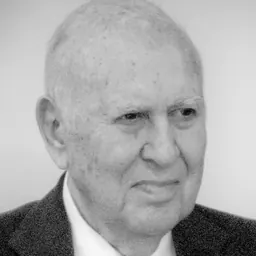
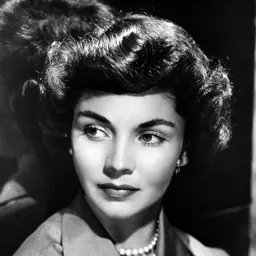
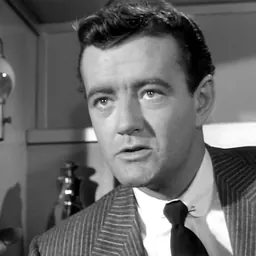
Paul Gilmore (July 14, 1873 – 1962) was a popular stage actor of the late 19th and early 20th centuries who also appeared in no fewer than 10 silent films. Additionally, he owned and managed for many years the Cherry Lane Theatre in New York City – giving work to such future stars as Robert Walker Sr., Jennifer Jones and Carl Reiner. In his declining years, he and his daughter, Virginia, operated the Gilmore Summer Stock Theatre in Duluth, Minnesota.
Early career Paul Howard Gilmore was born July 14, 1873, in Milwaukee, Wisconsin. His parents intended him to pursue a law career, but as a teenager Gilmore developed an interest in acting when he performed in amateur plays at Milwaukee's Grand Opera House, which was owned by his successful publisher father. Theatrical producer Jacob Litt saw Gilmore perform and, in 1891, offered him a role in his traveling show, The Ensign. On a lark, Gilmore accepted, intending to stay with the company for a few weeks and then return home to study law. He never did, instead continuing to perform with Litt's players in a number of successful productions that included Uncle Tom's Cabin and In Old Kentucky. By 1896 he had left Litt's Players and gained stature with Charles Frohman in plays such as The Wife, Americans Abroad and Sweet Lavender.
Film pioneer In addition to his stage work, Gilmore participated in the early development of motion pictures in the United States. Starting in 1897, he performed short "character studies" on film for the American Mutuoscope Company (later to become the Biograph Company) He also claimed to have appeared in one Edison feature, The Artist's Model, in 1918,
On June 17, 1897, Gilmore married Regina Cooper, the daughter of millionaire wagon maker A.A. Cooper of Dubuque, Iowa, Two years later, on Sept. 9, 1899, Gilmore's wife delivered twins – a boy and a girl. Regina Cooper Gilmore died of heart failure two days after giving birth. Gilmore allowed A. A. Cooper to assume custody of the children, give them the Cooper surname and raise them, while he continued to tour.
Gilmore's son, Paul Gilmore Cooper, died in 1916 after leaping off a train on which he had hitched a ride. When Gilmore's daughter, Regina, reached maturity, she joined her father in New York, adopted the stage name of Virginia, and assisted him in his theatrical work for the rest of his life.
Near-fatal accident Poster for The Musketeers, circa 1899Three months after the death of his wife, Gilmore was nearly killed in a production of The Musketeers in Phoenix, Arizona. On Dec. 16, 1899, Gilmore and two other actors were critically wounded when they were shot with live rounds that had accidentally been loaded into a stage pistol. Gilmore received six wounds, the most serious in his legs. Gilmore was at first not expected to live; when he did, doctors gave him little chance of being able to return to the stage. A bullet was removed from his knee in March 1900, after which he began to recover. By October of that year, he was again on the road, appearing in Under the Red Robe.
Actor Lewis Monroe died of lockjaw a month after the accident as the result of a bullet wound to the hand.
Middle career The Paul Gilmore Cherry Lane TheatreGilmore reached full star status in late 1900 with his performance in The Dawn of Freedom at the Fourteenth Street Theatre in New York City. In November of that year, he married actress Ethel Elizabeth Cauley, while on tour in Staunton, Virginia.
In addition to operating his own touring stage company and acting in productions throughout the United States, Gilmore began making feature films in 1915. By 1920, he had starred or had major roles in nine movies and accumulated more than $225,000 in cash and tangible assets, including of land on Anna Maria Island in Florida.
The Isle of Destiny, a six-reeler, performed well when it premiered in New York theaters, and Gilmore planned at least two other films for production on Anna Maria Island. But his speculations in real estate failed, and Gilmore lost all his assets and most of his cash. He returned to New York City, where he settled in Greenwich Village over a tobacco warehouse that he would transform into the Paul Gilmore Cherry Lane Theatre. The theater opened on July 14, 1949, with a production of This Thing Called Love. Gilmore operated the theater until age and declining health forced him to sell it in 1955.
Gilmore and his daughter retired to Dubuque, Iowa, where they resided at 418 Raymond Place. Gilmore died while wintering in Palm Springs, Florida, on December 29, 1962, at the age of 89. He is buried in Mt. Olivet Cemetery in Key West, Iowa.
Regina Cooper Gilmore died in Dubuque on Sept. 22, 1981. Upon her death, the Gilmore estate, which was valued in excess of $1 million, was divided among relatives and the church, Catholic charities and Saint Raphael's Cathedral.
Filmography
Feature films The Isle of Destiny (1920) .... Jim Stafford The Mad Woman (1919) The Artist's Model (1918) The Shrine of Happiness (1916) .... Ted Clark The House of Mystery (1926) The Other Girl (1920) .... Rev. Clifton Bradford Rosemary (1915) .... Capt. William Westwood A Woman's Wiles (1915) The Penitentes (1915) .... Colonel Juan Raca The Lost Secret (1915) The Conjurer's House (19??)
Edison/Biograph Shorts The Pillow Fight (1897) The Vanishing Lady (1897) The Miser (1897) Herman the Great (1897) Caught In the Act (1897) The Waiter (1898)
Don’t just read it —
keep it.
Full-length biographies made to live with: read them, listen on the way to work, watch them tonight.
- E-book
- Audio
- Video
Instant download · yours to keep · every purchase keeps this site free
Important facts
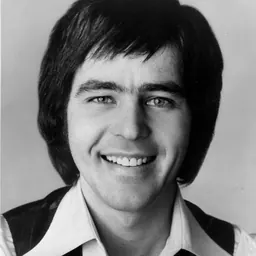
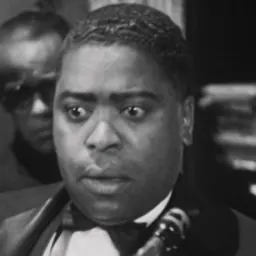
People in Paul Gilmore's life
Named in this biography and alive at the same time


Related people
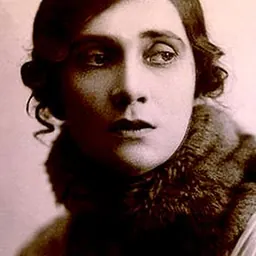
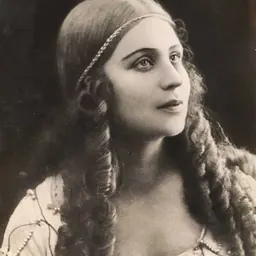
Same field, nearest in time

Contemporaries
People whose lives overlapped Paul Gilmore's



Frequently asked questions
Who was Paul Gilmore?
American actor (1873-1962)
When was Paul Gilmore born?
Paul Gilmore was born in 1873.
When did Paul Gilmore die?
Paul Gilmore died on 29 December 1962.
What was Paul Gilmore's occupation?
Paul Gilmore was an actor, stage actor, screenwriter and film actor.
What nationality was Paul Gilmore?
Paul Gilmore was American.
Sources & further reading
Cite this page
APA: Biography.guide. (2026). Paul Gilmore. https://biography.guide/paul-gilmore/
MLA: "Paul Gilmore." Biography.guide, https://biography.guide/paul-gilmore/.
Chicago: "Paul Gilmore." Biography.guide. https://biography.guide/paul-gilmore/.
Data last updated: 2026-09-20 · Spot an error? Report a correction.
Page generated 2026-09-27 05:23 UTC