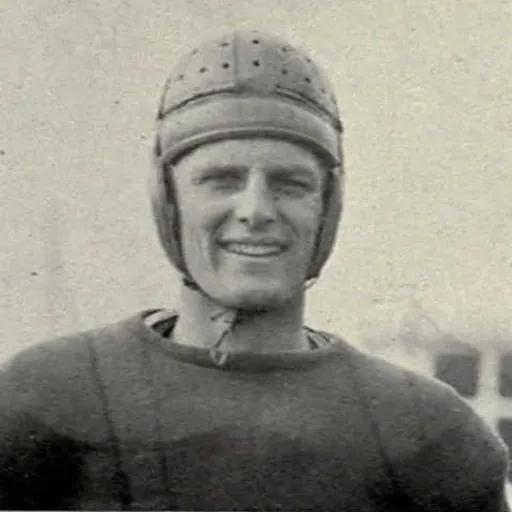
About Paul G. Goebel
Lived 1901 – 1988 (aged 86). Paul G. Goebel was an American politician and american football player.
Paul Gordon Goebel (May 28, 1901 – January 26, 1988) was an American football player who was an end for the University of Michigan Wolverines from 1920 to 1922. He was an All-American in 1921 and was the team's captain in 1922. He played professional football from 1923 to 1926 with the Columbus Tigers, Chicago Bears, and New York Yankees. He was named to the National Football League (NFL) All-Pro team in 1923 and 1924.
After his football career ended, he operated a sporting good store in Grand Rapids. He officiated football games for the Big Ten Conference for 16 years and also served in the U.S. Navy on an aircraft carrier in World War II. He was active in Republican Party politics in Grand Rapids, Michigan, and was one of the organizers of a reform movement to oust the city's political boss, Frank McKay. As an anti-McKay reform candidate, Goebel was three times elected mayor of Grand Rapids in the 1950s. He was later elected to the University of Michigan Board of Regents, where he served from 1962 to 1970.
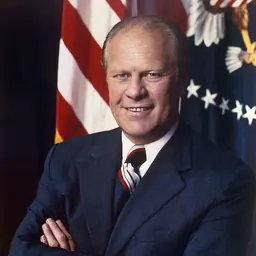
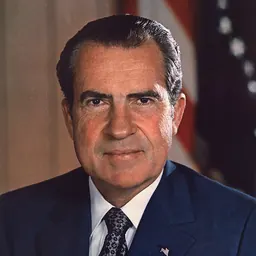
Goebel also played an important role in the career of U.S. President Gerald R. Ford. Goebel was friends with Ford's mother and stepfather and recommended Ford to head football coach Harry Kipke at the University of Michigan. When Ford returned from World War II, Goebel urged him to run for U.S. Congress and was part of the original Ford-for-Congress committee. Goebel was later the chairman of a committee formed in 1960 to name Ford as the Republican Party's vice presidential candidate on the ticket with Richard Nixon.
Football player at the University of Michigan
Goebel enrolled at the University of Michigan in 1919. He studied engineering and received his degree in 1923. While at Michigan, he played football under head coach Fielding H. Yost. He played at the end where he developed a reputation as one of the country's best forward pass receivers and as a tenacious defensive player. At 6-feet, 3-inches, Goebel was a tall player in his era. He started seven games in each of the 1920 and 1921 seasons at right end for the Wolverines, and was limited due to injury to five games in 1922. In 1921, he was chosen as an All-American and was voted the captain of the 1922 team.
Goebel's steel knee brace Prior to the 1922 season, Goebel "threw out his knee" and was fitted with a steel hinge – an early version of a knee brace. Goebel's playing time was limited because "the constant action would dry the oil and then the steel would become so hot that Goebel could not continue playing." Michigan shut out the Buckeyes, 19–0, with Goebel and Kipke scoring all the points. In the first period, Goebel blocked a punt and then kicked a long field goal from the 30-yard line for the game's first points. He also penetrated into the Ohio State backfield in the second quarter to recover a fumble. As the game wore on, the Buckeyes "seemed to realize (Goebel's) importance in the Michigan lineup because he was forced to take plenty of punishment." Another writer summed up Goebel's 1922 season: "Captain Paul Goebel of Michigan has commanded no little attention this season. He is fast and furious. His particular forte lies in his ability to not only plunge in and break up the interference of the opposing team, but after so doing, nail the man with the ball and down him in his tracks."
Tradition of the #1 jersey at Michigan Goebel was particularly adept as a pass receiver. A 1923 wire service report in the Capital Times noted that Goebel was "considered one of the best ends in the country and his work on receiving forward passes hasn't been excelled on the gridiron." Others to follow that tradition are Anthony Carter, Derrick Alexander, David Terrell, and Braylon Edwards.
Goebel also served years later as a pall bearer at the funeral of his coach, Fielding H. Yost, in August 1946.
Professional football In February 1923, Goebel refused an offer to become the head football coach at Wichita State University (then known as Fairmount College), saying he planned to enter the engineering profession after graduation. Instead, Goebel opted to play professional football. He played professional football for the Columbus Tigers from 1923 to 1925, the Chicago Bears in 1925, and the New York Yankees (the football team) in 1926. In his first year in the NFL, Goebel played in all ten of the team's games for the Columbus Tigers and was named to the All-Pro Team. He threw one touchdown pass and caught another. He was credited with eight points scored including two extra points.
In 1924, Goebel was again selected as an All-Pro player with the Tigers, playing in ten games, making two touchdown receptions, and returning a fumble for a touchdown. In all, he was credited with three touchdowns and 18 points in 1924.
In 1926, Goebel played for the Yankees alongside Red Grange. After the close of the 1926 football season, he went to Los Angeles where he took a minor role in Grange's latest film. In May 1927, Goebel announced his retirement from professional football. He said he would devote his time to the sporting goods store he operated in Grand Rapids. Goebel had been playing professional football every season since he finished at Michigan.
Goebel played a role in a famous Ohio State-Illinois game on November 13, 1943. The game was Paul Brown's last game as coach of the Buckeyes.
During World War II, Goebel served in the U.S. Navy as Lieutenant Commander on an aircraft carrier. His final game as an official was the 1952 Rose Bowl between Illinois and Stanford, in which he was the head linesman.
Goebel was also a fisherman, winning the title of Trout King at the National Trout Festival in 1949.
Relationship with Gerald R. Ford
Goebel was a friend of Gerald R. Ford's mother and stepfather in Grand Rapids. Goebel played an important role in guiding Ford to the University of Michigan. When Ford graduated from Grand Rapids South High School, Goebel recognized Ford's ability as a football player and recommended him to his former teammate Harry Kipke, who had taken over as Michigan's head football coach. Kipke recruited Ford, who became Michigan's Most Valuable Player in 1934. Ford did run for Congress in 1948, and Goebel was one of his close circle of early supporters, the original Ford-for-Congress group. Ford won the election and won re-election for twelve more terms.
When Goebel's son, Paul G. Goebel Jr., ran for Ford's congressional seat in 1974, then President Ford returned to Grand Rapids to campaign for Goebel's son.
Political career
Mayor of Grand Rapids Goebel himself ran for office in 1950. He ran for mayor of Grand Rapids as part of the same anti-McKay reform movement that brought Gerald Ford to office. At the time, Goebel was the partner in a sporting goods store and was described in the press as tall and rangy, a candidate "who looks like a blond Abraham Lincoln without a beard." Veldman defeated Goebel in the runoff by a margin of 203 votes. Goebel requested a recount, but he was unsuccessful. In 1956, he won re-election as mayor of Grand Rapids and served a final term from 1956 to 1958. In 1957, Goebel was included in published lists of potential candidates to run as the Republican candidate for governor. In January 1958, Goebel announced that he would not seek re-election as mayor. He said he had no plans to seek another political office.
University of Michigan Board of Regents In 1962, Goebel returned to politics, winning a seat on the Board of Regents of the University of Michigan, where he served from 1962 to 1970. In 1968, the Regents voted to eliminate curfews for all women students in residence halls and to allow each housing unit to set its own visitation hours. Goebel was the sole dissenter, saying: "If my judgment is proved wrong, no one will be happier than I." In July 1970, Goebel announced that he would retire from the Regents at the end of his term on December 31, 1970. At age 69, he said the expected strain of another campaign influenced his decision. He was also a member of the State of Michigan Higher Education Assistance Authority, Chairman of the State of Michigan Board of Ethics, Director of the U-M National Alumni Association and President of the Varsity "M" Club. Their son Paul G. Goebel Jr. was an aide to Rep. Gerald R. Ford and Vice President Richard M. Nixon. Paul Gobel Jr. also operated an insurance business in Grand Rapids known as the Paul Goebel group.
Honors and accolades Goebel's honors over the years include the following: Selected as an All-American in 1921. In 1971, Goebel was given the Distinguished Alumni Service Award. The award, which is presented annually, recognizes alumni who have distinguished themselves "by reason of services performed on behalf of the University of Michigan, or in connection with its organized alumni activities." The Distinguished Alumni Service Award is the highest honor the Alumni Association can bestow upon an alumna/us on behalf of the university. Inducted into Grand Rapids Sports Hall of Fame in 1971. In 1984, Goebel was the fourth recipient of the Ufer Award. Since 1981, the Ufer Award has been presented each year to a Letterwinners "M" Club member in recognition for his or her outstanding service to the University of Michigan Athletic Program. Inducted into the University of Michigan Hall of Honor in 1981. Only seven football players (Bennie Oosterbaan, Gerald Ford, Tom Harmon, Willie Heston, Germany Schulz, Ron Kramer, and Benny Friedman) were inducted into the Hall of Honor before Goebel. The U-M Club of Grand Rapids each year awards the Paul G. Goebel Sr. Distinguished Alumni in Athletic Awards. Past recipients include Julius Franks.
Don’t just read it —
keep it.
Full-length biographies made to live with: read them, listen on the way to work, watch them tonight.
- E-book
- Audio
- Video
Instant download · yours to keep · every purchase keeps this site free
Important facts
People in Paul G. Goebel's life
Named in this biography and alive at the same time



Related people
Same field, nearest in time




Contemporaries
People whose lives overlapped Paul G. Goebel's


Frequently asked questions
Who was Paul G. Goebel?
American football player (1901-1988)
When was Paul G. Goebel born?
Paul G. Goebel was born on 28 May 1901 in Grand Rapids.
When did Paul G. Goebel die?
Paul G. Goebel died on 26 January 1988 in Grand Rapids.
What was Paul G. Goebel's occupation?
Paul G. Goebel was a politician and american football player.
What nationality was Paul G. Goebel?
Paul G. Goebel was American.
Sources & further reading
Cite this page
APA: Biography.guide. (2026). Paul G. Goebel. https://biography.guide/paul-g-goebel/
MLA: "Paul G. Goebel." Biography.guide, https://biography.guide/paul-g-goebel/.
Chicago: "Paul G. Goebel." Biography.guide. https://biography.guide/paul-g-goebel/.
Data last updated: 2026-09-23 · Spot an error? Report a correction.
Portrait: Wikimedia Commons · author & licence
Page generated 2026-09-27 05:05 UTC