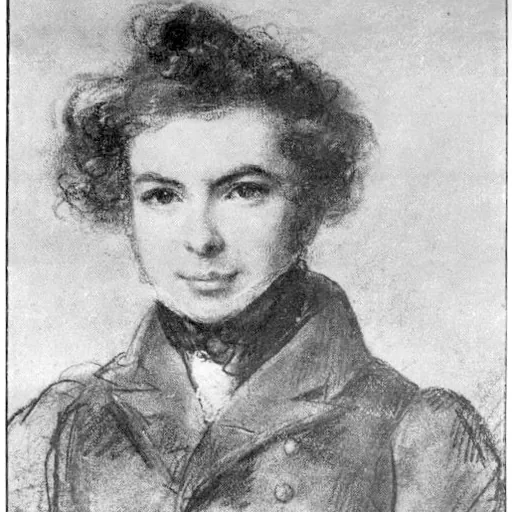
About Paul Foucher
Lived 1810 – 1875 (aged 64). Paul Foucher was a French journalist, librettist, playwright, poet and writer.
Paul-Henri Foucher (21 April 1810 – 24 January 1875) was a French playwright, theatre and music critic, political journalist, and novelist.
Biography
Early career Foucher was born in Paris and began his career as an employee in the offices of the War Department. One day he visited the poet Alexandre Soumet, who asked Foucher whether he had read his brother-in-law's play Amy Robsart. (Foucher's older sister Adèle had married Victor Hugo in 1822.) "If you have not read it, there are some fine scenes in it." Later Foucher asked Hugo if he could look at the play, and Hugo, who had been planning to burn it, instead gave it to Foucher and consented to let him revise it. Nevertheless, the whole affair did gain the young Foucher some notability. It was attacked by the classiques (as the opponents of romanticism were then called), "but all agreed that there was talent and vigor in it. From that time the author's success was assured." La Misère dans l'Amour (1832), and Les Passions dans le Monde (1833). As The New York Times was later to write: "Few literary men have been so active, or made so good a use of their time." was the inspiration for Eugène Scribe's libretto for Gaetano Donizetti's 1843 French grand opera Dom Sébastien. Herbert Weinstock, in his biography of Donizetti, has speculated that Foucher in turn may have been influenced by John Dryden's 1690 tragicomedy Don Sebastian. Foucher also contributed libretti for several operas and ballets, which "were not always impressive successes," but some for the Paris Opera "revealed a lively imagination and a feeling for the picturesque situations dear to the audiences of his time." Adolphe Adam's opera Richard en Palestine (7 October 1844), Edouard Deldevez's ballet-pantomime Paquita (a collaboration with Joseph Mazilier, who also did the choreography, first performed on 1 April 1846), and Count Nicolas Gabrielli's pantomime-ballet L'Étoile de Messine (20 November 1861). Most of Foucher's dramatic works were written in collaboration with well-known authors including Mazilier, D'Ennery, Arvers, Anicet-Bourgeois, Berthet, Goubaux, Desnoyers, Lavergne, Régnier, Borri, Jarry, Herbin, Bouchardy, Duport, Delaporte, Alboize, and Jaime. In 1873 he published a collection of sketches of famous dramatists as Les Coulisses du passé (In the Wings of the Past) and the book Les Sièges héroiques (Heroic Sieges), which tells the stories of celebrated sieges from the liberation of Orléans by Joan of Arc in 1429 to the bombardment of Strasbourg in 1870.
Career as a novelist Foucher published two serialized novels in La France and L'Opinion nationale. and La Vie du plaisir (The Life of Pleasure) in 1860.
Personal traits Foucher had several distinctive personal traits. He was so near-sighted, that in Paris he became a standard for comparison: myope comme Paul Foucher. His handwriting was so bad that the journals at which he worked had to employ a special copyist whose sole job was to carry out "Foucher translations". And he was notoriously absent-minded. Once he attended a ball thrown by the Turkish Ambassador, Ve'ly-Pasha. When it came time to leave, he searched his pockets for his coat-check number, but could not find it. The cloak-room attendant was unable to help him, so as the evening wore on Foucher requested the help of three Turkish guests in turn, each more decorated and high-ranking than the previous, but all without success. Finally the attendant said: ""You are a regular nightmare, you had better sit down and wait." Still without his coat at daybreak, Foucher finally decided to go home, where at last he discovered his coat and realized why he had lost his number. Many such stories were told about Foucher, "who took them all amiably and kindly."
Foucher was named Chevalier of the Legion of Honor on 29 April 1847. He died in Paris and was buried at Montparnasse Cemetery. Victor Hugo followed the hearse on foot, until eventually the acclamations of the crowds of the Quartier Latin forced him to retire to one of the mourning coaches. According to The New York Times, due to Foucher's "incessant labor", he "left his family in comfortable circumstances."
Works
Plays Yseul Raimbaud (1830) Saynètes (1832) La Misère dans l'Amour (1832) Les Passions dans le Monde (1833) Caravage (1834) Jeanne de Naples (1837) Don Sébastien de Portugal, tragédie (1839) Les Chevaux du Carrousel (1839) Le Pacte de famine (with Élie Berthet) (1839) Bianca Contadini (1840) La Guerre de l'indépendance en Amérique (1840) La Voisin (1842) Les Deux Perles (1844) Les Étouffeurs de Londres (1847) L'Héritier du Czar (1849) Notre-Dame de Paris (1850) Mademoiselle Aïssé (1854) La Bonne Aventure (1854) La Joconde (1855) Les Rôdeurs du Pont-Neuf (1858) L'Amiral de l'escadre Bleue (1858) L'Institutrice (1861) Delphine Gerbet (1862) Le Carnaval de Naples (1864) La Bande Noire (1866)
Operas and ballets-pantomimes Le Vaisseau fantôme, music by Dietsch (1842) Richard en Palestine, music by Adam (1844) Paquita, music by Deldevez (1846) L'Opéra au camp, music by Varney (1854) L'Étoile de Messine, music by Gabrielli (1861)
Serialized novels Le Guetteur du Cordouan (1854, 3 vol.) La Vie de plaisir (1860)
Nonfiction works Entre cour et jardin: études et souvenirs du théâtre (1867) Les Coulisses du passé (1873) Les Sièges héroïques (1873)
Don’t just read it —
keep it.
Full-length biographies made to live with: read them, listen on the way to work, watch them tonight.
- E-book
- Audio
- Video
Instant download · yours to keep · every purchase keeps this site free
Important facts
People in Paul Foucher's life
Named in this biography and alive at the same time
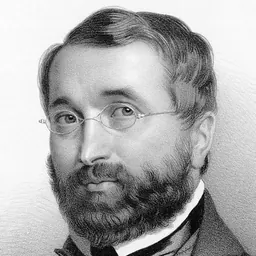
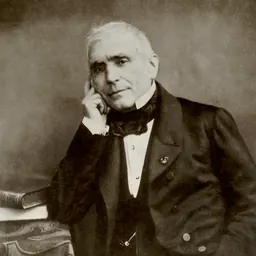


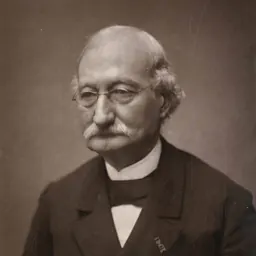
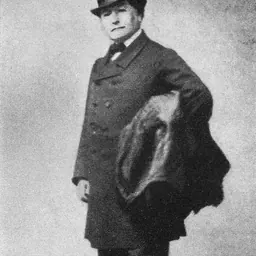
Related people
Same field, nearest in time
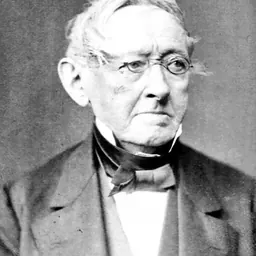

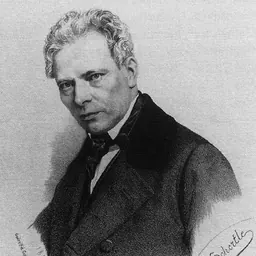
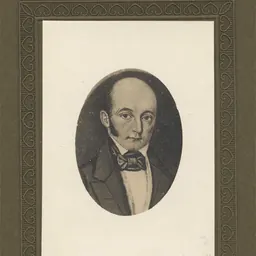
Contemporaries
People whose lives overlapped Paul Foucher's



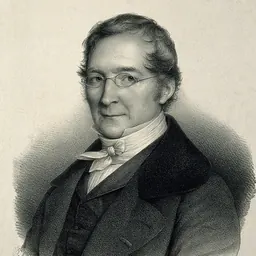

Frequently asked questions
Who was Paul Foucher?
French writer (1810-1875)
When was Paul Foucher born?
Paul Foucher was born on 22 April 1810 in Paris.
When did Paul Foucher die?
Paul Foucher died on 24 January 1875 in Paris.
What was Paul Foucher's occupation?
Paul Foucher was a journalist, librettist, playwright, poet and writer.
What nationality was Paul Foucher?
Paul Foucher was French.
Sources & further reading
Cite this page
APA: Biography.guide. (2026). Paul Foucher. https://biography.guide/paul-foucher/
MLA: "Paul Foucher." Biography.guide, https://biography.guide/paul-foucher/.
Chicago: "Paul Foucher." Biography.guide. https://biography.guide/paul-foucher/.
Data last updated: 2026-09-22 · Spot an error? Report a correction.
Portrait: Wikimedia Commons · author & licence
Page generated 2026-09-27 05:01 UTC