
About Paul Einzig
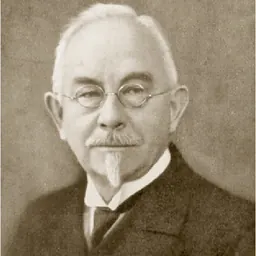
Lived 1897 – 1973 (aged 75). Paul Einzig was a Romanian and Hungarian economist and writer.
Paul Einzig (25 August 18978 May 1973) was an economic and political writer and journalist. He wrote over 50 books, alongside many articles for newspapers and journals, and regular columns for the newspapers Financial News (which became Financial Times) and Commercial and Financial Chronicle.
Biography Einzig was born in Braşov, Transylvania (then a part of Hungary, now Romania), into a Jewish family, and educated in Hungary, England, and France. He earned a degree as Doctor of Political and Economic Sciences at the University of Paris from 1921 to 1923. He moved to England in 1919, becoming a citizen in 1929.
Einzig wrote his first article for The Economist in 1919 and contributed to The Economic Journal in 1920 with an article entitled "The Monetary Economy of Bolshevism." He became the Paris correspondent for the Financial News during his doctorate studies, rising to foreign editor upon his move back to London. Einzig used his regular Lombard Street column in the Financial News to provide updates on international finance as well as express his personal views and fight for what he believed were worthy causes. He was the primary investigator behind the "Czech Gold" scandal, where the Bank of England had transferred substantial reserves of Czechoslovak gold to the Reichsbank following the German occupation of Czechoslovakia.
Einzig became political correspondent for the Financial News in 1940 and continued in this role until ill health forced him to resign in 1956. He spent the remainder of his career in freelance work and writing his weekly column in the Commercial and Financial Chronicle. He died in London in 1973.
Works International Gold Movements, 1929; 2d ed. enl., 1931 The Bank for International Settlements, 1930 Behind the Scenes of International Finance, 1931 The Fight for Financial Supremacy, 1931 The World Economic Crisis, 1929–1931, 1931 Montague Norman: A Study in Financial Statesmanship, 1932 The Bank for International Settlements, 1932 The Tragedy of the Pound, 1932 The Comedy of the Pound, 1933 The Economic Foundations of Fascism, 1933 The Sterling-Dollar-Franc Tangle, 1933 Exchange Control, 1934 France’s Crisis, 1934 Germany’s Default, 1934 The Economics of Rearmament, 1934; reprint 2014 The Future of Gold, 1934 Bankers, Statesmen and Economists, 1935 The Exchange Clearing System, 1935 World Finance Since 1914, 1935. (American ed.: World Finance, 1914–1935, 1935) Monetary Reform in Theory and Practice, 1936 World Finance, 1935–1937, 1937 World Finance, 1937–1938, 1938 Economic Problems of the Next War, 1939 World Finance, 1938–1939, 1939 Economic Warfare, 1940 Europe in Chains''', 1940 World Finance, 1939–1940, 1940 Appeasement Before, During and After the War, 1941 Economic Warfare 1939–1940, 1941 Can We Win the Peace?, 1942 The Japanese New Order in Asia, 1943 Currency after the War: The British and American Plans, 1944 Freedom from Want, 1944 Primitive Money, in its Ethnological, Historical and Economic Aspects, 1949; 1951; 1963 Inflation, 1952 How Money is Managed: The Ends and Means of Monetary Policy, 1954 The Economic Consequence of Automation, 1956 The Control of the Purse: Progress and Decline of Parliament's Financial Control, 1959 In the Centre of Things, 1960 A Dynamic Theory of Forward Exchange, 1961 The History of Foreign Exchange, 1962; 2d ed., 1970 Monetary Politics: Ends and Means, 1964 (new version of How Money is Managed) The Euro-Dollar System: Practice and Theory of International Interest Rates, 1964; reprint 1967 Foreign Dollar Loans in Europe, 1965 Primitive Money, in its Ethnological, Historical and Economic Aspects, 2d ed. rev. and enl., 1966 Textbook on Foreign Exchange, 1966 Foreign Exchange Crises: An Essay in Economic Pathology, 1968 Leads and Lags. The Main Cause of Devaluation, 1968 Decline and Fall? Britain's Crisis in the Sixties, 1969 The Euro-Bond Market, 1969 The Case Against Floating Exchanges, 1970 Parallel Money Markets. 1. The New Markets in London, 1971 The Case Against Joining the Common Market, 1971 A Textbook on Monetary Policy, 1972 Destiny of Gold, 1972 Destiny of the Dollar, 1972 Parallel Money Markets. 2. Overseas Markets, 1972 Roll-over Credits. The System of Adaptable Interest Rates, 1973 The Euro-dollar System. Practice and Theory of International Interest Rates'', 1973
Don’t just read it —
keep it.
Full-length biographies made to live with: read them, listen on the way to work, watch them tonight.
- E-book
- Audio
- Video
Instant download · yours to keep · every purchase keeps this site free
Important facts
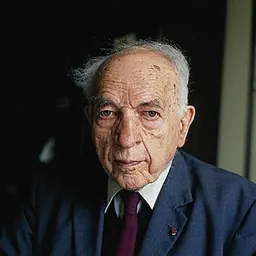
People in Paul Einzig's life
Named in this biography and alive at the same time

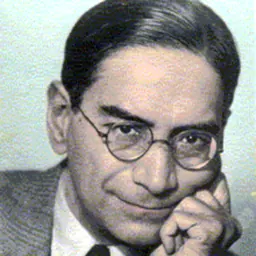
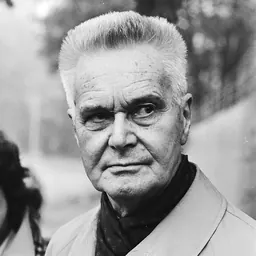
Related people
Same field, nearest in time



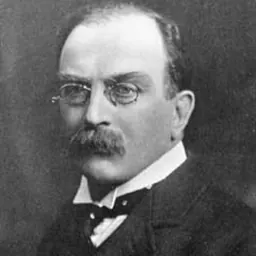
Contemporaries
People whose lives overlapped Paul Einzig's



Frequently asked questions
Who was Paul Einzig?
Romanian economist (1897–1973)
When was Paul Einzig born?
Paul Einzig was born on 25 August 1897 in Brașov.
When did Paul Einzig die?
Paul Einzig died on 8 May 1973 in London.
What was Paul Einzig's occupation?
Paul Einzig was an economist and writer.
What nationality was Paul Einzig?
Paul Einzig was Romanian and Hungarian.
Sources & further reading
Cite this page
APA: Biography.guide. (2026). Paul Einzig. https://biography.guide/paul-einzig/
MLA: "Paul Einzig." Biography.guide, https://biography.guide/paul-einzig/.
Chicago: "Paul Einzig." Biography.guide. https://biography.guide/paul-einzig/.
Data last updated: 2026-09-22 · Spot an error? Report a correction.
Page generated 2026-09-27 05:32 UTC