
About Paul Durand-Ruel
Lived 1831 – 1922 (aged 90). Paul Durand-Ruel was a French art dealer, art collector and gallerist.
Paul Durand-Ruel (; 31 October 1831 – 5 February 1922) was a French art dealer associated with the Impressionists and the Barbizon School. Being the first to support artists such as Claude Monet, Camille Pissarro, and Pierre-Auguste Renoir, he is known for his innovations in modernizing art markets, and is generally considered to be the most important art dealer of the 19th century. An ambitious entrepreneur, Durand-Ruel cultivated international interest in French artists by establishing art galleries and exhibitions in London, New York, Berlin, Brussels, among other places. Additionally, he played a role in the decentralization of art markets in France, which prior to the mid-19th century was monopolized by the Salon system.
Early life and education
He was born Paul-Marie-Joseph Durand-Ruel in Paris, son of Jean Marie Fortuné Durand and Marie Ferdinande Ruel. His parents, who opened an art shop in 1839, used the Durand-Ruel name for the family business. In 1851, Paul enrolled at the military school Ecole Militaire de Saint-Cyr but was forced to leave shortly after for health reasons. During the 1860s and early 1870s, Durand-Ruel was an important advocate and successful art dealer of the Barbizon School but he is best known for his relationship with a group of painters who would become known as the Impressionists.
He had three sons who worked with him in the business, Joseph Durand-Ruel (1862–1928), Charles Durand-Ruel (1865–1892), and Georges Durand-Ruel (1866–1931). After 1888 Joseph and his brothers began to take over the running of the family business from their father. They expanded into the American market, buying works by Eugène Delacroix, the Barbizon school and the Old Masters, and later by the Impressionists. The exhibitions relied on a business model where artists would retain the proceeds from their own sales and the success of an exhibition relied upon the market demand for the art, rather than the reviews of the state. The emergence of the dealer-artists relationship and independent exhibitions beginning in the 1870s broke down the monopoly power of the Salon and began a new era of art markets.
La Belle École of 1830 Prior to his support of the Impressionists, Durand-Ruel began his career in a campaign to raise the value of 'the beautiful School of 1830'. This group of artists were known for their work in Romanticism and landscape painting, and included Jean-Baptiste-Camille Corot, Théodore Rousseau, Jean-François Millet, Eugène Delacroix, and Gustave Courbet. Durand-Ruel played an active role in the collection of these painters' art in the 1860s and 70s. By 1874, having purchased 432 works by Delacroix, Corot, and Rousseau, Durand-Ruel was in a state of financial distress. Durand-Ruel and Claude Monet in Giverny, 1900 He recognized the artistic and fashionable potential of Impressionism as early as 1870, and his first major exhibition of their work took place at his London gallery in 1872. Eventually Durand-Ruel had exhibitions of Impressionism and other works (including the expatriate American painter James Abbott McNeill Whistler who lived in London), at his Paris and London galleries. During the final three decades of the 19th century, Durand-Ruel became the most important commercial advocate of French Impressionism in the world. He succeeded in establishing the market for Impressionism in the United States as well as in Europe. Edgar Degas, Mary Cassatt, Édouard Manet, Claude Monet, Berthe Morisot, Camille Pissarro, Pierre-Auguste Renoir, and Alfred Sisley are among the important Impressionist artists that Durand-Ruel helped to establish. He represented many lesser known artists including Maxime Dethomas or Hugues Merle amongst others.
Part of the success of Impressionism was due to the international demand. Durand-Ruel established a network of galleries and exhibitions in many countries, with hubs in London, New York, and Berlin. Regarding the Americans' open-mindedness towards Impressionism, Durand-Ruel once said, "The American public does not laugh. It buys!" "Without America," he said, "I would have been lost, ruined, after having bought so many Monets and Renoirs. The two exhibitions there in 1886 saved me. The American public bought moderately . . . but thanks to that public, Monet and Renoir were enabled to live and after that the French public followed suit."
London During the Franco-Prussian War of 1870–71, Durand-Ruel left Paris and escaped to London, where he met up with a number of exiled French artists including Charles-François Daubigny, Claude Monet and Camille Pissarro. In December 1870, he opened the first of ten Annual Exhibitions of the Society of French Artists at his new London gallery at 168 New Bond Street, under the management of Charles Deschamps. With the help of his sons, Durand-Ruel was able to have a permanent presence in the United States. In addition to the permanent gallery in New York City, he organized exhibitions in Boston, Philadelphia, Cincinnati, St. Louis, and Chicago, among other locations. The family-run American enterprise continued operating after Paul Durand-Ruel's death until 1950.
Germany Durand-Ruel's business in Germany came soon after his success in the United States. Germany hosted its first exhibition of the Impressionists in 1883, with the help of Durand-Ruel.
Through these principles, Durand-Ruel transformed art markets into a system where artists are monetarily supported by financiers impressed by their work. Between 1891 and 1922, Durand-Ruel purchased nearly 12,000 paintings. In 1920, at the age of 89, he declared: "At last the Impressionist masters triumphed just as the generation of 1830 had. My madness had been wisdom. To think that, had I passed away at sixty, I would have died debt-ridden and bankrupt, surrounded by a wealth of underrated treasures…" Renoir's Luncheon of the Boating Party once hung in Durand-Ruel's personal apartment, where he received clients and hosted dinners in a home setting. Millet's The Sheepfold, Moonlight was acquired by Durand-Ruel in 1872, who believed it to be Millet's 'masterpiece'.
Durand-Ruel was the subject of a major temporary exhibition titled "Inventing Impressionism" held at the National Gallery in London in 2015.
Durand-Ruel owned a violin made by Francois Lupot in 1810 until his death. He bought the violin from Albert Caressa as stated on the certificate issued by Jacques Français in 1955. The violin was sold at auction in October 2023.
References and sources
Don’t just read it —
keep it.
Full-length biographies made to live with: read them, listen on the way to work, watch them tonight.
- E-book
- Audio
- Video
Instant download · yours to keep · every purchase keeps this site free
Important facts
People in Paul Durand-Ruel's life
Named in this biography and alive at the same time




Related people
Same field, nearest in time

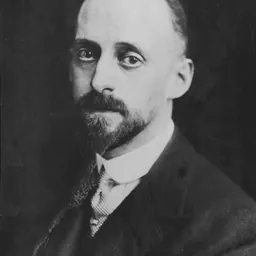
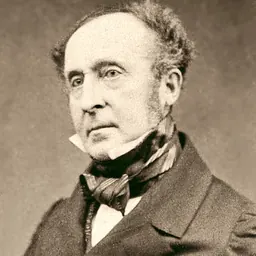
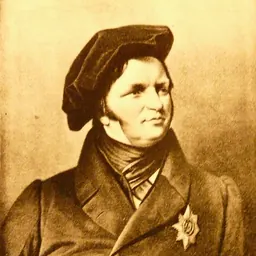
Contemporaries
People whose lives overlapped Paul Durand-Ruel's



Frequently asked questions
Who was Paul Durand-Ruel?
French art dealer (1831-1922)
When was Paul Durand-Ruel born?
Paul Durand-Ruel was born on 31 October 1831 in former 11th arrondissement of Paris.
When did Paul Durand-Ruel die?
Paul Durand-Ruel died on 5 February 1922 in 8th arrondissement of Paris.
What was Paul Durand-Ruel's occupation?
Paul Durand-Ruel was an art dealer, art collector and gallerist.
What nationality was Paul Durand-Ruel?
Paul Durand-Ruel was French.
Sources & further reading
Cite this page
APA: Biography.guide. (2026). Paul Durand-Ruel. https://biography.guide/paul-durand-ruel/
MLA: "Paul Durand-Ruel." Biography.guide, https://biography.guide/paul-durand-ruel/.
Chicago: "Paul Durand-Ruel." Biography.guide. https://biography.guide/paul-durand-ruel/.
Data last updated: 2026-09-20 · Spot an error? Report a correction.
Page generated 2026-09-27 05:22 UTC