
About Paul Demiéville
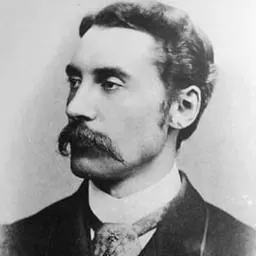
Lived 1894 – 1979 (aged 84). Paul Demiéville was a French and Swiss professor, translator, sinologist, orientalist, university teacher and editing staff.
Paul Demiéville (13 September 1894 – 23 March 1979) was a Swiss-French sinologist and Orientalist known for his studies of the Dunhuang manuscripts and Buddhism and his translations of Chinese poetry, as well as for his 30-year tenure as co-editor of T'oung Pao.
Demiéville was one of the foremost sinologists of the first half of the 20th century, and was known for his wide-ranging contributions to Chinese and Buddhist scholarship. His influence on Chinese scholarship in France was particularly profound, as he was the only major French sinologist to survive World War II.
Demiéville was one of the first sinologists to learn Japanese to augment their study of China: prior to the early 20th century, most scholars of China learned Manchu as their second scholarly language, but Demiéville's study of Japanese instead has been followed by nearly every major sinologist since his day.
Early life Paul Demiéville was born on 13 September 1894 in Lausanne, Switzerland, a son of a prominent physician in Lausanne. Combined with the family's Swiss citizenship, his father's status and income allowed Demiéville to receive an international and multicultural upbringing far beyond most of his contemporaries.
Career After completing his Diplômé in 1919, Demiéville was named a resident of the École française d'Extrême-Orient (French School of the Far East) in Hanoi, where he lived from 1920 to 1924. In 1924 he moved to southeast China, where he taught Sanskrit and philosophy at the University of Amoy (modern Xiamen University). In 1926 Demiéville moved to Tokyo, Japan, where he became director of the Maison Franco-Japonaise (French-Japanese House) and also served as editor-in-chief of Sylvain Lévi's historic Hôbôgirin, Dictionnaire Encyclopédique du Bouddhisme (Hōbōgirin 法寶義林: An Encyclopedic Dictionary of Buddhism), which was first published in 1929.
Demiéville returned to France in 1930 and was made a French citizen by decree the following year, when he was named Professor of Chinese at the École des Langues Orientales, where he stayed throughout World War II. In 1945 he became director of the 4th Section of the École Pratique des Haute Études and taught Buddhist philosophy there until 1956. In 1946, Demiéville was selected to replace Henri Maspero as Chair of Chinese Language and Literature at the Collège de France – Maspero having died in the Buchenwald concentration camp in 1945 – and held that position until his retirement in 1964. In 1951, Demiéville was honored with membership in the Académie des Inscriptions et Belles-Lettres.
From 1945 to 1975, Demiéville served as the French co-editor of the prominent sinology journal T'oung Pao, which was traditionally co-edited by one sinologist from France and another from the Netherlands.
Selected works ––– (1924). "Les Versions chinoises du Milindapanha" ("Chinese Versions of the Milinda Panha"), Bulletin de l'École française d'Extrême-Orient, no. XXIV, pp. 1–258. ––– (1929). "Sur l'authenticité du Ta tch'eng k'i sin louen" ("On the Authenticity of the Da cheng qi xin lun 大乘起新論"), Bulletin de la Maison Franco-Japonaise, vol. 2, no. 2, pp. 1–78. ––– (1935). "Iconography and History", in The Twin Pagodas of Zayton: A Study of Later Buddhist Sculpture in China, Harvard-Yenching Institute Monograph Series, vol. 2. Cambridge, Mass.: Harvard-Yenching Institute, pp. 27–95. ––– (1951). "À propos du Concile de Vaiśāli" ("Regarding the Council of Vaiśāli"). T'oung Pao 40. Leiden: E.J. Brill, pp. 239–296. ––– (1952). Le Concile de Lhasa: Une controverse sur la quiétisme entre bouddhistes de l'inde et de le Chine au VIIIème siècle (The Council of Lhasa: A controversy on quietism between Buddhists of India and China in the 8th century). Paris: Bibliothèque de l'Institut des Hautes Études chinoises. ––– (1954). "La Yogācārabhūmi de Sangharaksa" ("The Yogācārabhūmi of Sangharaksa"). Bulletin du l'École française d'Extrême-Orient, no. XLIV, 2, pp. 339–436.
Don’t just read it —
keep it.
Full-length biographies made to live with: read them, listen on the way to work, watch them tonight.
- E-book
- Audio
- Video
Instant download · yours to keep · every purchase keeps this site free
Important facts
People in Paul Demiéville's life
Named in this biography and alive at the same time
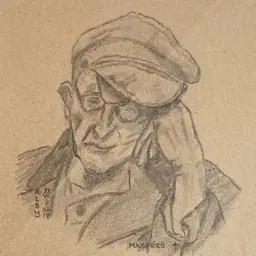
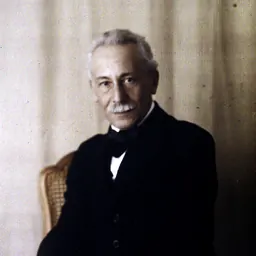
Related people
Same field, nearest in time

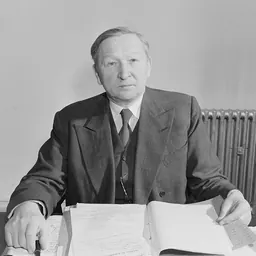
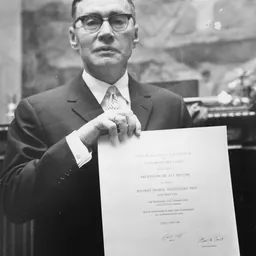
Contemporaries
People whose lives overlapped Paul Demiéville's


Frequently asked questions
Who was Paul Demiéville?
Swiss sinologist (1894-1979)
When was Paul Demiéville born?
Paul Demiéville was born on 13 September 1894 in Lausanne.
When did Paul Demiéville die?
Paul Demiéville died on 23 March 1979 in 14th arrondissement of Paris, Paris.
What was Paul Demiéville's occupation?
Paul Demiéville was a professor, translator, sinologist, orientalist, university teacher and editing staff.
What nationality was Paul Demiéville?
Paul Demiéville was French and Swiss.
Sources & further reading
Cite this page
APA: Biography.guide. (2026). Paul Demiéville. https://biography.guide/paul-demieville/
MLA: "Paul Demiéville." Biography.guide, https://biography.guide/paul-demieville/.
Chicago: "Paul Demiéville." Biography.guide. https://biography.guide/paul-demieville/.
Data last updated: 2026-09-26 · Spot an error? Report a correction.
Page generated 2026-09-27 05:16 UTC