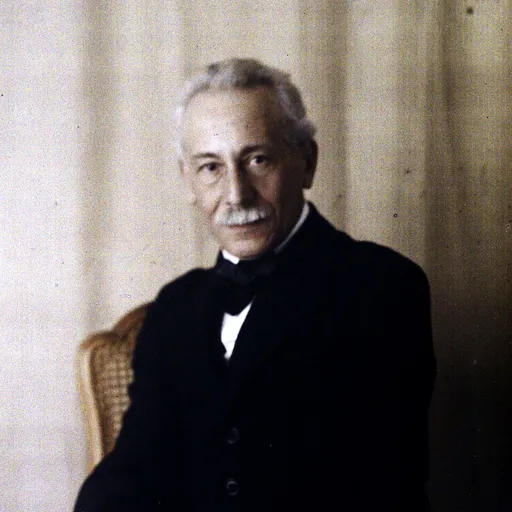
About Sylvain Lévi
Lived 1863 – 1935 (aged 72). Sylvain Lévi was a French linguist, professor, indologist and orientalist.
Sylvain Lévi (; March 28, 1863 – October 30, 1935) was an influential French intellectual and author whose specialities were oriental studies and India. He taught Sanskrit and Indian religions at the École pratique des hautes études in Paris, France. One of his notable students was Paul Pelliot.
Lévi's book Théâtre Indien is an important work on the subject of Indian performance art, and Lévi also conducted some of the earliest analysis of Tokharian fragments discovered in Western China. Lévi exerted a significant influence on the life and thought of Marcel Mauss, the nephew of Émile Durkheim.
Sylvain Lévi was a co-founder of the École française d'Extrême-Orient in Hanoi.
According to the Universal Jewish Encyclopedia, Lévi was (one of the) founder(s) of the École française d'Extrême-Orient (EFEO) (French School of the Far East) in Hanoi. The École française d'Extrême-Orient's website notes that the school was founded in Hanoi in 1902. One of his students, Suzanne Karpelès, the first female member of EFEO, joined him there in 1922 and remained in French Indochina until 1941.
Opinions He was also an early opponent of the traditionalist author René Guénon, citing the latter's uncritical belief in a "perennial philosophy", that a primal truth revealed directly to primitive humanity, based on an extreme reductionist view of Hinduism, which was the subject of Guénon's first book, L'Introduction générale a l'étude des doctrines hindoues. That was a thesis delivered to Lévi at the Sorbonne and rejected.
Works
Le Théâtre Indien, Deuxième tirage, 1963, Publié à l'occasion du centenaire de la naissance de Sylvain Lévi, Bibliothèque de l'Ecole des Hautes Etudes, IVe section, 83e Fascicule, Paris, Distributeur exclusif: Librairie Honoré Champion. Lévi, S. 1898. La doctrine du sacrifice dans les Brâhmanas, Paris : Ernest Leroux, Bibliothèque de l’École des Hautes Études-Sciences religieuses [= BÉHÉ-SR], vol. 11. Lévi, S. 1966. Id., avec une préface de L. Renou, 2e éd., Paris : Presses Universitaires de France, BÉHÉ-SR, vol. 73. Lévi, S. 2003. Id., réimpr. de Lévi 1966, avec une postface inédite de Ch. Malamoud, Brepols : Turnhout, BÉHÉ-SR, vol. 118. Le Népal: Étude historique d’un royaume hindou, Sylvain Lévi, 3 vol. 1905–08, Paris Nepal: Historical study of a Hindu kingdom, Sylvain Levi, Ancient Nepal, 44 installments, 1973–90. Asvaghosa, le sutralamkara et ses sources, S. Lévi, JA, 1908, 12, p. 57-193 Autour d'Asvaghosa, Sylvain Lévi, JA, Oc-Déc. 1929, p. 281-283 Kanishka et Satavahana, Sylvain Lévi, JA, Jan–Mars 1936, p. 103-107 Le Bouddhisme et les Grecs, S. Lévi, R.H.R. 23 (1891), p. 37 L'énigme des 256 nuits d'Asoka, Sylvain Lévi, JA 1948, p. 143-153 Les études orientales, par Sylvain Lévi, Annales du musée Guimet numéro 36, Hachette 1911, ANU DS1.P32.t36 Les grands hommes dans l'histoire de l'Inde, par Sylvain Lévi, Annales du musée Guimet numéro 40, Hachette 1913, ANU A DS1.P32.t40 Les seize Arhats protecteurs de la loi, Sylvain Lévi et Édouard Chavannes, JA 1916, vol. II, p. 204-275 Le sutra du sage et du fou, Sylvain Lévi, JA, Oc-Déc. 1925, p. 320-326, ANU pBL1411.A82.L4 L'inde civilisatrice, aperçu historique, S. Lévi, Paris 1938 L'Inde et le Monde, par Sylvain Lévi, Honoré Champion 1926, ANU G B131.L4 Madhyantavibhangatika, tr. S. Lévi ?, ANU BQ2965.Y3 Mahayanasutralamkara, exposé de la doctrine du Grand Véhicule selon le système Yogachara, tr. française Sylvain Lévi, Librairie Honoré Champion, 5 Quai Malaquais, Paris 1911, réimpression Rinsen Book Co. Kyoto 1983 ANU BQ3002.L48.1983.t2 Maitreya, le consolateur, S. Lévi, Mélanges Linossier, II, pp. 362–3 & pp. 355–402 Matériaux pour l'étude du système Vijnaptimatra, Sylvain Lévi, Paris Chanmpion 1932 Nairatmyapariprccha, Sylvain Lévi, JA, Oct-Déc. 1928, p. 209-215 Notes indiennes, Sylvain Lévi, JA, Janv. Mars 1925, p. 26-35 Notes sur les manuscrits sanscrits provenant de Bamiyan et de Gilgit, S. Lévi Observations sur une langue précanonique du bouddhisme, S. Lévi, JA Nov-Déc. 1912, p. 511 Sur la récitation primitive des textes bouddhiques, Sylvain Lévi, JA, Mai-Juin 1915, p. 401-407 Une langue précanonique du bouddhisme, S. Lévi, JA 1912, p. 495-514 Vijnaptimatratasiddhi, Sylvain Lévi, Paris 1925, ANU AA BL1405.B8 Vimsika-Vimsatika de Vasubandhu, tr. S. Lévi, Bibliothèque de l'École des Hautes Etudes fascicule 245-1925 et 260-1932 Paris JA = Journal Asiatique
Don’t just read it —
keep it.
Full-length biographies made to live with: read them, listen on the way to work, watch them tonight.
- E-book
- Audio
- Video
Instant download · yours to keep · every purchase keeps this site free
Important facts
People in Sylvain Lévi's life
Named in this biography and alive at the same time

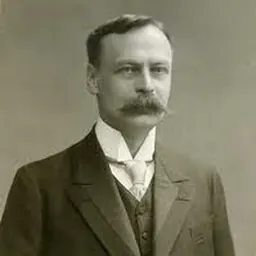


Related people
Same field, nearest in time
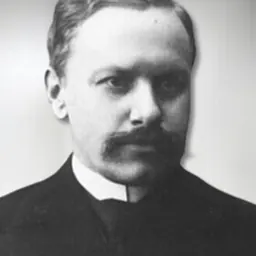
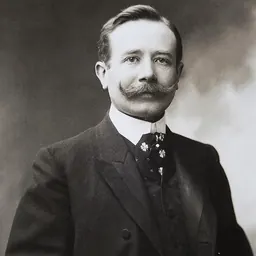

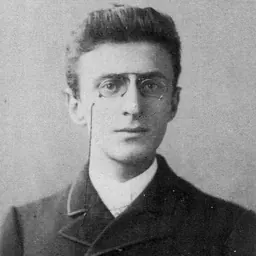
Contemporaries
People whose lives overlapped Sylvain Lévi's




Frequently asked questions
Who was Sylvain Lévi?
French orientalist and indologist (1863–1935)
When was Sylvain Lévi born?
Sylvain Lévi was born on 28 March 1863 in Paris.
When did Sylvain Lévi die?
Sylvain Lévi died on 30 October 1935 in Paris.
What was Sylvain Lévi's occupation?
Sylvain Lévi was a linguist, professor, indologist and orientalist.
What nationality was Sylvain Lévi?
Sylvain Lévi was French.
Sources & further reading
Cite this page
APA: Biography.guide. (2026). Sylvain Lévi. https://biography.guide/sylvain-levi/
MLA: "Sylvain Lévi." Biography.guide, https://biography.guide/sylvain-levi/.
Chicago: "Sylvain Lévi." Biography.guide. https://biography.guide/sylvain-levi/.
Data last updated: 2026-09-22 · Spot an error? Report a correction.
Portrait: Wikimedia Commons · author & licence
Page generated 2026-09-27 05:02 UTC