
Paul de Lagarde
German polymath, biblical scholar and orientalist
About Paul de Lagarde
Lived 1827 – 1891 (aged 64). Paul de Lagarde was a German writer, armenologist, university teacher, philosopher, theologian and coptologist.
Paul Anton de Lagarde (born Paul Bötticher, 2 November 1827 – 22 December 1891) was a German biblical scholar and orientalist. He is regarded as one of the greatest orientalists of the 19th century. Lagarde authored dozens of books, many on politics. His anti-Semitism, anti-Slavism, and aversion to traditional Christianity were influential precursors of Nazism.
Life and career Paul Bötticher was born in Berlin on November 2, 1827. His father, Johann Friedrich Wilhelm Bötticher, was a philologist who taught languages at the Friedrich Wilhelm Gymnasium. His mother, Luise, was only eighteen years old. Luise died several days after Paul was born. Wilhelm was bereft. He blamed his newborn son for the loss and treated him miserably. Paul's woeful upbringing led him to feel nothing upon his father's death. He attended the University of Halle-Wittenberg from 1846–7.
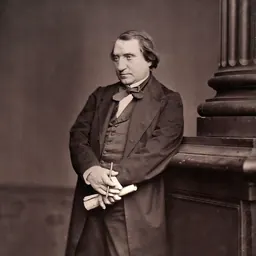
In 1852, Bötticher received a 1,000 thaler grant from King Frederick William IV to study abroad. He used it to travel to London to work at the British Museum. On his way home in January 1853, Bötticher stayed in Paris to work in the Bibliothèque nationale. He relied on Ernest Renan to check out manuscripts for him.
In 1855, Paul de Lagarde taught languages at Köllnisches Gymnasium in Berlin where his duties included teaching gymnastics. He continued to publish scholarly work, much of it at his own expense. In 1858, he transferred to the Friedrichswerdersches Gymnasium. In 1866, he was given three years leave for research. In 1869, he took over Heinrich Ewald's professorship of oriental languages at the University of Göttingen. Lagarde shunned professional affiliations and frequently attacked colleagues and peers. In a letter to Adolf Hilgenfeld, Lagarde described himself as an "anchorite", simultaneously lamenting and imposing his self-isolation.
Lagarde was diagnosed with colon cancer in 1891 and kept the diagnosis secret. He had an operation to treat it on 19 December. It was unsuccessful, and he died three days later.
Scholarship Paul de Lagarde's father Wilhelm Bötticher was a prolific scholar. Lagarde loathed the assembly-line nature of his father's writing. Ironically, he would be similarly overproductive, writing many works that were underbaked. He wrote dozens of books on a broad range of topics, moving fluidly between multiple languages. His main focus was elucidation of the Bible. A bibliography of his work was prepared in 1892, and it ran to eighteen pages.
In 1865, he set a massive goal of creating a critical edition of the Septuagint. The project obsessed him for most of his career. Just before his death, Lagarde showed his pupil Alfred Rahlfs his plans for the project so that his work could continue. Lagarde relied on the Codex Reuchlinianus to produce Prophetae chaldaice (1872), a text of Targum Jonathan. He did this work in fierce opposition of the relatively new Wissenschaft des Judentums approach.
Lagarde's studies of Arabic language manuscripts are still widely cited. He edited an Arabic translation of the Gospels (Die vier Evangelien, 1864), a Syriac translation of the Old Testament Apocrypha (Libri V. T. Apocryphi Syriace, 1861), and a Coptic translation of the Pentateuch (Der Pentateuch Koptisch, 1867).
He was also a student of Persian, publishing Isaias Persice (1883) and Persische Studien (1884). In 1880, de Lagarde attempted to reconstruct a Syriac version of Epiphanius' treatise On Weights and Measures. He published manuscripts of Coptic apocrypha as Aegyptiaca in 1883.
Lagarde published several volumes of miscellany such as Gesammelte Abhandlungen (1866), Symmicta (I. 1877, II. 1880), Semitica (I. 1878, II. 1879), Orientalia (1879–1880) and Mittheilungen (1884).
Political writing Lagarde was a member of the Prussian Conservative Party until 1849 when it fabricated evidence of treason against Benedikt Waldeck. He became deeply disenchanted and politically unaligned. It proposes a German colonization of Europe to create a Mitteleuropa. Though he also writes with the casual antisemitism that was widespread at the time, Lagarde expresses admiration for the discipline of Jewish life. He specifically points to Judaism as an example of how a national religion benefits a population. He viewed the Bible as a bricolage of dubious texts. He admired the early iteration of Christianity but despised what Catholicism had become, and he ridiculed Protestantism as an elaborate fantasy.
As Lagarde aged, the bitterness he felt about so much of life also hardened his antisemitism. His rhetoric advanced well beyond the prevailing prejudice into a conspiratorial fever.
Lagarde considered Jews to be the greatest barrier to German greatness, and he suggested they be moved to Madagascar. In 1887, he wrote, "One would have to have a heart of steel to not feel sympathy for the poor Germans and, by the same token, to not hate the Jews, to not hate and despise those who – out of humanity! – advocate for the Jews or are too cowardly to crush these vermin. Trichinella and bacilli would not be negotiated with, trichinella and bacilli would also not be nurtured, they would be destroyed as quickly and as thoroughly as possible." He also despised Slavs and wrote, "the sooner they perish the better it will be for us and them".
In 1878, Lagarde first collected his political essays in Deutsche Schriften (German Writings). He published a second volume in 1881 and a combined edition in 1886.
Legacy Lagarde was the most renowned Septuagint scholar of the nineteenth century. Shortly after his death, The New York Times described Lagarde as "the most remarkable writer on Semitic studies that the world has ever known". Lagarde bequeathed his library to the Royal Society of Sciences in Göttingen. When John Dyneley Prince was alerted that it was for sale and would immediately bestow the owner with the best Oriental library in America, he arranged for New York University to purchase it for $7,000 in 1893.
In 1894, Lagarde's wife Anna published many of his letters in a memoir of her husband.
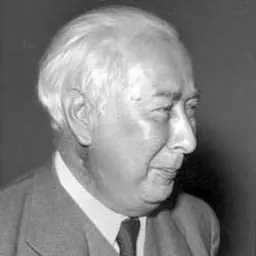
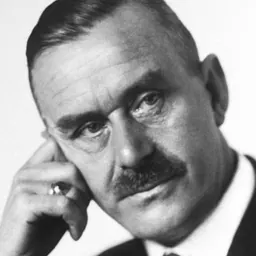
Deutsche Schriften was widely read by figures like Thomas Mann and Theodor Heuss. Tomáš Masaryk regarded Lagarde as one of the leading philosophical and theological spokesmen of the German Drang nach Osten project that threatened the Slavic countries. Masaryk grouped Lagarde with Heinrich von Treitschke as the movement's historian, Wilhelm II as its politician, and Friedrich Ratzel as its geographer.
Lagarde's writings foreshadowed much of the Nazi Party platform when it emerged in 1920. His imperialism prefigured Ratzel's concept of Lebensraum, which was taken up by the Nazis. The Nazi Madagascar Plan for the forcible relocation of Jews originates from what is essentially a wisecrack in Lagarde's 1885 book Die nächsten Pflichten deutscher Politik. The University's Student Union has requested the house be renamed.
Selected works As Paul Boetticher Horae aramaicae. Berlin: prostat apud C. Grobe, 1847. Rudimenta Mythologiae Semiticae Supplementa Lexici Aramaici. Berlin: G. Thome, 1848. Initia Chromatologiae Arabicae. Berlin: Excudebant Trowitzschius et filius, 1849. Arica. Halle: J.F. Lippert. 1851. Hymns of the Old Catholic Church of England. Halle: J.F. Lippert. 1851. Acta Apostolorum. Halle: J.F. Lippert. 1852. Epistulae Novi Testamenti, Coptice. Halle: E. Anton. 1852. Wurzelforschungen. Halle: J.F. Lippert. 1852.
As Paul Lagarde Zur Urgeschichte der Armenier: Ein philologischer Versuch. Austria, W. Hertz, 1854. Didascalia Apostolorum Syriace. Leipzig: B. G. Teubner, 1854. Libris Veteris Testamenti Apocryphi Syriace. Lipsiae: F.A. Brockhausen, 1861. Die Vier Evangelien Arabisch. Leipzig : F. A. Brockhaus, 1864. Gesammelte Abhandlungen. Leipzig: F.A. Brockhause, 1866. Der Pentateuch Koptische. Leipzig: B.G. Teubner, 1867. Onomastica Sacra, Vol. I & II. Gottingae, 1870. 2nd edition, 1887. Armenische Studien. Göttingen: Dieterich’sche Verlagsbuchhandlung, 1877. Semitica I & II. Göttingen: Dieterich’sche Verlagsbuchhandlung, 1878/9. Symmicta I & II. Göttingen: Dieterich’sche Verlagsbuchhandlung, 1877/80. Orientalia I & II. Göttingen: Dieterich’sche Verlagsbuchhandlung, 1879/80. Veteris Testamenti. Gottingae: W.F. Kaestneri, 1880. Aegyptiaca. Gottingae: A. Hoyer, 1883. Mittheilungen I & II, & III. Göttingen: Dieterich’sche Verlagsbuchhandlung, 1884/7/9. Deutsche Schriften. Göttingen: Dieterich’sche Verlagsbuchhandlung, 1892.
As editor: Alcalá, Pedro de. Petri Hispani de Lingua Arabica libri duo. Göttingen: Arnoldi Hoyer, 1883.
Don’t just read it —
keep it.
Full-length biographies made to live with: read them, listen on the way to work, watch them tonight.
- E-book
- Audio
- Video
Instant download · yours to keep · every purchase keeps this site free
Important facts
People in Paul de Lagarde's life
Named in this biography and alive at the same time




Related people
Same field, nearest in time

Contemporaries
People whose lives overlapped Paul de Lagarde's





Frequently asked questions
Who was Paul de Lagarde?
German polymath, biblical scholar and orientalist (1827-1891)
When was Paul de Lagarde born?
Paul de Lagarde was born on 2 November 1827 in Berlin.
When did Paul de Lagarde die?
Paul de Lagarde died on 22 December 1891 in Göttingen.
What was Paul de Lagarde's occupation?
Paul de Lagarde was a writer, armenologist, university teacher, philosopher, theologian and coptologist.
What nationality was Paul de Lagarde?
Paul de Lagarde was German.
Sources & further reading
Cite this page
APA: Biography.guide. (2026). Paul de Lagarde. https://biography.guide/paul-de-lagarde/
MLA: "Paul de Lagarde." Biography.guide, https://biography.guide/paul-de-lagarde/.
Chicago: "Paul de Lagarde." Biography.guide. https://biography.guide/paul-de-lagarde/.
Data last updated: 2026-09-20 · Spot an error? Report a correction.
Page generated 2026-09-27 05:32 UTC