
About Paul Citroen
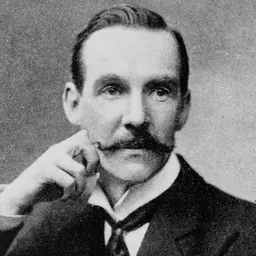
Lived 1896 – 1983 (aged 86). Paul Citroen was a Dutch painter, photographer, art collector, teacher, ceramicist and draftsperson.
Roelof Paul Citroen (15 December 1896 – 13 March 1983) was a German-born Dutch artist, art educator and co-founder of the New Art Academy in Amsterdam. Among his best-known works are the photo-montage Metropolis and the 1949 Dutch postage stamps.
Biography
Early life Citroen was born and grew up in a middle-class family in Berlin to Hendrik Roelof Citroen (1865–1932), a Dutch Jew from Amsterdam while his mother, Ellen Philippi (1872–1945), was from a Berlin Jewish family. His father owned a fur shop and died in Berlin just before the onset of Nazi Germany while his mother died due to illness at the Bergen-Belsen concentration camp. His sister Ilse Citroen (died with her husband at the Auschwitz concentration camp) was the mother of Sanne Ledermann, a friend of Anne Frank. At an early age, Citroen began drawing, provoking strong support from his parents. He soon started to experiment with photography with Erwin Blumenfeld and studied art in Berlin.
As a painter, he was a Dadaist. As a visual artist in photography, he used the Bauhaus Style of physical portraits, many times with the subject peering intensely into the camera.
In 1919 Citroen began studying at the Bauhaus, where he started taking lessons from Paul Klee and Wassily Kandinsky (part of Der Blaue Reiter) and Johannes Itten, who became one of his biggest influences. Around this time, he started Metropolis (1923), which became his best-known piece. Metropolis is held at the Print Room of Leiden University Libraries. A digital version is available via Leiden's Digital Collections. Metropolis influenced Fritz Lang to make his classic film Metropolis. Between 1929 and 1935, Citroen made many photographs, clearly influenced by his work with Blumenfeld.
Citroen's work was included in the 1939 exhibition and sale Onze Kunst van Heden (Our Art of Today) at the Rijksmuseum in Amsterdam.
Later life He soon started up the Nieuwe Kunstschool (New Art School) with Charles Roelofsz. It ran out of money and closed down in 1937. That year, Citroen became a scholar at the Royal Academy of Art in The Hague. When Citroen was warned that he was due to be arrested on 28 August 1942, he fled to Maria Helena Friedlaender (née Bruhn), a German woman, wife of Henri Friedlaender. She hid him with other fugitives in the attic of her house in Wassenaar, South Holland, for several months.
Among his many students are Kees Bol, Madeleine Gans,
Public collections Kunstmuseum Den Haag Hermann-Hesse-Museum, Calw Literatuurmuseum, Den Haag Museum De Fundatie, Zwolle Rijksmuseum Amsterdam Leiden University Libraries Prentenkabinet Stedelijk Museum Amsterdam MoMA, New York Metropolitan Museum of Art, New York Art Institute of Chicago
Don’t just read it —
keep it.
Full-length biographies made to live with: read them, listen on the way to work, watch them tonight.
- E-book
- Audio
- Video
Instant download · yours to keep · every purchase keeps this site free
Important facts
People in Paul Citroen's life
Named in this biography and alive at the same time



Related people
Same field, nearest in time


Contemporaries
People whose lives overlapped Paul Citroen's


Frequently asked questions
Who was Paul Citroen?
Dutch painter (1896-1983)
When was Paul Citroen born?
Paul Citroen was born on 15 December 1896 in Berlin, Germany.
When did Paul Citroen die?
Paul Citroen died on 13 March 1983 in Wassenaar.
What was Paul Citroen's occupation?
Paul Citroen was a painter, photographer, art collector, teacher, ceramicist and draftsperson.
What nationality was Paul Citroen?
Paul Citroen was Dutch.
Sources & further reading
Cite this page
APA: Biography.guide. (2026). Paul Citroen. https://biography.guide/paul-citroen/
MLA: "Paul Citroen." Biography.guide, https://biography.guide/paul-citroen/.
Chicago: "Paul Citroen." Biography.guide. https://biography.guide/paul-citroen/.
Data last updated: 2026-09-20 · Spot an error? Report a correction.
Page generated 2026-09-27 05:20 UTC