
Patty Cannon
American slave trader and serial killer
About Patty Cannon
Lived 1760 – 1829 (aged 68–69). Patty Cannon was a businessperson, serial killer and slave trader.
The Delmarva Peninsula of Maryland and Delaware, where the Cannon–Johnson Gang committed most of their kidnapping illegal slave trade operations. Note the white line boundary dividing the peninsula into three states which also included Virginia.
Patty Cannon, whose birth name may have been Lucretia Patricia Hanly (c. 1759/1760 or 1769 – May 11, 1829), was an illegal slave trader, serial killer, and the co-leader of the multi-racial Cannon–Johnson Gang of Maryland–Delaware. The group operated for about a decade in the early 19th century and abducted hundreds of free Black people and fugitive slaves, along the Delmarva Peninsula, across multiple state lines to sell into slavery in southern states such as Alabama and Mississippi. The activity became known as the Reverse Underground Railroad.
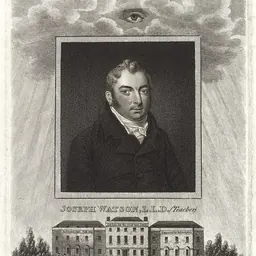
Mayor Joseph Watson of Philadelphia and Governor John Andrew Shulze of Pennsylvania worked to recover young free black people kidnapped by the gang in the summer of 1825 and to prosecute the gang members. They did not succeed in trying any of the white members. The only time any real effort was made to arrest and convict the gang was when authorities found the bodies of several white slave traders, a child and a baby. Some sources say she killed herself with poison.
Beginning in 1841, some popular accounts referred to the illegal slave trader as Lucretia P. Cannon, although there is no evidence to indicate she used the name "Lucretia" in her lifetime. A popular 19th-century novel based on her exploits contributed to her mythic status as a ruthless figure. She has continued to be featured as a figure in fiction. The state of Delaware placed a historical marker in Seaford dedicated "to the victims of this evil enterprise, and those who struggled against it." on the border with Delaware at the convergence of Caroline and Dorchester counties in Maryland, and Sussex County, Delaware. Jesse Cannon died around 1826.
Some time after this, Cannon's daughter married Joe Johnson, who became the mother's most notorious partner in crime. The Cannon–Johnson gang included whites and blacks, among them Henry Carr and John Purnell, described as a "yellow" man or mulatto, who used several aliases. They served as decoys to get young blacks aboard their boat or close enough to take captive. Robert Brereton, a relative of Cannon's late son-in-law, also continued to be involved with the gang at least until 1826.
In addition, nearby Philadelphia, Pennsylvania had the largest population of free black Americans in the North and no professional police force in the antebellum years. Residents, especially children because they were more easily controlled, were at risk from kidnappers. At a time when southern slaveholders came to the city with their slaves, it was difficult for onlookers to determine what was happening between adults and children, and especially between adult black Americans and those who appeared to be their children, when kidnappers used black accomplices. Some were taken overland for sale in Alabama and Mississippi.
The gang's activities continued for many years. Local law enforcement officials were reluctant to halt the illegal operations, and may have been afraid of the gang's reputation for violence. When Patty Cannon learned the police were coming, she would slip across state lines away from local police forces. ("Boy" was a degrading reference to a black man of any age; Mrs. Johnson was not strictly referring to male children.)
Lydia Smith, a 25-year-old free black woman, testified that she was kidnapped in 1825 and kept in Cannon's home before being moved to Johnson's tavern. She was held there for five months until she was shipped south with a large lot of kidnapped free blacks being sold into slavery. and 39 lashes; records show the sentence was carried out.
In 1827, after Cornelius Sinclair had been freed from slavery in Alabama, he was among witnesses to testify against Henry Carr and John Purnell (alias "John Smith"), two members of the gang who were prosecuted for kidnapping free blacks. They were acquitted in Mayor's Court, and Carr left for Alabama, where he died in 1828. Purnell was also tried in the Philadelphia County Court, where he was convicted in Philadelphia on two counts of kidnapping, and sentenced to a $4000 (~$ in ) fine and 42 years in prison. He died five years later while incarcerated in Walnut Street Prison in the city.
In 1829, bodies of four black people, including three children, were discovered buried on farm property which Cannon owned in Delaware. A tenant farmer uncovered their remains during plowing. Cannon died in her cell, in Georgetown, Delaware, on May 11, 1829, at an age estimated to be between sixty and seventy.
Legacy In the 1990s, a historical marker was placed on the highway near what is sometimes called the "Patty Cannon House" in Reliance, Maryland, but this structure was built about 1840. A PBS history series proved the marker was placed on land which Joe Johnson bought in 1821 for $150, and Patty Cannon bought from him in 1826. Her own residence, which was built in the 18th century, stood several hundred yards away and was torn down in 1948.
Representation in other media She figures into a number of collections of folkloric stories involving ghosts later collected into books. Narrative and Confessions of Lucretia P. Cannon (1841), published anonymously in New York. This pamphlet inspired others, in which the main character's name and crimes were changed. These pamphlets were a subgenre of sensational literature which resembled a combination of modern pulp magazines and true crime books; they were contemporary with the British penny dreadfuls. Cannon was given the first name "Lucretia" in the 1841 pamphlet, apparently to associate her with the notorious poisoner Lucretia Borgia. The Entailed Hat, or, Patty Cannon's Times, a novel by George Alfred Townsend was published in 1884. Its popularity resulted in numerous hardback editions; it was reissued in 1890, 1912, 1955 and 1969. A paperback edition was issued in March 2007. The slave-stealing Patty Ridenour character in a sixth-season episode of Homicide: Life on the Street entitled "Sins of the Father" (aired January 9, 1998) appears to be modeled on Cannon. James McBride features Cannon in his 2008 historical novel Song Yet Sung (2008). Clive Cussler and Grant Blackwood's novel Spartan Gold (2009), is based in part upon Cannon and a modern-day search for valuable stolen artifacts which she may have left behind. The WGN TV series Underground introduced the character Patty Cannon (played by Brigid Brannagh and then Sadie Stratton) in its first-season finale (2016). This was an anachronism since the series takes place in the late 1850s, decades after Cannon's death, yet portrays her as fairly young. Cannon was featured in the Season 11, episode 4 of Deadly Women.
Don’t just read it —
keep it.
Full-length biographies made to live with: read them, listen on the way to work, watch them tonight.
- E-book
- Audio
- Video
Instant download · yours to keep · every purchase keeps this site free
Important facts
People in Patty Cannon's life
Named in this biography and alive at the same time
Related people
Same field, nearest in time




Contemporaries
People whose lives overlapped Patty Cannon's





Frequently asked questions
Who was Patty Cannon?
American slave trader and serial killer
When was Patty Cannon born?
Patty Cannon was born in 1760.
When did Patty Cannon die?
Patty Cannon died on 11 May 1829 in prison.
What was Patty Cannon's occupation?
Patty Cannon was a businessperson, serial killer and slave trader.
Sources & further reading
Cite this page
APA: Biography.guide. (2026). Patty Cannon. https://biography.guide/patty-cannon/
MLA: "Patty Cannon." Biography.guide, https://biography.guide/patty-cannon/.
Chicago: "Patty Cannon." Biography.guide. https://biography.guide/patty-cannon/.
Data last updated: 2026-09-22 · Spot an error? Report a correction.
Page generated 2026-09-27 05:21 UTC