
About Patrick Hadley
Lived 1899 – 1973 (aged 74). Patrick Hadley was a British composer, music educator and university teacher.
Patrick Arthur Sheldon Hadley (5 March 1899 – 17 December 1973) was a British composer.
Biography Patrick Sheldon Hadley was born on 5 March 1899 in Cambridge. His father, William Sheldon Hadley, was at that time a fellow of Pembroke College. His mother, Edith Jane, was the daughter of the Revd Robert Foster, chaplain to the Royal Hibernian Military School in Dublin.
Patrick attended St Ronan's Preparatory School (in Worthing, Sussex) and Winchester College (in Hampshire). However the First World War interrupted his education. He enlisted in the army and was commissioned as a second lieutenant in the Royal Field Artillery. He managed to survive unscathed until the last weeks of the war, when he received an injury necessitating the below-knee amputation of his right leg. This profoundly damaged his confidence and also caused him to perhaps drink more than was wise; he was in constant pain, for which alcohol provided some relief. Patrick's elder brother Peyton Sheldon Hadley, a former pupil of Charterhouse School, who served in the infantry, was also wounded in the closing months of the War. He was invalided home to convalesce, but died of pneumonia that October. A memorial to Peyton is found in the Charterhouse School Chapel. that Hadley's contemporaries at the RCM included Constant Lambert and Gordon Jacob. He won the Sullivan prize for composition: at that time the sum of 5 shillings.
In 1938 Hadley was elected to a Fellowship at Gonville and Caius College in Cambridge and appointed as a lecturer in the music faculty. Much of his time was spent in mundane administrative activities, but there was still time available for composition. Some of his greatest works were written during and after the war.
Music Patrick Hadley was influenced by the music of Frederick Delius and also to a certain extent folk music. in many ways Hadley is a link between Vaughan Williams and Benjamin Britten. For example, the first movement of The Trees so High anticipates in some respects Hadley was not so drawn into the folk song revival as Vaughan Williams, though much of his music has subtle folk characteristics.
Many of the shorter works in the composer's output, such as anthems for liturgical use, were connected with the choir of Gonville and Caius College, Cambridge. He also made a number of arrangements of works in many different genres, from Verdi's Stabat Mater to Waltzing Matilda.
Works Ephemera. On 19 March 1925 Constant Lambert was the piano soloist at a College concert for a performance of this setting of W B Yeats for soprano, flute, oboe, string quartet and piano. Ephemera was probably influenced by Peter Warlock's The Curlew (1920–22) and approaches the Celtic twilight mood of Warlock's piece, though it is less melancholic. Lambert conducted the work again in a version for soprano and small orchestra in a BBC broadcast on 18 December 1931. It remained unpublished. Scene from The Woodlanders. Another song of farewell scored for similar ensemble. A setting of Thomas Hardy, it is more assured than Ephemera and was accepted for publication by Hubert Foss at the Oxford University Press in 1926. Hadley continued to write works for solo voice and small ensemble throughout his career, such as Mariana (setting Tennyson) in 1937 and Lines from 'The Cenci''' (setting Shelley) in 1951. The Trees So High. One of Hadley's undoubted masterpieces is his Symphonic Ballad: The Trees So High, completed in 1931, and first performed in Cambridge the following year. It was at one stage described by Hadley as a 'symphony in A minor'. Scored for baritone, chorus, and full orchestra, it uses the melodic framework and text of the Somerset folksong of that name. There are four movements, though only the last features the chorus and soloist, quoting the folksong explicitly in its entirety. Hadley characterised the form as ‘three independent brooks which flow into one stream at the beginning of the finale’. La Belle Dame sans merci. This 'short masterpiece' 'I lost my mother in 1940 and that set my mind to the Derbyshire hills where she met my father.' Many specific local place-names are quoted in the text. As Christopher Palmer notes, One Morning in Spring. Hadley wrote little for orchestra alone: purely instrumental music did not hold much attraction for him. It is strikingly scored, calling for cor anglais but no oboes. Lenton Meditations. This (also known as A Lenten Cantata or A Cantata for Lent) was Hadley's last major work, completed in 1962. It is a setting of Biblical texts, written for tenor and bass soloists, chorus and orchestra with organ.
Recordings La Belle Dame sans merci: Neill Archer (tenor), Philharmonia Chorus, Philharmonia Orchestra, conducted by Matthias Bamert, 1992, reissued on CD as Chandos CHAN 241-22. Fen and Flood, arranged by Ralph Vaughan Williams for soloists, mixed chorus and orchestra: Mary Bevan (soprano), Leigh Melrose (baritone), Joyful Company of Singers, Bournemouth Symphony Orchestra, conducted by Paul Daniel, 2010, issued on Albion Records ALBCD 012. The Hills, Felicity Palmer (soprano), Robert Tear (tenor), Robert Lloyd (bass), Cambridge University Musical Society Chorus, London Philharmonic Orchestra conducted by Philip Ledger, 1975, reissued on CD as EMI CDM 5 67118 2. I sing of a maiden: Choir of King's College, Cambridge and Francis Grier (organ), conducted by Philip Ledger, 1975, reissued on CD as EMI CDM 5 67118 2. Kinder Scout. BBC Philharmonic conducted by Rumon Gamba, on British Tone Poems Volume 2, Chandos Records CHAN 10981, September 2019. Lenten Meditations (aka Cantata for Lent): Neill Archer (tenor), Stephen Richardson (bass), Leslie Pearson (organ), Philharmonia Chorus, Philharmonia Orchestra, conducted by Matthias Bamert, 1992, reissued on CD as Chandos CHAN 241-22. My beloved spake: Choir of King's College, Cambridge and James Lancelot (organ), conducted by Sir David Willcocks, 1973, reissued on CD as EMI CDM 5 67118 2. One Morning in Spring: London Philharmonic Orchestra, conducted by Sir Adrian Boult, 1979, reissued on Lyrita SRCD 245. One Morning in Spring: Philharmonia Orchestra, conducted by Matthias Bamert, 1992, reissued on CD as Chandos CHAN 241-22. The Trees so High: David Wilson-Johnson (baritone), Philharmonia Chorus, Philharmonia Orchestra, conducted by Matthias Bamert, 1992, reissued on CD as Chandos CHAN 241-22. The Trees so High: Thomas Allen (baritone), Guildford Philharmonic Choir, New Philharmonia Orchestra, conducted by Vernon Handley, 1979, reissued on CD as Lyrita SRCD 238.
List of works Kinder Scout (1923), tone poem for orchestra Ephemera (1925), text Yeats, soprano and chamber ensemble Scene from The Woodlanders (1925) text Hardy, voice and chamber ensemble Lullaby (1929), song, text Richard Rowlands The Trees So High, symphonic ballad (1931), for baritone, chorus, and full orchestra String Quartet (1933)La Belle Dame sans merci (1935), text Keats, for tenor, chorus and orchestra I Sing of a Maiden (1936), short piece for chorus and organ The Solitary Reaper (1936), text Wordsworth, part song for unaccompanied choir Mariana (1937), text Tennyson, voice and chamber ensemble My Beloved Spake (1938), short piece for chorus and organ Antigone (1939), incidental music for voices and chamber ensemble One Morning in Spring (1942), for orchestra The Travellers (1942), text Alan Pryce-Jones, cantata for soprano, chorus and orchestra The Hills (1944), cantata for soloists, chorus and orchestra Lines from 'The Cenci' (1951), text Shelley, voice and chamber ensemble Agamemnon (1953), incidental music for voices and chamber ensemble Fen and Flood (1955), cantata for chorus and orchestra Connemara (1958), cantata for soprano, tenor, baritone, chorus and orchestra Cantata for Lent (1962), for tenor and bass soloists, chorus and orchestra with organ.
Don’t just read it —
keep it.
Full-length biographies made to live with: read them, listen on the way to work, watch them tonight.
- E-book
- Audio
- Video
Instant download · yours to keep · every purchase keeps this site free
Important facts
People in Patrick Hadley's life
Named in this biography and alive at the same time





Related people
Same field, nearest in time
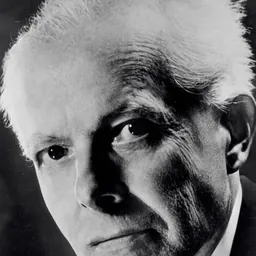


Contemporaries
People whose lives overlapped Patrick Hadley's

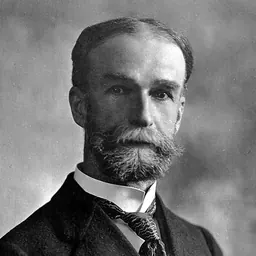
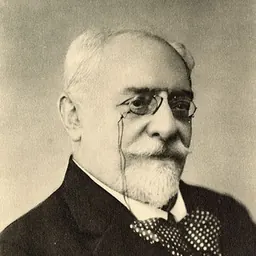
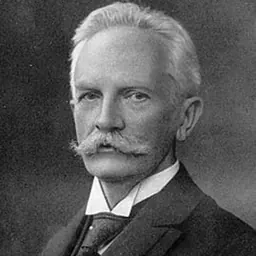


Frequently asked questions
Who was Patrick Hadley?
British composer (1899–1973)
When was Patrick Hadley born?
Patrick Hadley was born on 5 March 1899 in Cambridge.
When did Patrick Hadley die?
Patrick Hadley died on 17 December 1973 in King's Lynn.
What was Patrick Hadley's occupation?
Patrick Hadley was a composer, music educator and university teacher.
What nationality was Patrick Hadley?
Patrick Hadley was British.
Sources & further reading
Cite this page
APA: Biography.guide. (2026). Patrick Hadley. https://biography.guide/patrick-hadley/
MLA: "Patrick Hadley." Biography.guide, https://biography.guide/patrick-hadley/.
Chicago: "Patrick Hadley." Biography.guide. https://biography.guide/patrick-hadley/.
Data last updated: 2026-09-20 · Spot an error? Report a correction.
Page generated 2026-09-27 04:57 UTC