
About Patricia Hoey
Lived 1883 – 1930 (aged 46). Patricia Hoey was an Irish journalist, known for Suffragette.
Patricia Hoey (15 November 1883 – 9 November 1930) was an Irish journalist, suffragist, Irish Republican and nationalist.
Early life and family Patricia Hoey was born Ethel Mary Hoey at 7 Trafalgar Terrace, Dublin on 15 November 1883. Her parents were Edmond and Margaret Hoey (née Mulchinock). Her maternal great-uncle was William Pembroke Mulchinock, the purported composer of The Rose of Tralee, and her great-great-uncle was John Mulchinock. Hoey's father died on 3 March 1887, which left his widow with just £78 and heavily pregnant with her second child, Edmund Joseph who was born on 15 April. There is no record of Hoey's childhood or education. It appears that her mother remarried, and that the family may have moved to England. In the 1920s Hoey was described as supporting her mother who was recorded as 'Mrs Clive Howard' and a step-sister who was described as deaf and dumb.
Life in Ireland Hoey left England for Canada in June 1913, sailing from Liverpool to Quebec on the Teutonic. She worked for the Canadian government, conducting research on maple-syrup farmers. She had returned to Ireland by 3 February 1916, where she was appointed to inquire into cases of outdoor relief and coal distribution recorded in the relieving officer's books. On 22 February she delivered a speech on the women's movement in Canada. She joined Ard Craobh Cumann na mBan and was stationed at the Imperial Hotel on O'Connell Street under the command of Frank Thornton during the Easter Rising. Commandant Seamus Daly stated that she was in charge of 7-8 Cumann na mBan women, and said she was the "most efficient and hard-working woman during the whole thing". Hoey was in charge of evacuating the women from the hotel when it was bombed. She also maintained a secret office for Michael Collins at her home at 5 Mespil Road under the name O'Brien. At this house, Hoey occasionally hosted cabinet meetings, with Collins using it as an office during the day for meetings. Hoey was appointed secretary to the Dáil courts on Henry Street by Collins. The auxiliary British forces occupied 5 Mespil Road for 24 hours in April 1921 in an attempt to catch Collins unaware. Hoey circumvented them by pretending her mother was unwell and calling on Dr Alice Barry who then took papers from the house, smuggled them to Collins with a warning for him to stay away. Hoey's house was ransacked, with her possessions taken or destroyed, and she was imprisoned in Mountjoy prison for several weeks until she was released in June due to a lack of any evidence against her. During her incarceration, along with other women, Collins sent her items such as books, food, and tea.
Following the truce in July 1921, Griffith requested that she work on the negotiations regarding Ulster. Hoey was pro-treaty, and was enlisted in the National Army as assistant military censor on 20 June 1922, working under Piaras Béaslaí. Béaslaí later stated that she did exactly the same work as her male peers, operating under great personal danger. After the civil war, she attempted to enter politics, as a founding member of the Women's Independent Association, and later running unsuccessfully in the 1925 Seanad election. She faced scepticism from the Irish Free State government, who were unwilling to pay her a pension. She petitioned Béaslaí, Kevin O'Higgins, and William Cosgrave, but was only awarded £24.3.4.
In July 1926, Hoey organised a dispensary for the treatment of sick animals of the poor in Portobello Harbour, Dublin. It was so successful, that it became a reoccurring evening on every Wednesday and Saturday. In 1926 she was working for the Hearst press. Hoey disappears from the records until January 1929, when her mother petitioned the government for money when she mentions her daughter's illness. Hoey died on 9 November 1930 of pulmonary tuberculosis at Our Lady of Lourdes hospital, Kill of the Grange, Dublin. She is buried in Glasnevin Cemetery, with her funeral attended by Colonel Joseph O'Reilly representing President Cosgrave, Richard Mulcahy and Justice John Reddin among others.
Don’t just read it —
keep it.
Full-length biographies made to live with: read them, listen on the way to work, watch them tonight.
- E-book
- Audio
- Video
Instant download · yours to keep · every purchase keeps this site free
Important facts
People in Patricia Hoey's life
Named in this biography and alive at the same time


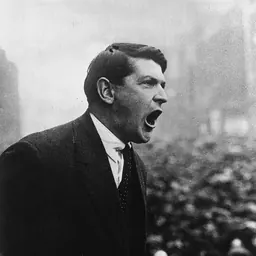
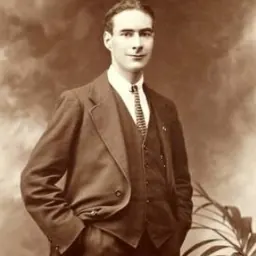
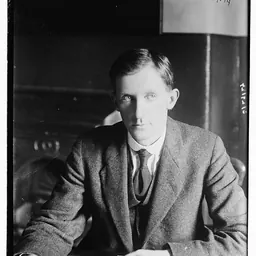


Related people
Same field, nearest in time



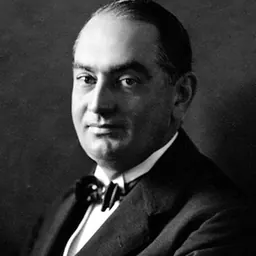
Contemporaries
People whose lives overlapped Patricia Hoey's


Frequently asked questions
Who was Patricia Hoey?
Irish journalist, suffragist and nationalist (1883–1930)
When was Patricia Hoey born?
Patricia Hoey was born on 15 November 1883 in Dublin.
When did Patricia Hoey die?
Patricia Hoey died on 9 November 1930 in Dublin.
What was Patricia Hoey's occupation?
Patricia Hoey was a journalist.
What was Patricia Hoey known for?
Patricia Hoey was known for Suffragette.
What nationality was Patricia Hoey?
Patricia Hoey was Irish.
Sources & further reading
Cite this page
APA: Biography.guide. (2026). Patricia Hoey. https://biography.guide/patricia-hoey/
MLA: "Patricia Hoey." Biography.guide, https://biography.guide/patricia-hoey/.
Chicago: "Patricia Hoey." Biography.guide. https://biography.guide/patricia-hoey/.
Data last updated: 2026-09-20 · Spot an error? Report a correction.
Page generated 2026-09-27 05:33 UTC