
About Patricia Churchland
Born 1943. Patricia Churchland is a Canadian and American philosopher, university teacher and neuroscientist.
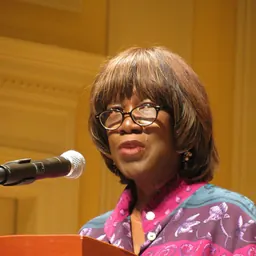
Patricia Smith Churchland (born 16 July 1943) is a Canadian-American analytic philosopher noted for her contributions to neurophilosophy and the philosophy of mind. She is UC President's Professor of Philosophy Emerita at the University of California, San Diego (UCSD), where she has taught since 1984. She has also held an adjunct professorship at the Salk Institute for Biological Studies since 1989. She is a member of the Board of Trustees Moscow Center for Consciousness Studies of Philosophy Department, Moscow State University. In 2015, she was elected a Fellow of the American Academy of Arts & Sciences. Educated at the University of British Columbia, the University of Pittsburgh, and Somerville College, Oxford, she taught philosophy at the University of Manitoba from 1969 to 1984 and is married to the philosopher Paul Churchland. Larissa MacFarquhar, writing for The New Yorker, observed of the philosophical couple that: "Their work is so similar that they are sometimes discussed, in journals and books, as one person."
Biography
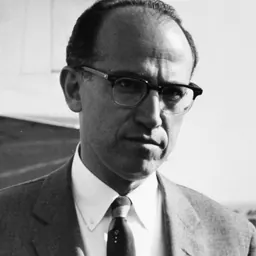
Early life and education Churchland was born Patricia Smith in Oliver, British Columbia, She took her undergraduate degree at the University of British Columbia, graduating with honors in 1965. Thereafter she studied at Somerville College, Oxford as a British Council and Canada Council Fellow, obtaining a B. Phil in 1969. From 1982 to 1983 she was a Visiting Member in Social Science at the Institute for Advanced Study in Princeton. In 1984, she was invited to take up a professorship in the department of philosophy at UCSD, and relocated there with her husband Paul, where both have remained since. Since 1989, she has also held an adjunct professorship at the Salk Institute adjacent to UCSD's campus, where she became acquainted with Jonas Salk Her collaboration with Sejnowski culminated in a book, The Computational Brain (MIT Press, 1993), co-authored with Sejnowski. Churchland was named the UC President's Professor of Philosophy in 1999, and served as Chair of the Philosophy Department at UCSD from 2000-2007.
Philosophy Churchland is broadly allied to a view of philosophy as a kind of 'proto-science' - asking challenging but largely empirical questions. She advocates the scientific endeavour, and has dismissed significant swathes of professional philosophy as obsessed with what she regards as unnecessary. Philosophy of mind Churchland's own work has focused on the interface between neuroscience and philosophy. According to her, philosophers are increasingly realizing that to understand the mind one must understand the brain. She applies findings from neuroscience to address traditional philosophical questions about knowledge, free will, consciousness and ethics. She is associated with a school of thought called eliminative materialism, which argues that common sense, immediately intuitive, or "folk psychological" concepts such as thought, free will, and consciousness will likely need to be revised in a physically reductionistic way as neuroscientists discover more about the nature of brain function. 2014 saw a brief exchange of views on these topics with Colin McGinn in the pages of the New York Review Of Books.
Personal life
Churchland first met her husband, the philosopher Paul Churchland, while they were both enrolled in a class on Plato at the University of Pittsburgh, Churchland is considered an atheist, but she identified herself as pantheist in a 2012 interview.
Awards and honors MacArthur Fellowship, 1991 Humanist Laureate, International Academy of Humanism, 1993 Honorary Doctor of Letters, University of Virginia, 1996 Distinguished Cognitive Scientist, UC, Merced Cognitive and Information Sciences program, 2011 Fellow of the Cognitive Science Society, 2011
Works
As sole author Neurophilosophy: Toward a Unified Science of the Mind-Brain. (1986) Cambridge, Massachusetts: The MIT Press. "The Hornswoggle Problem". (1996) San Diego, La Jolla, CA. Journal of Consciousness Studies. Brain-Wise: Studies in Neurophilosophy. (2002) Cambridge, Massachusetts: The MIT Press. Braintrust: What Neuroscience Tells Us about Morality. (2011) Princeton University Press. eBook Touching A Nerve: The Self As Brain. (2013) W. W. Norton & Company. Conscience: The Origins of Moral Intuition. (2019) W. W. Norton & Company.
As co-author or editor The Computational Brain. (1992) Patricia S. Churchland and T. J. Sejnowski. Cambridge, Massachusetts: The MIT Press. Neurophilosophy and Alzheimer's Disease. (1992) Edited by Y. Christen and Patricia S. Churchland. Berlin: Springer-Verlag. The Mind-Brain Continuum (1996). Edited by R.R. Llinás and Patricia S. Churchland: The MIT Press. On the Contrary: Critical Essays 1987-1997. (1998). Paul M. Churchland and Patricia S. Churchland. Cambridge, Massachusetts: The MIT Press.
Don’t just read it —
keep it.
Full-length biographies made to live with: read them, listen on the way to work, watch them tonight.
- E-book
- Audio
- Video
Instant download · yours to keep · every purchase keeps this site free
Important facts
People in Patricia Churchland's life
Named in this biography and alive at the same time




Related people
Same field, nearest in time


Contemporaries
People whose lives overlapped Patricia Churchland's


Frequently asked questions
Who is Patricia Churchland?
Canadian philosopher
When was Patricia Churchland born?
Patricia Churchland was born on 16 July 1943 in Oliver.
What is Patricia Churchland's occupation?
Patricia Churchland is a philosopher, university teacher and neuroscientist.
What nationality is Patricia Churchland?
Patricia Churchland is Canadian and American.
Sources & further reading
· Wikipedia: Patricia Churchland
· DBpedia: Patricia Churchland
Cite this page
APA: Biography.guide. (2026). Patricia Churchland. https://biography.guide/patricia-churchland/
MLA: "Patricia Churchland." Biography.guide, https://biography.guide/patricia-churchland/.
Chicago: "Patricia Churchland." Biography.guide. https://biography.guide/patricia-churchland/.
Data last updated: 2026-09-26 · Spot an error? Report a correction.
Page generated 2026-09-27 05:14 UTC