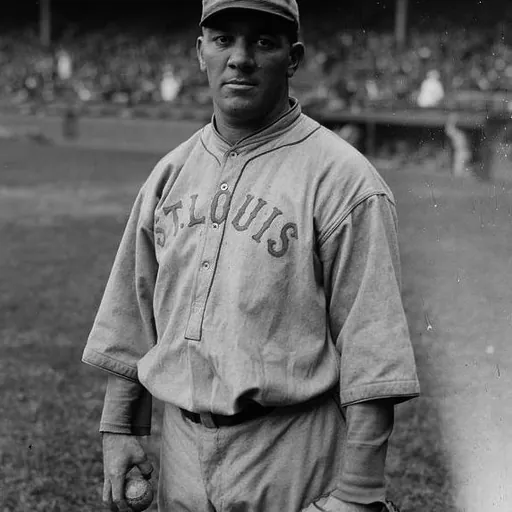
About Pat Collins
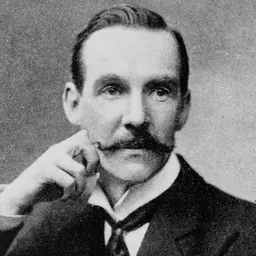
Lived 1896 – 1960 (aged 63). Pat Collins was an American baseball player.
Tharon Leslie "Pat" Collins (September 13, 1896 – May 20, 1960) was an American professional baseball catcher. He played ten seasons in Major League Baseball (MLB) for the St. Louis Browns, New York Yankees and Boston Braves from 1919 to 1929. Collins batted and threw right-handed and also played five games at first base.
Collins played minor league baseball for the Joplin Miners until 1919, when he signed with the Browns. After spending six seasons with the organization, Collins spent a one-year sojourn in the minor leagues before he was traded to the Yankees, where he spent the next three years and played in the famous 1927 Murderers' Row lineup. At the conclusion of the 1928 season, he was traded to the Braves, with whom he played his last major league game on May 23, 1929. A two-time World Series champion, he is famous for being the only major league player to pinch hit and pinch run in the same game.
Personal life Collins was born on September 13, 1896, in Sweet Springs, Missouri. His mother, Sarah, ran a boarding house, and he had three siblings: Ola, Mildred, and Rathal. He attended school in Sweet Springs before moving to Kansas City, Kansas, to play sandlot ball. He was married to Daisy C. Collins. During his time with the Yankees, his teammate Babe Ruth – who usually called everyone "Kid" due to his inability to remember people's names – mockingly gave Collins the nickname "Horse Nose". After his major league career ended, he went on to run a restaurant in Kansas City, then operate a tavern in Lawrence, Kansas, until 1952.
In April 1952, the state of Kansas took Collins to court over alleged unpaid federal income tax from 1945 to 1950. After being treated for a heart condition, In 1919, his last season with the Miners, he had a breakthrough year, posting a batting average of .316 and amassing 100 hits, 19 doubles and 10 home runs in 96 games played. Between 1920 and 1922, he never played more than 31 games nor started more than 20 games a season as catcher, and his role was limited to occasional pinch-hitting appearances. During a June 8 road game at Shibe Park, he became the first and only major league player to pinch hit and pinch run in the same game. His teammate Homer Ezzell reached base in the third inning, but needed to use the restroom. Collins was inserted into the game as a pinch runner until Ezzell returned. In the ninth inning, Collins returned to pinch hit for pitcher Ray Kolp after the Philadelphia Athletics' manager Connie Mack agreed to drop the no free substitution rule and allowed Collins to pinch hit. However, the official box score lists his pinch hit appearance only.
In , there were two factors which limited Collins to just 20 games (11 starts) as catcher. Firstly, he dislocated the joint in his left thumb during spring training after splitting the finger. Then on June 22, Collins—along with Browns manager George Sisler and coach Jimmy Austin—were suspended indefinitely after arguing balls and strikes with the umpire. Sisler lodged a formal protest to AL president Ban Johnson, and the suspensions were rescinded four days later. After the season ended, Collins was not re-signed by the Browns, so he spent the season with the St. Paul Saints, a minor league baseball team that competed in the American Association (AA). There, he batted .316 and hit 19 home runs in 132 games. During his years with the team, he developed a reputation of being slow-footed and having a throwing arm that was described as "terrible" and "weak". However, his steadiness behind the plate after Benny Bengough—who was Miller Huggins' first choice for the job—suffered from a sore arm before spring training commenced. who was also facing his former team. This, along with Bengough's recurring problems with his arm, prompted the Yankees to buy Hank Severeid from the Washington Senators. Collins did not receive much playing time throughout the series, appearing in just three games and getting no hits and one strikeout in two plate appearances. He was usually placed near the bottom of the Yankees lineup, which was given the nickname "Murderers' Row". Many sports analysts, baseball writers and fans consider the 1927 team the greatest baseball team of all time. Although Collins was labelled an "offensive afterthought", Collins played in Games 1 and 4; in the first game, he was hitless in two at bats but garnered two walks, while in the latter game he went 3-for-3 with a double. His series average of .600 was the highest among his teammates. the team now had four catchers on their roster. The increase competition restricted Collins to 45 starts and 70 games in total. However, he played just one game in the series, entering the 7th inning of Game 4 as a defensive substitute and hitting a double two innings later. The catching situation—along with his dismal .221 batting average that year There, he batted .122 and had 5 hits in 16 games played He batted .244 during his stint with the team and was traded midway through the 1930 season to the Kansas City Blues, thus returning to the AA. His numbers improved tremendously—he recorded a .358 batting average, amassed 39 hits and slugged 7 doubles and 3 home runs in 109 at bats. The season saw Collins play just 27 games with the Blues and his average dipped to .182. but the deal fell through and he remained with the team through to the season. That year, he played 105 games and batted .268, collected 78 hits with 14 doubles, 3 triples and 4 home runs before retiring from professional baseball at the end of the season. However, the plan fell through after a court injunction was issued barring him from using the stadium in St. Joseph for professional baseball. Because of this, Collins forfeited the St. Joseph franchise and subsequently bought the Western League's Rock Island Islanders instead.
Don’t just read it —
keep it.
Full-length biographies made to live with: read them, listen on the way to work, watch them tonight.
- E-book
- Audio
- Video
Instant download · yours to keep · every purchase keeps this site free
Important facts
People in Pat Collins's life
Named in this biography and alive at the same time


Related people
Same field, nearest in time

Contemporaries
People whose lives overlapped Pat Collins's




Frequently asked questions
Who was Pat Collins?
American baseball player
When was Pat Collins born?
Pat Collins was born on 13 September 1896 in Sweet Springs.
When did Pat Collins die?
Pat Collins died on 20 May 1960 in Kansas City.
What was Pat Collins's occupation?
Pat Collins was a baseball player.
What nationality was Pat Collins?
Pat Collins was American.
Sources & further reading
· DBpedia: Pat Collins (baseball)
Cite this page
APA: Biography.guide. (2026). Pat Collins. https://biography.guide/pat-collins/
MLA: "Pat Collins." Biography.guide, https://biography.guide/pat-collins/.
Chicago: "Pat Collins." Biography.guide. https://biography.guide/pat-collins/.
Data last updated: 2026-09-22 · Spot an error? Report a correction.
Portrait: Wikimedia Commons · author & licence
Page generated 2026-09-27 05:03 UTC