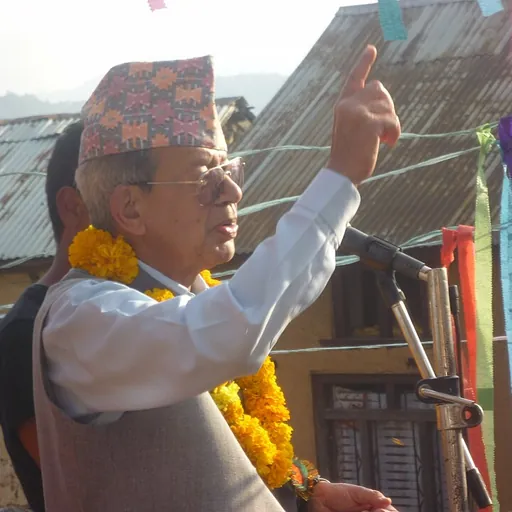
About Pashupati Shumsher Jung Bahadur Rana
Born 1941. Pashupati Shumsher Jung Bahadur Rana is a Nepali politician.
Pashupati Shumsher Jung Bahadur Rana is a politician and statesman from the former Rana dynasty of Nepal. He served as the Minister of Foreign Affairs, the Minister of Finance, the Minister of Water Resources and Minister of Communications and the Deputy Prime Minister of Nepal after the Panchayat era. He served as Minister of Home Affairs, Minister of Panchayat and Local Development (1986–1988), Minister of Transport and Tourism (1978–1979) and various other full ministers and state ministers during the Panchayat era. He is also one of the richest people in Nepal.
Personal life
Pashupati Shumsher Jang Bahadur Rana was born to Lieutenant General Yuvaraj Bijaya Shamsher Jang Bahadur Rana, son of H.H. Shree Tin Maharaja Mohan Shumsher Jang Bahadur Rana, into the Rana dynasty of Nepal, which had wielded hereditary power in the Kingdom of Nepal since 1846. Rana attended Bishop Cotton School in Shimla, India, for his early secondary education. He continued his studies at Haileybury and Imperial Service College in the United Kingdom, then pursued a PPE degree at New College, University of Oxford and graduated with a Bachelor of Arts degree.
He is married to Maharani Usha Raje Scindia, daughter of the Maharaja of the Gwalior State, Jiwaji Rao Scindia and Vijaya Raje Scindia. He has two daughters: Devyani Rajya Lakshmi and Urvashi Rajya Lakshmi. Devyani Rajya Lakshmi married the erstwhile Yuvaraj of Singrauli; Aishwarya Singh, son of Bhuvneshwar Prasad Singh and Veena Kumari Singh. Urvashi Rajya Lakshmi married Shiv Khemka, a businessman from the "Marwadi" Community.
Wealth Rana's wealth derives primarily from inherited Rana family estates and lands, such as the Lakshmi Niwas palace, dating to the pre-1951 era, which were subsequently managed through business ventures in manufacturing and energy sectors. He holds stakes in various Nepalese manufacturing companies, banks and previously owned Nepal Gas, contributing to an estimated net worth of $820 million as of recent assessments. His marriage to Usha Raje Scindia has also contributed and bolstered his economic standing. He is regarded as one of Nepal's cleanest politicians, contrary to other mainstream politicians.
Political career
Ministerial positions Pashupati Shumsher Jung Bahadur Rana assumed the role of Minister of Foreign Affairs shortly after the 1990 restoration of multiparty democracy, which marked the end of the Panchayat autocratic system and initiated a transitional phase in Nepal's governance. This approach aligned with historical precedents of Nepalese leaders who prioritized sovereignty through pragmatic balancing of great-power interests, avoiding over-reliance on any single external actor. Rana subsequently served as Minister of Finance in the immediate post-1990 democratic interim government, focusing on stabilizing public finances during economic uncertainty following political upheaval. His brief tenure addressed foundational fiscal management in a nascent multiparty framework, though quantifiable outcomes such as debt reduction or revenue enhancements are sparsely documented in contemporary accounts.
In the mid-1990s, Rana held the position of Minister of Water Resources, where he advanced infrastructure initiatives centered on hydropower and irrigation to capitalize on Nepal's hydrological assets. A key action was tabling the Mahakali Integrated Development Treaty in parliament in 1997 for ratification, which outlined joint utilization of the Mahakali River for power generation and agriculture with India, potentially enabling multi-gigawatt hydropower capacity while raising concerns over equitable resource control and long-term sovereignty implications.
On August 6, 2017, Rana led a factional split from the RPP, registering the Rastriya Prajatantra Party (Democratic)—also known as RPP-Prajatantrik—at the Election Commission, citing irreconcilable differences with Chairman Kamal Thapa over pragmatic alliances like joining Prime Minister Sher Bahadur Deuba coalition government, which Rana argued undermined commitments to monarchist and Hindu nationalist principles.
The departure reduced the original RPP's parliamentary strength from 37 seats, highlighting fractures in sustaining unity after the November 2016 merger of Thapa's RPP-Nepal and Rana's earlier RPP faction.
Subsequent leadership tensions in 2018 involved merger negotiations with Thapa's RPP and Prakash Chandra Lohani's group, where Rana advocated stricter adherence to pro-Hindu state and monarchy restoration amid broader dissatisfaction with republican governance's corruption and instability, though talks stalled over power-sharing and policy priorities. These dynamics reflected causal pressures from voter disillusionment with mainstream parties' failures, bolstering Rana's faction's appeal to traditionalist constituencies prioritizing cultural and institutional restoration over expediency. Rana's resolve culminated in a 2019 merger with Lohani's Ekata Rastriya Prajatantra Party (Rastrawadi), forming the Rastriya Prajatantra Party (Samyukta) on January 31, which reaffirmed dual leadership and ideological focus on Hindu Rashtra and Constitutional monarchy, enabling consolidated outreach to bases alienated by multiparty system's inefficiencies. This realignment sustained the party's niche support, as evidenced by its ability to field candidates in subsequent polls drawing from royalist and Hindu revivalist voters, though overall RPP variants garnered under 2% national vote share in 2017 provincial elections, linking turnout gains in conservative strongholds to anti-corruption messaging rooted in pre-republican nostalgia.
Later electoral roles Rana was sworn in as the senior-most member of Nepal's House of Representatives (HoR) on December 21, 2022, following his election from the Rastriya Prajatantra Party in the November 2022 general elections. His precedence stemmed from verified age, positioning him to administer oaths to other lawmakers the following day, December 22.
In this capacity, Rana assumed the temporary role of Speaker for the initial HoR session, overseeing parliamentary procedures and pledging impartiality amid political transitions. He described himself as a "guardian of the country," committing to coordinate across parties, advance multiparty democracy, and ensure procedural integrity without favoritism.
Into 2024 and 2025, Rana continued active parliamentary involvement, including service on the Parliamentary Hearing Committee. His public engagements featured critiques of contemporary governance, favoring historical figures like Jung Bahadur Rana for their role in preserving sovereignty through decisive leadership, in contrast to perceived inefficiencies under leaders such as K.P. Sharma Oli.
Electoral history
1978 House of Representatives Election - Won 1982 House of Representatives Election - Won 1986 House of Representatives Election - Won 1991 House of Representatives Election - Won 1994 House of Representatives Election - Won 1999 House of Representatives Election - Won 2013 Constituent Assembly Election - Lost 2013 Constituent Assembly Election - Lost 2018 House of Representatives Election - Lost 2022 House of Representatives (Upper House) Election - Won
Notable published works
Nepal's Forth Plan: A Critique (1971). Bikas Tatha Yojana (1971). Nepal in Perspective (1973). Kathmandu; a Living Heritage (1989). Contemporary Nepal (1998). The Ranas of Nepal (2002).
Don’t just read it —
keep it.
Full-length biographies made to live with: read them, listen on the way to work, watch them tonight.
- E-book
- Audio
- Video
Instant download · yours to keep · every purchase keeps this site free
Important facts
People in Pashupati Shumsher Jung Bahadur Rana's life
Named in this biography and alive at the same time



Related people
Same field, nearest in time
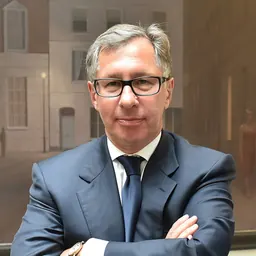
Contemporaries
People whose lives overlapped Pashupati Shumsher Jung Bahadur Rana's
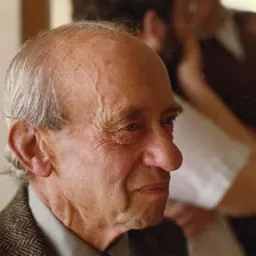
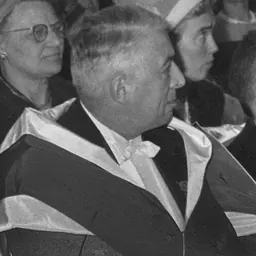
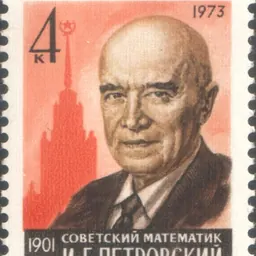
Frequently asked questions
Who is Pashupati Shumsher Jung Bahadur Rana?
Nepalese politician
When was Pashupati Shumsher Jung Bahadur Rana born?
Pashupati Shumsher Jung Bahadur Rana was born on 7 May 1941 in Kathmandu.
What is Pashupati Shumsher Jung Bahadur Rana's occupation?
Pashupati Shumsher Jung Bahadur Rana is a politician.
What nationality is Pashupati Shumsher Jung Bahadur Rana?
Pashupati Shumsher Jung Bahadur Rana is Nepali.
Sources & further reading
· Wikipedia: Pashupati Shumsher Jung Bahadur Rana
· DBpedia: Pashupati Shumsher Jung Bahadur Rana
Cite this page
APA: Biography.guide. (2026). Pashupati Shumsher Jung Bahadur Rana. https://biography.guide/pashupati-shumsher-jung-bahadur-rana/
MLA: "Pashupati Shumsher Jung Bahadur Rana." Biography.guide, https://biography.guide/pashupati-shumsher-jung-bahadur-rana/.
Chicago: "Pashupati Shumsher Jung Bahadur Rana." Biography.guide. https://biography.guide/pashupati-shumsher-jung-bahadur-rana/.
Data last updated: 2026-09-30 · Spot an error? Report a correction.
Portrait: Wikimedia Commons · author & licence
Page generated 2026-10-04 14:25 UTC