
About Paschen von Cossel
Lived 1714 – 1805 (aged 90). Paschen von Cossel was a German notary, lawyer and jurist.
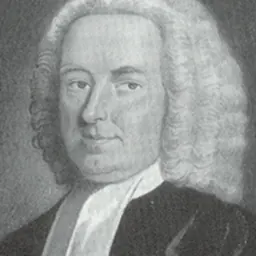
Paschen Ritter und Edler von Cossel (21 December 1714 in Anklam, Vorpommern – 17 January 1805 in Jersbek), was a German lawyer (since 1738), doctor of laws, syndic, canon of the Hamburg Cathedral chapter, and owner of two Holsteinian estates, Gut Jersbek and Gut Stegen (from 1774–1805). He led a successful public life, and, in 1769, became Konferenzrat to the Danish royal household. Cossel and his second wife are buried in the forest adjacent to the park on the Jersbek estate.
Biography
Birth, family, and education Paschen von Cossel was born to Henning Detloff Kossel (2 March 1670 – 6 July 1741) and Catharina Dorothea Pritzbuer (26 February 1683 – 17 November 1741), the last of eight children. His father had been a merchant, vintner, cellarer, and innkeeper in Anklam, Wismar, Neubrandenburg, and Stralsund, since 1700.
Cossel spent his school days in the Gymnasium Stralsund (part of the Katharinenkloster), where he received a thorough education (learning, for instance, Greek, Latin, and Hebrew), gaining his school certificate in 1731. He received his Licentium Juris at the University of Rostock (1731) the Ernst-Moritz-Arndt-Universität Greifswald (1734), and the Martin-Luther-Universität Halle-Wittenberg (1736), where he wrote a doctoral dissertation.
Two childless marriages On the 15 May 1748 in Pyrmont, Paschen von Cossel married Christine Eleonore Seip (14 January 1728 – 23 July 1748), daughter of Dr Johann Philipp Seip, the royal physician. Following her untimely death shortly after the marriage, Cossel married Maria Elisabeth Matthießen (28 January 1718 – 5 April 1789) on the 12 August 1755. Neither marriage yielded any progeny.
Death Over ninety years old, Paschen von Cossel died in his Jersbek residence around 1pm on the 17 January 1805. The burial took place on the 23 January in the early hours of the morning, in the presence of friends and family; he is buried next to his second wife in the park of the Jersbek estate. This burial was altogether unconventional: there were no tolling bells, the burial place was not a consecrated graveyard, and there was neither pastor, nor blessing. It is not known why Cossel made these burial wishes. There are three factors which may have contributed to this decision, all based in the zeitgeist of the latter half of the eighteenth century: a desire to look back to the customs of antiquity, whereby one would be buried extra muros, i.e. in open space; the Enlightenment idea that it was unhygienic to bury the dead in and around churches; and simply a love of nature. Another possible reason for this unusual burial is that Cossel had feuded with Pastor Hans Christian Andresen, of Sülfeld.
Honours Both of Cossel's brothers went to Hamburg to establish trade businesses. Paschen followed them there in 1738, but became a lawyer. Through his excellent legal knowledge, juristic acumen, practical skill, and oratorical talent, he quickly developed a large and notable chancellery. On the 3 July 1741, Elector Frederick Augustus II of Saxony, in his role as imperial vicar for Saxony, granted Cossel the privilege of a count palatinate.
On the 16 April 1750, Cossel was elected successor to the Very Reverend Nicolai Albert von Holtze, of the syndic of the Hamburg Cathedral chapter. He held this office until 1760. Also, from the 15 December 1755 to the 9 April 1791, he was co-manager of the diocese (Canonicus minor).
He became the Mecklenburg-Schweriner Wirklicher Justizrat (4 November 1752), the Etatsrat to the royal Russian and Holsteinian households (23 July 1760), and the Konferenzrat to the royal Danish household (8 November 1769).
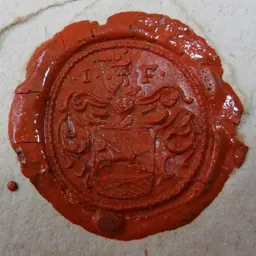
Paschen von Cossel's long-time friend, Christian Stilck, presented him with letters patent and a grant of arms, and was raised into the untitled ranks of nobility on 21 December 1742. After he visited the imperial court in Vienna and asked for a raise in noble rank, he was granted the hereditary style of "Ritter und Edler von Cossel" (The Knight and The Noble of Cossel) on the 2 June 1755.
Don’t just read it —
keep it.
Full-length biographies made to live with: read them, listen on the way to work, watch them tonight.
- E-book
- Audio
- Video
Instant download · yours to keep · every purchase keeps this site free
Important facts
Related people
Same field, nearest in time




Contemporaries
People whose lives overlapped Paschen von Cossel's




Frequently asked questions
Who was Paschen von Cossel?
German lawyer
When was Paschen von Cossel born?
Paschen von Cossel was born on 21 December 1714 in Anklam.
When did Paschen von Cossel die?
Paschen von Cossel died on 17 January 1805 in Jersbek.
What was Paschen von Cossel's occupation?
Paschen von Cossel was a notary, lawyer and jurist.
What nationality was Paschen von Cossel?
Paschen von Cossel was German.
Sources & further reading
· Wikipedia: Paschen von Cossel
Cite this page
APA: Biography.guide. (2026). Paschen von Cossel. https://biography.guide/paschen-von-cossel/
MLA: "Paschen von Cossel." Biography.guide, https://biography.guide/paschen-von-cossel/.
Chicago: "Paschen von Cossel." Biography.guide. https://biography.guide/paschen-von-cossel/.
Data last updated: 2026-09-20 · Spot an error? Report a correction.
Page generated 2026-09-27 05:14 UTC