
About Park Chong-hwa
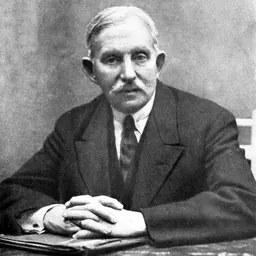
Lived 1901 – 1981 (aged 79). Park Chong-hwa was a South Korean novelist, writer and poet.
Park Chong-hwa (; October 29, 1901 – January 13, 1981) was an early-modern Korean poet and novelist.
Biography Park Chong-hwa was born October 29, 1901, in Seoul, Korean Empire. Park wrote under the name Woltan and attended the Huimun Uisuk Academy. He worked as a member of the literary club Swan (1922) and was the vice-chairman of the Choson Writers' Association in 1946. He also served as the Chairman of the Seoul Committee for Arts (1947) and the Writers' Association of Korea (1949). Park was named the President of the Korea Arts Council (1955) and Chairman of the Board of the Korean Writers' Association (1964). He died on January 13, 1981.
Poetry Park first entered the literary world as a poet, publishing “Anguished Youth” (Onoeui cheongchun 오뇌의 청춘) and “Milk-colored Streets” (Uyubit geori 우유빛거리) in the inaugural issue of the journal Rose Village (Jangmichon) in 1921, and “Returning to the Secret Room” (Milsillo doragada 밀실로 돌아가다 ) and “Elegy” (Manga) in the 1922 inaugural issue of White Tide (Baekjo). With his first poetry collection, Private Melodies of the Black Room (Heukbang Bigok, 1924), Park established his reputation as a romantic poet.
During the Japanese occupation, censorship, prison, or even death followed overt literary resistance and the predominant emotion among Korean writers in the 1920s was near-despair. Poets like Pak Chong-hwa and Yi Sang-hwa therefore turned to dark imitations of the European decadent movement. However, in a poem like "Koryo Celadon" Pak uses an aesthetic theme as an indirect statement of national pride, which was later to be taken up in his novels.
During the Goryeo period of a thousand years before, the unique grey-green celadon ware (ceong-ja) had been the main type of ceramics produced on the Korean peninsula but under Japanese rule, artware pottery had all but disappeared from the country. In the past it had been particularly associated with Buddhist ceremonies, hence the bodhisattva reference in the first stanza. The poem then turns to later successors of ceong-ja, the so-called white celadon (baek-ja) and cobalt-blue kingfisher shade mentioned in the second stanza, and in the third to the types of use to which the pottery was put.
Novels Learning this approach through his poetry, Park Jonghwa devoted the rest of his life to writing historical novels that espouse Korean nationalism. The Literature Translation Institute of Korea summarizes this part of his career:
Devotion to Korean national identity remained the dominant theme of both Park Jonghwa’s fiction and life. Even in the climate of intense persecution toward the end of the Japanese colonial rule, Park Jonghwa refused to adopt a Japanese surname or participate in pro-Japanese literary organizations as many of his colleagues had done. During the colonial period, Park published several works of historical fiction, including Blood on a Silk Sleeve (Geumsamui pi, 1936), Long Awaited Spring (Daechunbu, 1939), The Eve (Jeonya, 1942), and Compassion (Dajeongbulsim, 1942). After the Liberation, Park Jonghwa continued to be active in the nationalist camp, serving as the vice president of both Pan-Korean Writers’ Association (Jeon Joseon munpilga hyeophoe) and Pan-Korean Federation of Cultural Organizations (Jeonguk munhwa danche chong yeonhaphoe). He also expressed his euphoria at the recovery of national independence in The Nation (Minjok), the final work in the trilogy that followed The Eve and Compassion. Thereafter, Park Jonghwa turned to more remote times to continue his examinations of Korean history from a nationalist perspective. The Japanese Invasion of 1592 (Imjinwaeran 임진왜란, 1955), Hong Gyeongrae 홍경래 (1958), and The World in Women’s Hands (Yeoin cheonha 여인천하, 1959) all manifest his desire to unearth the vigorous spirit of national pride from the pages of Korean history. By virtue of meticulous research and awareness of history’s grand scope, Park Jonghwa managed to preserve in these historical novels a great variety of Korean habits of thought and folk customs.
Works in Translation King Sejong : a novel (translated by Ahn Junghyo, New York 1980)
Works in Korean (Partial) Novels Blood on the Royal Sleeve serialised in 1936 in the Maeil Sinbo Ode to Spring Friendly Buddha My People The Japanese Invasion Resting Cloud
Awards Cultural Medal by the Order of the President in 1962 May 16 Nationalism Prize in Literature in 1966 Republic of Korea Rose-of-Sharon Citizen's Medal in 1970.
Don’t just read it —
keep it.
Full-length biographies made to live with: read them, listen on the way to work, watch them tonight.
- E-book
- Audio
- Video
Instant download · yours to keep · every purchase keeps this site free
Important facts
People in Park Chong-hwa's life
Named in this biography and alive at the same time


Related people
Same field, nearest in time



Contemporaries
People whose lives overlapped Park Chong-hwa's


Frequently asked questions
Who was Park Chong-hwa?
South Korean writer (1901- 1981)
When was Park Chong-hwa born?
Park Chong-hwa was born on 29 October 1901 in Gwangju.
When did Park Chong-hwa die?
Park Chong-hwa died on 3 January 1981 in Seoul.
What was Park Chong-hwa's occupation?
Park Chong-hwa was a novelist, writer and poet.
What nationality was Park Chong-hwa?
Park Chong-hwa was South Korean.
Sources & further reading
Cite this page
APA: Biography.guide. (2026). Park Chong-hwa. https://biography.guide/park-chong-hwa/
MLA: "Park Chong-hwa." Biography.guide, https://biography.guide/park-chong-hwa/.
Chicago: "Park Chong-hwa." Biography.guide. https://biography.guide/park-chong-hwa/.
Data last updated: 2026-09-20 · Spot an error? Report a correction.
Page generated 2026-09-27 05:25 UTC