
About Paolo Sylos Labini
Lived 1920 – 2005 (aged 85). Paolo Sylos Labini was an Italian economist.
Paolo Sylos Labini (30 October 1920 – 7 December 2005) was an Italian economist and political advisor in post-World War II Italy. He was a professor at the Sapienza University of Rome and member of the Accademia Nazionale dei Lincei. His theoretical contributions covered oligopoly, the relation between innovation and market structure, inflation, and socioeconomic evolution. His work often contained a strong historical dimension, in common with Classical economics.
Life Paolo Sylos Labini was born in Rome, to an Apulia family, on 30 October 1920. His advisor was Guglielmo Masci, then Giuseppe Ugo Papi following Masci's death in 1941. Graduating during World War II, Sylos Labini was called up for conscription and assigned to Civita Castellana, then Florence. During this time, Sylos Labini also published on Italian economic conditions.
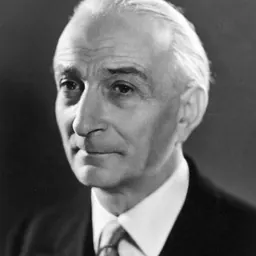
Sylos Labini's interest in innovation, and the sense of inadequacy of Italian economics at that time, In 1949 he traveled to Cambridge, where he was supervised by Dennis Robertson, and became friends with Piero Sraffa, Nicholas Kaldor, and Joan Robinson. Afterwards, he returned to Italy. He visited the United States again with Giuseppe Guarino in 1955 to study the American oil situation, sent by then Prime Minister Antonio Segni. In 1955, he became an assistant professor of political economy at the Faculty of Economics of the University of Sassari. He moved to the University of Catania in 1957, then to the University of Bologna in 1960, before returning to Sapienza University in October 1962, where he taught principles of political economy at the Faculty of Statistical, Demographic, and Actuarial Sciences until his retirement in 1995. Between 1971 and 1972, he worked to establish the University of Calabria with Beniamino Andreatta.
Economic Theory Cover of the Italian edition of "Oligopoly and technical progress" Sylos Labini's main contribution came in 1956, with Oligopoly and Technical Progress. Oligopoly describes the general case of competitive market, whose limiting cases are perfect competition and monopoly. In agreement with Nicholas Kaldor, Sylos Labini found that oligopoly is additionally the most common situation in reality, and that its theory represented an advance in understanding imperfect competition. Sylos Labini expanded the theory's "dynamic" character (away from, for example, kinked demand curves), and formulated the resulting connections between microeconomic and macroeconomic effects. The book was published around the same time as Joe Bain's Barriers to New Competition. The two works were grouped together in an article by Franco Modigliani, which caused them to become accepted as part of mainstream theory on non-competitive market forms.
For microeconomists, the work had major implications for barriers to entry, extending the analysis of the role of technology beyond economies of scale to include, among other factors, the flexibility in price setting by oligopolistic firms. This line of inquiry led to his formalization of exclusion prices. Oligopoly also formed the basis for "Sylos' postulate": that all firms' production stays constant in response to the entry of new firms, with existing firms therefore allowing prices to fall. Despite the name, Sylos Labini considered the postulate to be an original invention of Modigliani. Similar arguments led to his theory of an "optimum rate of profit" that emerged when considering the effect of wage increases on effective demand. In particular, Sylos Labini was never comfortable limiting economics to Neoclassical equilibrium finding. His body of work therefore included titles such as Underdevelopment: A Strategy for Reform, in which he sought to identify the main, variegated drivers of inequality between the richest and poorest nations, while also describing the failure of "mainstream economics" to address such problems. He also made important policy-directed contributions, including guidelines for Italy's nascent petroleum industry in the 1950s, an econometric model of the Italian economy in 1967, and a series of works on wages, productivity, and inflation, published between 1965 and 1975, which incorporated the results of his econometric analyses.
Civic Engagement Sylos Labini maintained a lifelong commitment to improving conditions in Italy through political involvement, and held that it was in fact the goal of the economist to promote civil development. He wrote of himself, in his 1974 Saggio sulle classi sociali (Essay on Social Classes), "The author considers himself, politically, an honest reformist – honest in the sense that he not only believes in but, with his very modest means, works for reforms, especially those reforms that can help clear the ground of all those legally controllable obstacles that hinder the development of the working class."
In 1949, at age 29, he contributed to the Work Plan proposed by Giuseppe Di Vittorio, a plan for the economic and social reconstruction of Italy. as well as the collection Problemi dell'economia siciliana, containing fieldwork-based analyses of differences between eastern and western Sicily. he later reflected, "They seemed like mad sheep, headed towards the precipice: they were creating the conditions to be exploited in the worst possible way."
Selected works Oligopoly and Technical Progress / Oligopolio e progresso tecnico (1956) Problemi dell'economia siciliana (1966) Problemi dello sviluppo economico (1970) Trade Unions, Inflation and Productivity / Sindacati, inflazione e produttività (1972) Saggio sulle classi sociali (1974) Il sottosviluppo e l'economia contemporanea (1983) The Forces of Economic Growth and Decline / Le forze dello sviluppo e del declino (1984) Le classi sociali negli anni '80 Roma-Bari (1986) Nuove tecnologie e disoccupazione (1989) Elementi di dinamica economica (1992) Economic Growth and Business Cycles: Prices and the Process of Cyclical Development / Progresso tecnico e sviluppo ciclico (1993) Underdevelopment: A Strategy for Reform / Sottosviluppo. una strategia di riforme (2000) Ahi serva Italia: Un appello ai miei concittadini (2006)
Don’t just read it —
keep it.
Full-length biographies made to live with: read them, listen on the way to work, watch them tonight.
- E-book
- Audio
- Video
Instant download · yours to keep · every purchase keeps this site free
Important facts
People in Paolo Sylos Labini's life
Named in this biography and alive at the same time


Related people
Same field, nearest in time



Contemporaries
People whose lives overlapped Paolo Sylos Labini's





Frequently asked questions
Who was Paolo Sylos Labini?
Italian economist (1920-2005)
When was Paolo Sylos Labini born?
Paolo Sylos Labini was born on 30 October 1920 in Rome.
When did Paolo Sylos Labini die?
Paolo Sylos Labini died on 7 December 2005 in Rome.
What was Paolo Sylos Labini's occupation?
Paolo Sylos Labini was an economist.
What nationality was Paolo Sylos Labini?
Paolo Sylos Labini was Italian.
Sources & further reading
· Wikipedia: Paolo Sylos Labini
Cite this page
APA: Biography.guide. (2026). Paolo Sylos Labini. https://biography.guide/paolo-sylos-labini/
MLA: "Paolo Sylos Labini." Biography.guide, https://biography.guide/paolo-sylos-labini/.
Chicago: "Paolo Sylos Labini." Biography.guide. https://biography.guide/paolo-sylos-labini/.
Data last updated: 2026-09-20 · Spot an error? Report a correction.
Page generated 2026-09-27 05:23 UTC