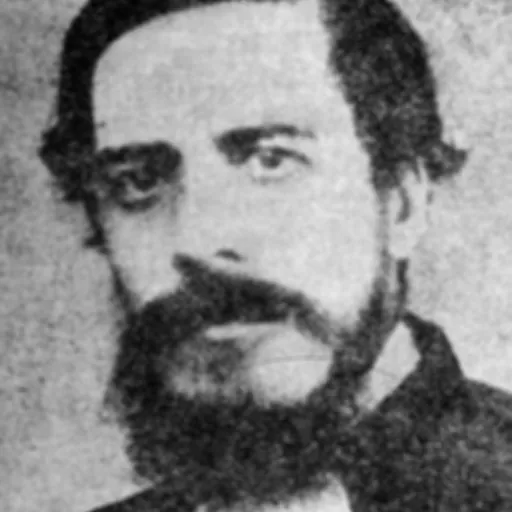
About Pantazi Ghica
Lived 1831 – 1882 (aged 51). Pantazi Ghica was a Romanian literary critic and poet.
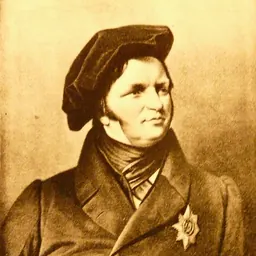
Pantazi Ghica (; also known under the pen names Tapazin, G. Pantazi, and Ghaki; 15 March 1831 – 17 July 1882) was a Wallachian, later Romanian, politician and lawyer, also known as a dramatist, poet, short story writer, and literary critic. A prominent representative of the liberal current, he was the younger brother and lifelong collaborator of Ion Ghica, who served as Prime Minister of the Romanian Kingdom in 1866-1867 and again in 1870-1871. Pantazi Ghica began his political career as a participant in the Wallachian Revolution of 1848, a collaborator of the Romantic historian and activist Nicolae Bălcescu, and a member of the radical grouping headed by C. A. Rosetti. Although twice involved in the administration of Buzău County, Ghica lived much of his life in exile or in Bucharest, and was also a soldier for the Ottoman Empire during the Crimean War. After 1875, he was a prominent member of the National Liberal Party.
Generally seen as a mediocre writer, he was foremost noted for his associations with the literary figures Nicolae Filimon, Vasile Alecsandri, Dimitrie Bolintineanu, Alexandru Odobescu and Alexandru Macedonski, as well as for his extended polemic with the conservative literary society Junimea. Ghica's work and political convictions were criticized and often ridiculed by Junimist intellectuals such as Titu Maiorescu, Mihai Eminescu, and Ion Luca Caragiale. He is most likely one of the unnamed liberal politicians who are negatively portrayed in Eminescu's poem Scrisoarea a III-a.
Pantazi Ghica suffered from kyphosis. Notably, this physical defect is mentioned for satirical effect in Eminescu's poem and in Caragiale's autobiographical work, Din carnetul unui vechi sufleur.
Biography
Early life and revolutionary activities Pantazi was born into the Ghica family, a prestigious group of Phanariote hospodars and boyars in the Danubian Principalities, whose origins were Greek and Albanian. He was the twelfth of fifteen children born to Ban Dimitrie Ghica and his wife Maria Câmpineanu (a boyaress of the Câmpineanu family). Ion, Pantazi, Temistocle and Maria Ghica were the only four children to survive into adulthood.
Like his siblings, Pantazi Ghica studied at the Saint Sava College in Wallachia's capital. It was around that time that he befriended the poet Bolintineanu, who was twelve years his senior and by then already a friend of Ion Ghica. His mother later took him to France, where he is known to have been enlisted in a boarding house. Upon his return to Wallachia in 1847, together with his brother, Ghica was involved in the agitation leading up to the 1848 uprising, and became Bălcescu's secretary. Before the revolution toppled Prince Gheorghe Bibescu and created a new administration, Bălcescu sent Pantazi Ghica as an agitator, in service to the revolutionary organization Frăţia. Reportedly, he also associated with literary critic Jean-Baptiste Alphonse Karr, composers Daniel Auber and Fromental Halévy, and playwright Eugène Scribe.
Prosecutor, lawyer and journalist
In 1856-1858, he was a prosecutor in Dâmbovița County, before starting a private practice as a lawyer on Bucharest's Podul Mogoșoaiei. This came at a time when Wallachia's united with Moldavia under the rule of Alexandru Ioan Cuza (proclaimed in 1859, and effected in 1862). Following Cuza's election in both countries, Ghica joined the civil service: he first replaced his friend George Crețeanu as inspector in the Ministry of Justice (April–September 1859) and department head in the Ministry of Foreign Affairs (before 1860). In 1862, he was appointed attorney for the Ministry of Education. He shared a cell with his colleague, N. T. Orășanu, a noted adversary of Carol's rule. He was also an associate of the writer Alexandru Odobescu, and, after 1861, collaborated on his monthly literary magazine Revista Română. It was here that he published a critical review of Ciocoii vechi și noi, a novel by his friend Nicolae Filimon, which upset the latter (as a consequence, relations between the two soured). For a while during those years, Ghica edited two satirical magazine, Păcală (named in honor of the eponymous folk hero) and Scrânciobul.
In 1863, he went on a trip to Moldavia, where he notably visited his relative Cleopatra Ghica (married into the Russian Trubetskoy family). By the 1870s, he was also contributing articles to Rosetti's journal Românul. During the same period, he began publishing his literary pieces in Revista Contimporană.
In 1866, Domnitor Cuza was replaced with Carol of Hohenzollern. Apparently, Pantazi Ghica had played a secondary part in the conspiracy that toppled Cuza, as a local commander of the Citizens' Guard. Ghica was subsequently assigned the office of Buzău County prefect by the first of his brother's cabinets.
Final years His new Bucharest residence became a meeting spot for literary figures. In 1875, Pantazi Ghica was witness to a scandal involving the Romanian Army and Ioan Emanoil Florescu, the Minister of War. That year, the officer Ioan Crainic, who considered himself insulted by Florescu, handed in his resignation from the military and challenged the Minister to a duel (asking Ghica to serve as both his courier and witness); the problems were eventually avoided after Florescu ordered his subordinates to arrest Crainic. The publication was inspired by the renowned journalist Nicolae Moret Blaremberg.
He was for long a member of the Chamber of Deputies and the Senate, representing the "Red" liberal tendency and, late in life, the National Liberals. In June 1876, shortly after the first concentrated National Liberal cabinet came to power, he and Nicolae Fleva spearheaded the effort to prosecute the former "White" Conservative ministers. In opening the case, Ghica stated: "It wasn't just us who condemned those ministers, but public opinion in general, the entire country, cast a blame on them, and we are the expression of that blame". The effort pitted Pantazi Ghica against his main literary rival, outgoing Education Minister Titu Maiorescu, who was called in for questioning. The attempt to stage a trial was ultimately defeated by moderates in Ghica's own party, who ignored his vocal protests.
In June 1881, promoting the designs of one Traian Theodorescu, Pantazi Ghica unsuccessfully presented Parliament with a proposal to have a submarine built for the Romanian Navy. During the same year, he was a cabinet-appointed inspector of historical monuments in Moldavia.
Pantazi Ghica died at his house on Cometei Street, and was buried at his family's estate in Ghergani. while others are thought to be influenced by the Romantic author Dimitrie Bolintineanu. With time, however, Ghica moved away from Romanticism, and developed his own brand of Realism, which did not exclude imagination and speculation, and which hailed Alecsandri as a prime example of writing. In one instance, he argued that beauty "must absolutely be united with the good". In 1850, Ghica authored a piece in honor of the deceased poet Vasile Cârlova, titled O lacrimă a poetului Cârlova ("One of Poet Cârlova's Tears"). It depicted Cârlova drinking from a skull-shaped cup with the inscription Lina, adu-ţi aminte! ("Lina, remember!", allegedly in honor of a nun he had loved).
In addition, Pantazi Ghica wrote a lengthy satire the high society in his day (Schiţe din societatea română, "Sketches of the Romanian Society"), and, as a result of the Russo-Turkish War of 1877–1878, the play Răniţii români ("The Wounded Romanians"). Ghica was outraged to find that the National Theater did not accept his play, and, as a consequence, issued a formal protest.
Beţia de cuvinte By the close of the 1860s, Pantazi Ghica was among the main targets of early criticism from Junimea—a literary society which expressed a conservative vision and was opposed to the cultural and political tenets of liberalism. Ghica's works were among those discussed by Junimeas Titu Maiorescu in his famous essay of 1873, Beţia de cuvinte. The title, meaning literally "inebriation with words", attacked Romantic liberals over their experiments with Romanian language, their Romantic nationalist aesthetic guidelines, and their emphatic prose. The influential Maiorescu saw these as a main source for the widespread cultural and social problems facing Romania during its process of Westernization.
Thus, Revista Contimporană contributors such as Ghica, V. A. Urechia, August Treboniu Laurian, and Gheorghe Sion are listed by Maiorescu as negative examples in Romanian literature, for their use of coined neologisms, as well as for their tautologies and contradictions. Maiorescu sarcastically recorded that Ghica was introducing new words to the Romanian lexis, through the means of Francization. On the occasion, he also presented Ghica with more of his own mistakes. Odobescu recorded the polemic between Ghica and the contributors to Junimea'''s magazine Convorbiri Literare—the former stood accused of having embellished his own biography by claiming to have won the interest of French writers during his stay in Paris. Elsewhere, he backed Ghica's inclusion among the "victims of Inebriation with words [italics in the original]", as well as Maiorescu's criticism of his Francized speech. and Ştefan Sihleanu, who credited Ghica with having single-handedly introduced Alessandro Manzoni's type of historical novels to local literature, in their adapted novella form. They read:
Eminescu followed Ghica's political career with interest. In one of his articles for the Conservative journal Timpul, published in early 1882, he examined the Filibiliu affair, he took the teacher's side, arguing that both Ghica and Filibiliu's other National Liberal detractor, Petru Grădişteanu, were exaggerating. He commented that the scandal was largely owed to the victim's father having made use of his political connections with the Ion Brătianu cabinet, and protested when the teacher assigned a provincial post as a punitive measure. This was one of several polemics between Eminescu and various associates of Rosetti: literary historian Perpessicius argued that they were partly responsible for the "super-tensed" relations between Românul and Timpul. George Călinescu identified other, less-known, poems by Eminescu, which also allude to Ghica's style, politics and personal life. In his view, the latter group usurped the revolutionary legacy, while the former could have found itself best represented by the emerging Conservative Party. Nonetheless, others knew him as a gentleman, praising him for his kindness and sociability.
At some stage in their lives, Pantazi Ghica and his friend C. A. Rosetti briefly associated with a circle of actors meeting in the house of theater manager Iorgu Caragiale (Ion Luca's uncle). Ion Luca Caragiale's 1907 work, Din carnetul unui vechi sufleur, featured an anecdote about Pantazi Ghica and Iorgu Caragiale, recounting how the former had fallen in love with an unnamed actress. According to the story, Ghica, who had asked the group of actors to facilitate an amorous meeting with the object of his affection, was the target of a prank: Iorgu Caragiale reportedly arranged for his colleague, a certain Matache Piţirigă, to dress up in female clothes and meet Ghica in an unlit room. In its initial unpublished version, Din carnetul unui vechi sufleur simply described Iorgu Caragiale's victim as "a hunchback". The work, a Romanian classic, was written in the 1920s by Caragiale's estranged son Mateiu, and, Cernătescu notes, shows Ghica in company with decadent aristocrats from the Cantacuzino and Soutzos clans.
Don’t just read it —
keep it.
Full-length biographies made to live with: read them, listen on the way to work, watch them tonight.
- E-book
- Audio
- Video
Instant download · yours to keep · every purchase keeps this site free
Important facts
People in Pantazi Ghica's life
Named in this biography and alive at the same time




Related people
Same field, nearest in time


Contemporaries
People whose lives overlapped Pantazi Ghica's


Frequently asked questions
Who was Pantazi Ghica?
19th-century Romanian writer and politician
When was Pantazi Ghica born?
Pantazi Ghica was born on 15 March 1831 in Principality of Wallachia.
When did Pantazi Ghica die?
Pantazi Ghica died on 17 July 1882 in Bucharest.
What was Pantazi Ghica's occupation?
Pantazi Ghica was a literary critic and poet.
What nationality was Pantazi Ghica?
Pantazi Ghica was Romanian.
Sources & further reading
Cite this page
APA: Biography.guide. (2026). Pantazi Ghica. https://biography.guide/pantazi-ghica/
MLA: "Pantazi Ghica." Biography.guide, https://biography.guide/pantazi-ghica/.
Chicago: "Pantazi Ghica." Biography.guide. https://biography.guide/pantazi-ghica/.
Data last updated: 2026-09-20 · Spot an error? Report a correction.
Page generated 2026-09-27 05:09 UTC