
About Panini Tennekoon
Lived 1922 – 2007 (aged 85). Panini Tennekoon was an architect.
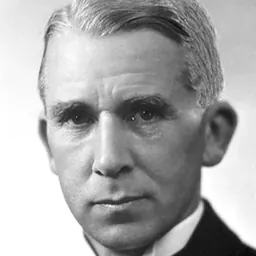
Panini Tennekoon (5 February 1922 – 16 July 2007) was a Sri Lankan architect. He spent most of his career as a public servant, working in the Public Works Department, serving as the country's chief architect, before running his own architectural practice, designing low-cost housing and investigating sustainable timber use in construction. He was a fellow of Sri Lankan Institute of Architects and the Royal Australian Institute of Architects.
Early life and education Tennekoon was educated at S. Thomas' College, Mount Lavinia.
He then joined an apprentice course in architecture run by Peradeniya University architect, Shirley de Alwis, in 1945. He was selected to join a five-year course at the Bartlett School of Architecture but decided not to travel to England and join the course due to the adverse living conditions in London at the end of the Second World War. In 1955, upon winning a Colombo Plan Scholarship to the School of Architecture at the University of Melbourne, he completed the five-year course in only three years, graduating in 1958 with a Graduate Diploma in Architectural Design. He was the first Asian to win the Wunderlich Annual Prize given by the school in recognition of general excellence by students. In 1977, he was appointed as the chief architect. During his tenure at the Public Works department he was responsible for designing the National Library, Colombo (1976); Bandaranaike Samadhi, Horogolla; Prime Minister D. S. Senanayake's memorial, Colombo; Supreme Court Complex in Hulftsdorp (1978); Siyane Teacher Training College; teaching hospital complex at the Colombo South Hospital, Kalubowila; Kollupitiya police station; and the Department of National Archives.
In 1979 he became the chief architect of the Greater Colombo Development Authority (now known as the Urban Development Authority). Between 1991 and 1993, he was the consultant architect of the Architectural Unit of the Central Engineering Consultancy Bureau,
He died on 16 July 2007, at the age of 85, and was buried at Borella Cemetery.
Notable honours 1955 - Colombo Plan Scholarship to the School of Architecture at the University of Melbourne 1956 - Wunderlich Annual Prize for General Excellence, University of Melbourne 1959 - Associate Royal Institute of British Architects 1970 - Fellow Royal Australian Institute of Architects 1976 - Fellow Sri Lankan Institute of Architects
List of architectural works
Monuments Bandaranaike Samadhi, Horagolla Gonawiddgala Park bungalow and Timirigasmankada Park Bungalow, Udawalawe National Park Park bungalow, Giritale National Park Aquarium, entrance feature, reptilium, restaurant, management office complex, Zoological Gardens, Dehiwala
Housing Hostel Accommodation for Male Medical Students, Norris Canal Road Hostel for Female University Students Colombo Campus, Buller's Lane, Colombo Circuit Bungalow for Commissioner of National Housing, Kandy Public Works Department Circuit Bungalow, Arugambay Tourist Guest House Complex, R. A. de Mel Mawatha, Colombo Low-Cost Housing for Dwellers of Low Income High-Density Housing Areas, Colombo City Suburbs (1971) Low-Cost House, Kumbuke (1995)
Educational Buildings Academy of Administrative Studies, Longdon Place, Colombo Assembly hall, female teacher trainees hostel and library, Siyane Teachers Training College, Nittambuwa Sri Sanghabodhi Central College extension, Central Maha Vidyalaya Teaching Hospital complex at Colombo South General Hospital, Kalubowila Botany and Zoology Faculty Complex Colombo Campus, Thurstan Road, Colombo St. Bridget's Convent Assembly hall, Colombo
Commercial Buildings Laksala branches, Kegalla and Ratnapura Post Office complexes, Peradeniya and Veyangoda Police stations, Wadduwa, Beruwala and Kollupitiya Ministry of Buddha Sasana Complex, Colombo United Nations Development Program Complex extensions, Colombo Supreme Tourist Office complex, Colombo Central Finance Co. Office complex, Colombo Department of National Archives, Reid Avenue, Colombo: composed of three circular wings, with curved façades, linked by a three-storey exhibition hall. The building presents an innovative shading design consisting of precast vertical concrete elements in front of regular glass windows.
Don’t just read it —
keep it.
Full-length biographies made to live with: read them, listen on the way to work, watch them tonight.
- E-book
- Audio
- Video
Instant download · yours to keep · every purchase keeps this site free
Important facts
Related people
Same field, nearest in time

Contemporaries
People whose lives overlapped Panini Tennekoon's


Frequently asked questions
Who was Panini Tennekoon?
Sri Lankan architect
When was Panini Tennekoon born?
Panini Tennekoon was born on 5 February 1922.
When did Panini Tennekoon die?
Panini Tennekoon died on 16 July 2007.
What was Panini Tennekoon's occupation?
Panini Tennekoon was an architect.
Sources & further reading
Cite this page
APA: Biography.guide. (2026). Panini Tennekoon. https://biography.guide/panini-tennekoon/
MLA: "Panini Tennekoon." Biography.guide, https://biography.guide/panini-tennekoon/.
Chicago: "Panini Tennekoon." Biography.guide. https://biography.guide/panini-tennekoon/.
Data last updated: 2026-09-22 · Spot an error? Report a correction.
Page generated 2026-09-27 05:10 UTC