
About Pan Yue
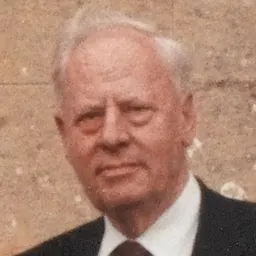
Born 1960. Pan Yue is a Chinese journalist, politician, environmentalist and historian.
Pan Yue (; born April 1960) is a Chinese government official who is the current director of the National Ethnic Affairs Commission and a deputy head of the United Front Work Department.
He is recognized as an environmental activist who led notable campaigns to underscore the intensity of climate change by challenging the main constituents of air pollution and greenhouse emissions. He advocated for the advancement of technology and resources to address environmental issues. In 2003, Pan would become the first-ranked deputy director at the State Environmental Protection Administration (SEPA) which would then go on to become the Ministry of Environmental Protection. In August 2015, Pan was appointed as the deputy secretary of the Ministry of Environmental Protection, a position that had been empty since 2007. Pan would later leave this position to serve as the executive vice president of the Central Institute of Socialism, a position he would serve from 2016 to 2021.
Pan became an alternative member of the Central Committee of the Chinese Communist Party in 2021,
Pans first years of adulthood were spent during the era of Deng Xiaoping. This era oversaw the massive expansion of the Chinese economy as well as a period of cultural exchange between the West and China along the coastal regions of China. This cultural exchange brought with it many new ideas and concepts to China during Yue's educational years.
Pan Yue followed in his father's footsteps and enlisted in military service, serving in the former 38th Group Army and the former 13th Division of the . Pan's service in the PLA ended in 1982 and he shortly afterward worked a myriad of jobs and positions. From 1986 to 1988 Pan worked as a deputy director at the Research Office of State Air Traffic Control Bureau, secretary at the Communist Youth League of China (CYLC), chief in the International Department of Fangshan District, and as deputy director of the Foreign Trade and Economic Cooperation Committee of Fangshan District.
Many of the jobs and positions Panheld during the years of 1994–2003 were under the purview of the State-owned Assets Supervision and Administration Commission (SASAC), which is a special commission that is under the direct oversight of the state council. The SASAC is responsible for managing the state-owned enterprises (SOE) in China.
As deputy head of the Ministry of Environmental Protection, formerly known as SEPA, Pan was responsible for the task of protecting China's climate and the environment from pollution and contamination be it air, water, and land. The Ministry of Environmental Protection also holds jurisdiction and oversight of China's nuclear safety agency.
Early political and environmental activism In 2003, Pan circulated an internal document titled Thoughts on the Transformation from a Revolutionary Party to a Party in Power at the Economic Restructuring Office of the State Council. Green GDP was rolled out in 10 provinces and cities across China but was met with local resistance. In 2006 Green GDP programs and research were halted and In 2015 Green GDP research was restarted by the Ministry of Ecology and Environment. In the same year, Pan stated that China's immense GDP growth had come at the cost of its natural resources and environmental stability and further claimed that the GDP growth would be unable to keep up with the increasing environmental costs. This granted him global acclaim and he was nominated for the Person of the year award in 2007 by The New Statesman, a British magazine company that focuses on current affairs. In a 2008 interview, Pan stated that the environmental laws in China are on record but go virtually unenforced due to a lack of ecological culture; This problem is something Pan hopes to remedy through the revival of some of the founding principles of traditional Chinese culture, that being the harmony between humans and their environment. During his time as "Hurricane Pan", Pan also popularized the idea of "Green GDP", a system of economics that takes into account the short and long-term monetary costs of releasing pollutants into the environment. In support of Pan's statement about the limited access to China is government data which indicates that approximately only 60% of China's surface water is fit for human consumption. "Many in government and business are devoted to short-term profit, and officials are solely motivated by the prospect of an increase in GDP. None of them pay adequate attention to environmental protection." he said. Pan's concerns were echoed by Wang Canfa of the China University of Political Science and Law who was one of the creators of the new Environmental Protection laws.
In the same year, Pan said that an environmental tax was at the top of the Chinese government's agenda and encouraged all Chinese corporations and companies to buy environmental insurance.
In a 2007 article published by Pan titled "Green China and Young China" he says that environmental protection cannot be advanced by the State Environmental Protection Administration (SEPA) alone. It requires action from the whole of society. Pan also discusses the environmental injustice within the Chinese state, remarking that those big industries like coal mining often extract the natural resources of a province, leaving it heavily polluted and then leaving before they can be negatively affected by the damage.
In 2007 Pan had a sharp change in policy regarding environmental protection. Pan ended his harsh crackdowns on China's polluters and instead as acting deputy director of China's State Environmental Protection Administration (SEPA), proposed seven new green economic policies in a speech to the China Green Forum on September 9, 2007. Pan explained this strategy change stating that the crackdowns had not worked as well as hoped and "that it's a great shame to find ourselves in this situation. Legal crackdowns have resulted in nothing more than a tug of war." "
In 2014 after the passing of a new Environment Protection law that would severely punish China's biggest polluters in an attempt to curtail carbon emissions Pan voiced concerns about its enforcement. Yue in a Monday interview with Xinhua said the new "powerful" law could still fail without ironclad enforcement.
Pan spoke on the punishment for officials who failed to comply with the new Environment Protection law saying that "Officials who are found to have approved illegal projects, covered up illegal behavior, failed to act in time after public tips, forged monitoring data, and failed to disclose environmental information that should be publicized by law will face punishments such as demotion, removal from their posts and losing their jobs."
Pan spearheaded the new Environment Protection law that went into effect on January 1, 2015. During the first two months of the year, 15 polluting companies were hit with daily fines, the largest one paying a total of 1.9 million yuan ($303,000). Yue commented on this stating that the fines represented a "good beginning of the revised law." Pan and other environmental authorities ordered more than 120 polluting companies to stop polluting, even if that means suspending production. At this Conference Xi Jinping also pledged that China will reach peak emissions by the year 2030. This Think tank's research includes: collaborative democracy research, the study of the sense of community in the Chinese nation, and the study of social organizations' role in social governance, all concept deemed essential to China's development and stability. This inspection was launched in response to the two explosions that occurred on August 12 at a warehouse in Tianjin Port. The warehouse stored large quantities of toxic chemicals, including 700 tons of Sodium Cyanide, and the death toll from the explosion was over 160
In 2015, Pan at the age of 55, as deputy minister of the Ministry of Environmental Protection oversaw the environmental impact assessments.
Pan returned to the forefront of politics again in 2015 when the Chinese media announced that Pan had been promoted to the position of deputy secretary of the MEP and was now in charge of handling all Environmental impact assessments
In 2018 at the fifth China Beijing International Fair for Trade in Services. After Russia and China has deals to further cooperate in medical treatment, property investment, education, tourism, and culture, Pan spoke, saying that "With changes in health concepts and medical models, TCM plays an important role in treating various diseases and has been widely recognized by society."
At a 2019 Forum on the Chinese civilization and China's path held in Beijing, Pan expressed the belief that China's path is deeply rooted in its civilization and has provided an institutional model for the modernization of developing countries. Yue's comments supported the reports of increased Chinese investment in 1st and 2nd world countries as between 2001 and 2018, China loaned approximately $126 billion to African countries. Between 2001 and 2018, China invested $4.
Central Committee membership In 2021 Pan was elected as an alternate of the 19th Central Committee of the Chinese Communist Party. He was also appointed as a deputy head of the United Front Work Department of the CCP in 2021, succeeding Xu Yousheng, a former sent-down youth of the Cultural Revolution.
In a 2021 speech, Pan praised the Chinese government for its international economic and diplomatic success regarding the Regional Comprehensive Economic Partnership (RCEP) for 15 Asia-Pacific countries and the China-EU Investment Agreement as having upheld the principles of multilateralism and free trade. In 2021 and 2022, Pan gave speeches to both domestic and overseas Chinese persons in the preparation for the upcoming Chinese new year that remarked on the impact of the COVID-19 pandemic and Chinese resilience. The 2022 speech discussed the Chinese Communist Party's fulfillment of its first centennial goal, and the importance of overseas Chinese persons in the continued existence of the CCP through their defense of China in the Japanese invasion during the Second World War as well as their contributions to rapid Chinese economic growth. He was promoted to become a full member of the Central Committee after the 20th CCP National Congress in October 2022.
Political positions Pan is a believer in the concept of ecological civilization and ecological socialism. From a Marxist perspective, the dynamics of capitalism are seen as the driving force behind global ecological devastation and minimal efforts to avert it. Pan went on to say that China's rapid GDP growth was copied off of western models and as a result, the environmental issues that occurred in Europe during their 100 years of GDP growth have been condensed down to 20 in China. Pan stated that "While becoming the world leader in GDP growth and foreign investment, we have also become the world's number one consumer of coal, oil, and steel – and the largest producer of CO2 and chemical oxygen demand (COD) emissions."
In 2024, the Pan-edited textbook An Introduction to the Community of the Zhonghua Race (中华民族共同体概论) was rolled out and made compulsory for all university students in the country. The textbook advocates for further integration of the country's ethnic minorities and criticizes prior policies of "ethnic minority exceptionalism."
Personal life Pan Yue is a lover of the liberal arts and a known poet. Yue has published "Selected Poems of Pan Yue", and a personal essay titled "Holding Up the Grassland". He holds a doctorate in history and is an associate researcher. He was formerly married to Liu Chaoying, the daughter of General Liu Huaqing who was a former vice-chairman of the Central Military Commission. His former wife Liu Chaoying was at the center of the 1996 United States campaign finance controversy in which there was an alleged effort by China to influence domestic American politics. Friends have described Pan as different from the standard politicians calling him an informal and unstuffy figure who is imaginative and determined. Liu and Pan have a son, and the daughter-in-law named Elizabeth "Betsy" Jelena Wang.
Don’t just read it —
keep it.
Full-length biographies made to live with: read them, listen on the way to work, watch them tonight.
- E-book
- Audio
- Video
Instant download · yours to keep · every purchase keeps this site free
Important facts
Family & relationships
People in Pan Yue's life
Named in this biography and alive at the same time


Related people
Same field, nearest in time


Contemporaries
People whose lives overlapped Pan Yue's



Frequently asked questions
Who is Pan Yue?
Chinese politician
When was Pan Yue born?
Pan Yue was born in 1960 in Nanjing.
What is Pan Yue's occupation?
Pan Yue is a journalist, politician, environmentalist and historian.
What nationality is Pan Yue?
Pan Yue is Chinese.
Sources & further reading
· DBpedia: Pan Yue (politician)
Cite this page
APA: Biography.guide. (2026). Pan Yue. https://biography.guide/pan-yue/
MLA: "Pan Yue." Biography.guide, https://biography.guide/pan-yue/.
Chicago: "Pan Yue." Biography.guide. https://biography.guide/pan-yue/.
Data last updated: 2026-09-20 · Spot an error? Report a correction.
Page generated 2026-09-27 05:27 UTC