
About Pammi Bai
Born 1965. Pammi Bai is an Indian singer and dancer.
Paramjit Singh Sidhu, professionally known as Pami Bai, is an Indian singer, songwriter and Bhangra dancer from Patiala.
He is considered one of the most notable figures in the world of Punjabi music specialising in the traditional folk dance of Punjab; Bhangra. Since 1987, he gained national attention with the song "Ashke." Since then, he has gone on to record 12 albums, and has performed internationally with his band. He was given the Sangeet Natak Akademi Award on 4 October 2016 by President Pranab Mukheerjee at Rashtrapati Bhawan in New Delhi for his contribution to the world of Punjabi folk music.
Early life He was born in Jakhepal in the district of Sangrur, Punjab, India to Sardar Partap Singh Baghi. During his childhood days his inclination towards Bhangra, the folk dance of Punjab, increased and started participating in various school functions. Later during his college days he participated in Inter-University functions, and pursued it to become the Dance Director of Bhangra. While he was doing his M.A. he started singing amateurishly. In 1982 he recorded his first song Nachdi Jawani. In coming years, he went over to 20 countries to perform as a bhangra dancer and folk singer. He was also involved in Theatre acts and performed on Ram Lilla stages as comedy artists during free time.
Music career He recorded his first audio cassette in 1987, along with the late Narinder Biba. Then he recorded an audio cassette with Surinder Kaur, a renowned TV and radio artist. One of his songs was recorded by Jagjit Singh in his audio cassette released in 1991. Two of his songs were recorded by Music Today. He has worked with music directors like Surinder Bachan, Charanjit Ahuja, Kuljit singh, Pandit Jawala Parshad and Ved Sethi. However the real break for him came with music director Kuljit Singh the release of "Ji ne jan nu karda" and "Rangli Dunia Ton", His album Nach Pauni Dhamal was released in 2005, followed by the Aman Hayer produced Punjaban in 2009. The title song from the album Punjabian Di Balle Balle featured a video that originated in the Punjab He has since released the album Jugni and Diamond Sohniye (2015). In 2004 at Cultural Presentation in the World Punjabi Conference held at Lahore, Pakistan he was one of the few delegates who had gone to represent India. Later in 2007 he went on to the tour of USA, for various cultural shows.
Music style and instruments Pami Bai is an adept of Punjabi folk music and his songs include the traditional music instruments of toomba, algoza, toombi, sarangi, wanjli, bugdu, been, dhadd, dholki, dhol, ghara, chimta, dafli and dhoru. His songs include various Bhangra forms like Jhoomar, Malwai, Giddha, Dhandas. He is widely known to be a guardian of old Punjabi culture, and mother tongue Punjabi where in this time the Punjabi music industry is influenced by western culture. Frankfinn Tracks 10 Kuljit Singh 2007 Dhol Te Dhamaalan FrankFinn Tracks 10 Kuljit Singh 2009 Punjaban T-Series Tracks 8 Aman Hayer 2011 Punjabiyan Di Balle Balle Vajhali Records Tracks 8 Kuljit Singh /Harjeet Guddu 2013 Jugni Live Folk Studio Tracks 10 Popsy/Kuljit Singh /Harjeet Guddu 2015 Diamond Sohniye Jass Records Tracks 11 Gurmeet Singh 2017 The 37th Chapter Of Pammi Bai T-Series Tracks 12 Gurmeet Singh, Aman Hayer, Jaidev Kumar & Rupin Kahlon
Don’t just read it —
keep it.
Full-length biographies made to live with: read them, listen on the way to work, watch them tonight.
- E-book
- Audio
- Video
Instant download · yours to keep · every purchase keeps this site free
Important facts
People in Pammi Bai's life
Named in this biography and alive at the same time




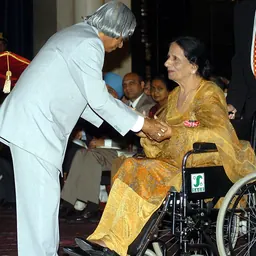


Related people
Same field, nearest in time





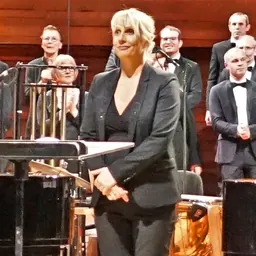
Contemporaries
People whose lives overlapped Pammi Bai's


Frequently asked questions
Who is Pammi Bai?
Indian singer
When was Pammi Bai born?
Pammi Bai was born on 9 November 1965 in Punjab, India, Sangrur.
What is Pammi Bai's occupation?
Pammi Bai is a singer and dancer.
What nationality is Pammi Bai?
Pammi Bai is Indian.
Sources & further reading
Cite this page
APA: Biography.guide. (2026). Pammi Bai. https://biography.guide/pammi-bai/
MLA: "Pammi Bai." Biography.guide, https://biography.guide/pammi-bai/.
Chicago: "Pammi Bai." Biography.guide. https://biography.guide/pammi-bai/.
Data last updated: 2026-09-20 · Spot an error? Report a correction.
Page generated 2026-09-27 05:27 UTC