
About Pak Mok-wol
Lived 1916 – 1978 (aged 62). Pak Mok-wol was a South Korean poet and writer.
Pak Mok-wol (, 6 January 1916 – 24 March 1978) was an influential Korean poet and academic.
Personal life He was born Pak Yeongjong on January 6, 1916, in Moryang Village, Seo-myeon, Gyeongju, North Gyeongsang Province, in present-day South Korea, to parents Pak Jun-pil and Pak In-jae . He had a younger brother and two younger sisters. He graduated from Keisung Middle School (today Keisung High School) in Daegu in 1935. He lived in Tokyo from April 1937 until late 1939, during which period he devoted his time to writing. From September 1939 to September 1940, he had several of his poems published in the magazine . Afterwards, due to increasing wartime censorship by the Japanese colonial government, he continued writing privately but did not publish any further poetry until after the liberation of Korea. He was married to Yu Ik-sun , with whom he had four sons and a daughter.
Pak taught at various schools including Keisung Middle School and Ewha Girls' High School beginning in 1946, before joining the faculty of Hongik University as an assistant professor in 1953. In 1961 he took up a position as associate professor at Hanyang University (at which a statue was erected in his honor), and in 1963 he became a full professor there. He was later named the dean of the university's College of Humanities. He was a board member of the Society of Korean Poets from its founding in 1957, and was chosen as the society's chairman in 1968. He died on March 24, 1978, at his home in Wonhyoro-dong, Yongsan District, Seoul.
After his experiences during the Korean War, Pak's work shifted in style. Now he strove to incorporate the pain, death, and even monotony of daily existence into his poetry without maintaining a standard of sentimental and lyrical quality. His poetry collections, Wild Peach Blossoms (Sandohwa) and Orchids and Other Poems (Nan. Gita) encapsulate his artistic aim to depict the shifting human response to both the joys and sorrows of life. His later poems, however, represent a return to the use of vivid colloquial language as the medium through which to express the color and vitality of local culture.
His collection of poems from this later stylistic phase, Fallen Leaves in Gyeongsang-do (Gyeongsang-doui garangnip) provides the artistic forum through which he is able to further explore his earlier questions of the relationship between light and dark, happiness and despair, and life and death. Pak's poetry, especially his later work, reveals a fervent love for life that does not wane despite his diligent acknowledgment of the ever-present threat of the end. He is celebrated for the cautious optimism of his work and his ability to subtly internalize conflicts of empiric reality in his deceptively localized and dialectal poetry.
Awards and legacy
Pak's awards include the Freedom Literature Awards, May Literature and Art Awards, the Seoul City Culture Awards (1969), and the Moran Medal of the Order of Civil Merit (1972). In 2007, he was listed by the Korean Poets' Association among the ten most important modern Korean poets.
Pak lived in a house in Wonhyoro-dong from 1965 until his death in 1978. The Seoul Municipal Government had expressed interest in preserving the house as a cultural heritage asset, but his son had to sell it to a real estate developer to cover debts in 2002, and the developer demolished the building in 2004. The demolition, along with similar incidents or near-misses involving the old houses of other cultural figures such as Choe Nam-seon and Seo Jeong-ju around the same time, sparked increasing public interest in the issue of cultural heritage preservation.
Don’t just read it —
keep it.
Full-length biographies made to live with: read them, listen on the way to work, watch them tonight.
- E-book
- Audio
- Video
Instant download · yours to keep · every purchase keeps this site free
Important facts
People in Pak Mok-wol's life
Named in this biography and alive at the same time


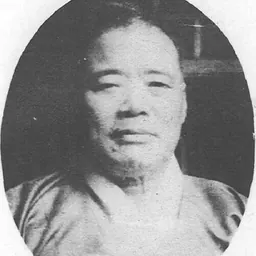
Related people
Same field, nearest in time

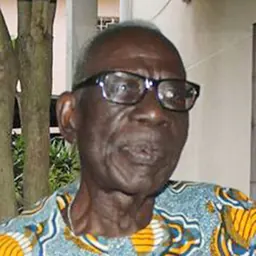

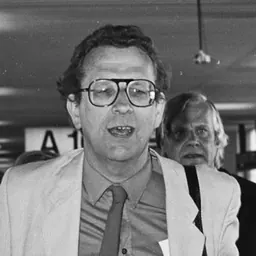
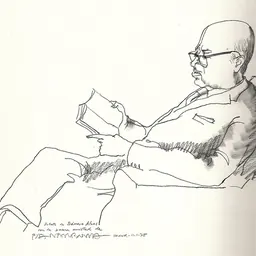
Contemporaries
People whose lives overlapped Pak Mok-wol's



Frequently asked questions
Who was Pak Mok-wol?
South Korean writer (1916–1978)
When was Pak Mok-wol born?
Pak Mok-wol was born on 6 January 1916 in Gyeongju.
When did Pak Mok-wol die?
Pak Mok-wol died on 24 March 1978 in Yongsan District.
What was Pak Mok-wol's occupation?
Pak Mok-wol was a poet and writer.
What nationality was Pak Mok-wol?
Pak Mok-wol was South Korean.
Sources & further reading
Cite this page
APA: Biography.guide. (2026). Pak Mok-wol. https://biography.guide/pak-mok-wol/
MLA: "Pak Mok-wol." Biography.guide, https://biography.guide/pak-mok-wol/.
Chicago: "Pak Mok-wol." Biography.guide. https://biography.guide/pak-mok-wol/.
Data last updated: 2026-09-20 · Spot an error? Report a correction.
Page generated 2026-09-27 05:26 UTC