
About Pafnuty Chebyshev
Lived 1821 – 1894 (aged 73). Pafnuty Chebyshev was a Russian mathematician, statistician and university teacher, known for Analytical geometry, Mechanics and Number theory.
Pafnuty Lvovich Chebyshev ( – ) was a Russian mathematician and considered to be the founding father of Russian mathematics.
Chebyshev is known for his fundamental contributions to the fields of probability, statistics, mechanics, and number theory. A number of important mathematical concepts are named after him, including the Chebyshev inequality (which can be used to prove the weak law of large numbers), the Bertrand–Chebyshev theorem, Chebyshev polynomials, Chebyshev linkage, and Chebyshev bias.
Transcription The surname Chebyshev has been transliterated in several different ways, including Tchebichef, Tchebychev, Tchebycheff, Tschebyschev, Tschebyschef, Tschebyscheff, Čebyčev, Čebyšev, Chebysheff, Chebychov and Chebyshov (which provides the closest pronunciation in English to the correct pronunciation in old Russian). Chebychev is an erroneous mixture between English and French transliterations. In English, the transliteration Chebyshev has gained widespread acceptance. The correct transliteration according to ISO 9 is Čebyšëv. The American Mathematical Society adopted the transcription Chebyshev in its Mathematical Reviews.
His first name comes from the Greek Paphnutius (Παφνούτιος), which in turn takes its origin in the Coptic Paphnuty (Ⲡⲁⲫⲛⲟⲩϯ), meaning "that who belongs to God" or simply "the man of God".
Biography Early years One of nine children, Chebyshev was born in the village of Okatovo in the district of Borovsk, province of Kaluga. His father, Lev Pavlovich, was a Russian nobleman and wealthy landowner. Pafnuty Lvovich was first educated at home by his mother Agrafena Ivanovna Pozniakova (in reading and writing) and by his cousin Avdotya Kvintillianovna Sukhareva (in French and arithmetic). Chebyshev mentioned that his music teacher also played an important role in his education, for she "raised his mind to exactness and analysis".
Trendelenburg's gait affected Chebyshev's adolescence and development. From childhood, he limped and walked with a stick and so his parents abandoned the idea of his becoming an officer in the family tradition. His disability prevented his playing many children's games and he devoted himself instead to mathematics.
In 1832, the family moved to Moscow, mainly to attend to the education of their eldest sons (Pafnuty and Pavel, who would become lawyers). Education continued at home and his parents engaged teachers of excellent reputation, including (for mathematics and physics) the senior Moscow University teacher , who had taught, among others, the future writer Ivan Turgenev.
University studies
In summer 1837, Chebyshev passed the registration examinations and, in September of that year, began his mathematical studies at the second philosophical department of Moscow University. His teachers included N.D. Brashman, N.E. Zernov and D.M. Perevoshchikov of whom it seems clear that Brashman had the greatest influence on Chebyshev. Brashman instructed him in practical mechanics and probably showed him the work of French engineer J.V. Poncelet. In 1841 Chebyshev was awarded the silver medal for his work "calculation of the roots of equations" which he had finished in 1838. In this, Chebyshev derived an approximating algorithm for the solution of algebraic equations of nth degree based on Newton's method. In the same year, he finished his studies as "most outstanding candidate".
In 1841, Chebyshev's financial situation changed drastically. There was famine in Russia, and his parents were forced to leave Moscow. Although they could no longer support their son, he decided to continue his mathematical studies and prepared for the master examinations, which lasted six months. Chebyshev passed the final examination in October 1843 and, in 1846, defended his master thesis "An Essay on the Elementary Analysis of the Theory of Probability." His biographer Prudnikov suggests that Chebyshev was directed to this subject after learning of recently published books on probability theory or on the revenue of the Russian insurance industry.
Adult years In 1847, Chebyshev promoted his thesis pro venia legendi "On integration with the help of logarithms" at St Petersburg University and thus obtained the right to teach there as a lecturer. At that time some of Leonhard Euler's works were rediscovered by P. N. Fuss and were being edited by Viktor Bunyakovsky, who encouraged Chebyshev to study them. This would come to influence Chebyshev's work. In 1848, he submitted his work The Theory of Congruences for a doctorate, which he defended in May 1849.
In 1893, he was elected honorable member of the St. Petersburg Mathematical Society, which had been founded three years earlier.
Chebyshev died in St Petersburg on 8 December 1894.
Fifty years later, in 1896, the celebrated prime number theorem was proved, independently, by Jacques Hadamard and Charles Jean de la Vallée Poussin:
using ideas introduced by Bernhard Riemann.
Chebyshev is also known for the Chebyshev polynomials and the Chebyshev bias – the difference between the number of primes that are congruent to 3 (modulo 4) and 1 (modulo 4).
Chebyshev was the first person to think systematically in terms of random variables and their moments and expectations.
Legacy
Chebyshev is considered to be a founding father of Russian mathematics.
The lunar crater Chebyshev and the asteroid 2010 Chebyshev were named to honor his major achievements in the mathematical realm.
Don’t just read it —
keep it.
Full-length biographies made to live with: read them, listen on the way to work, watch them tonight.
- E-book
- Audio
- Video
Instant download · yours to keep · every purchase keeps this site free
Important facts
People in Pafnuty Chebyshev's life
Named in this biography and alive at the same time



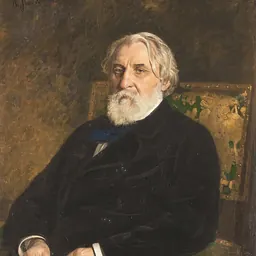
Related people
Same field, nearest in time

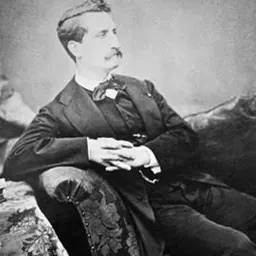


Contemporaries
People whose lives overlapped Pafnuty Chebyshev's



Frequently asked questions
Who was Pafnuty Chebyshev?
Russian mathematician (1821–1894)
When was Pafnuty Chebyshev born?
Pafnuty Chebyshev was born on 4 May 1821 in Akatovo.
When did Pafnuty Chebyshev die?
Pafnuty Chebyshev died on 26 November 1894 in Saint Petersburg.
What was Pafnuty Chebyshev's occupation?
Pafnuty Chebyshev was a mathematician, statistician and university teacher.
What was Pafnuty Chebyshev known for?
Pafnuty Chebyshev was known for Analytical geometry, Mechanics, Number theory, Probability and Statistics.
What nationality was Pafnuty Chebyshev?
Pafnuty Chebyshev was Russian.
Sources & further reading
· Wikipedia: Pafnuty Chebyshev
Cite this page
APA: Biography.guide. (2026). Pafnuty Chebyshev. https://biography.guide/pafnuty-chebyshev/
MLA: "Pafnuty Chebyshev." Biography.guide, https://biography.guide/pafnuty-chebyshev/.
Chicago: "Pafnuty Chebyshev." Biography.guide. https://biography.guide/pafnuty-chebyshev/.
Data last updated: 2026-09-20 · Spot an error? Report a correction.
Page generated 2026-09-27 05:30 UTC