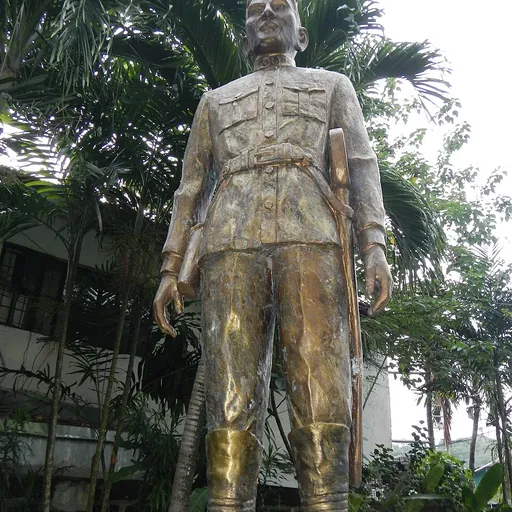
Paciano Rizal
Filipino general and revolutionary, and the older brother of José Rizal
About Paciano Rizal
Lived 1851 – 1930 (aged 79). Paciano Rizal was a Filipino military personnel.
Paciano Rizal Mercado y Alonso Realonda (March 9, 1851 – April 13, 1930) was a Filipino general and revolutionary, and the older brother of José Rizal. Paciano Rizal was born on March 9, 1851, in Calamba, Laguna. He was sent to Biñan to study Latin and was subsequently enrolled at the San José College in Manila. Paciano befriended Priest José Burgos and resided in his home. The 1872 Cavite mutiny commenced early that year. Due to the implication of Burgos and two other priests in the mutiny, they were executed. Paciano assisted in enrolling José in the Ateneo Municipal for his secondary studies. Paciano helped José choose a course in his tertiary studies. After Burgos died, he went back to Calamba to oversee his family's hacienda.
Due to José's desire to go to Europe, Paciano and his uncle Antonio assisted José in traveling to Europe without informing his parents. He also supported the Propaganda Movement and Katipunan. In 1888, an agrarian crisis arose in Calamba, causing Paciano and his family to be evicted from their house. Paciano was exiled to Mindoro and subsequently to Jolo. After the release of El filibusterismo, a novel that his brother authored, and alleged plans of an uprising by the Katipunan, José was taken to trial and sentenced to death by firing squad. During the trial, Paciano was tortured for three days. Spanish authorities attempted to extract information from him to use against his brother. José was executed on December 30, 1896.
After José died, Paciano joined Katipunan forces under Emilio Aguinaldo. He was appointed general of the revolutionary forces and was elected Secretary of Finance of Central Luzon. He led troops and fought against the Spanish government, playing a key role in the Battle of Calamba. He was also general in the Philippine–American War but was captured in 1900; after he was released and became a farmer. The American colonial government and the local government of Laguna offered positions to him, but he rejected both. On April 13, 1930, Paciano died at his home in Los Baños at the age of 79 and was buried at the Manila North Cemetery.
Early life and education Paciano Rizal was born to Francisco Engracio Rizal Mercado y Alejandro and Teodora Alonso y Quintos on March 9, 1851, as the second of eleven children in Calamba, Laguna. Out of two properties they leased, Paciano lived in a stone house. The family was not rich, but comfortable and well-to-do. Francisco and Teodora gave their children good education. The society at the time had a feudalistic nature: Spaniards extracted money from the natives as taxes and assigned them to manual labor. The Spaniards and friars were upper-class, favored natives, mestizos, and creoles were middle class, and regular native Filipinos and Indios were low-class.
Paciano was first educated through his mother.
While in Manila, Paciano befriended Father José Burgos and resided in his home. He regularly served as the "messenger" for negotiations between Burgos and the Spanish government due to the secularization movement Burgos ran. He eventually lowered the amount he gave to José to 35 Mexican pesos. After the parents found out of his trip to Europe, Paciano helped calm them down. He kept José updated on events happening in his homeland and translated José's poems including José's "El Amor Patrio" that Paciano gave to Marcelo H. del Pilar.
When [the cholera epidemic] was officially declared in Manila, land and sea communications were interrupted. Ships coming from filthy ports were forbidden to stop here. The steamers that come from Manila go directly to Sta. Cruz [Laguna] to be fumigated and quarantined for 12 hours. Towns[people] are not allowed to mingle with each other or enjoy any consideration, except with the permission of the government. — Paciano Rizal
Execution of José Rizal After El filibusterismo, another of José's novels, was published in 1891, being affiliated with the author of both novels was, according to Chris Antonette Piedad-Pugay of the National Historical Commission of the Philippines, "like carrying a heavy cross." After three days of torture, Paciano was too sick to sign, causing him to be carted home. He was released "shapeless" and was described by Piedad-Pugay as "good as dead." José was executed by shooting on December 30. After Rizal's execution, Paciano gave Bonifacio a copy of Rizal's last poem "Mi Ultimo Adios".
From June 1 to August 19, Paciano also was a leader of 400 Filipinos against 60 Spaniards in the Battle of Calamba, fighting them until the Spaniards surrendered. Paciano was also one of the leaders of a siege in Santa Cruz, Laguna, that 10,000 Filipinos joined, yet were defeated. A trick Paciano used in getting Spaniards to surrender in Calamba was by lighting firecrackers to frighten the Spaniards due to a limited number of guns. Paciano was assigned by Aguinaldo to deliver arms and disband troops in Laguna. Paciano continued engaging in warfare even after the Philippine–American War commenced. He was captured by American troops in 1900 and went back to farming after he was released. The film is 30 minutes long and was one of the entries in the 2020 Cinemalaya. In Los Baños, a shrine dedicated to Paciano was installed on April 13, 1983; the shrine is classified as a level 1 national historical landmark. A camp in Santa Cruz, Camp Heneral Paciano Rizal, was named to honor Paciano on June 17, 2011. A personage honoring Paciano was installed in the camp on July 28, 2021. The installation of the personage was held by Laguna Governor Ramil Hernandez and was also celebrated in honor of the 450th founding anniversary of the province. In Calamba, a barangay and an elementary school was named after Paciano. An executive issuance made by Gloria Macapagal Arroyo declared March 9, 2009, as "General Paciano Rizal Day" in Laguna. Celebrations were also made by the Laguna Provincial Police Office honoring Paciano.
Don’t just read it —
keep it.
Full-length biographies made to live with: read them, listen on the way to work, watch them tonight.
- E-book
- Audio
- Video
Instant download · yours to keep · every purchase keeps this site free
Important facts
People in Paciano Rizal's life
Named in this biography and alive at the same time

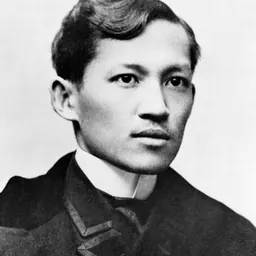


Related people
Same field, nearest in time


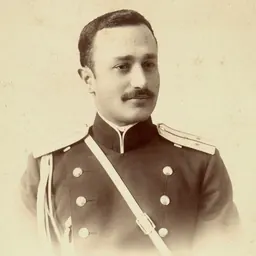

Contemporaries
People whose lives overlapped Paciano Rizal's


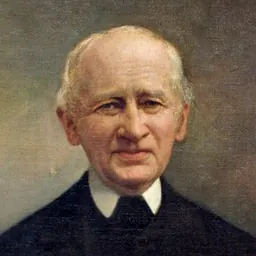
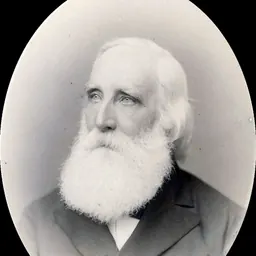
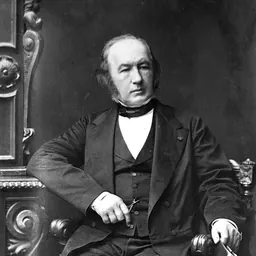
Frequently asked questions
Who was Paciano Rizal?
Filipino general and revolutionary, and the older brother of José Rizal (1851–1930)
When was Paciano Rizal born?
Paciano Rizal was born on 9 March 1851.
When did Paciano Rizal die?
Paciano Rizal died on 13 April 1930 in Los Baños.
What was Paciano Rizal's occupation?
Paciano Rizal was a military personnel.
What nationality was Paciano Rizal?
Paciano Rizal was Filipino.
Sources & further reading
Cite this page
APA: Biography.guide. (2026). Paciano Rizal. https://biography.guide/paciano-rizal/
MLA: "Paciano Rizal." Biography.guide, https://biography.guide/paciano-rizal/.
Chicago: "Paciano Rizal." Biography.guide. https://biography.guide/paciano-rizal/.
Data last updated: 2026-09-22 · Spot an error? Report a correction.
Portrait: Wikimedia Commons · author & licence
Page generated 2026-09-27 05:03 UTC