
About P. Subbarayan
Lived 1889 – 1962 (aged 73). P. Subbarayan was an Indian politician, diplomat and lawyer.
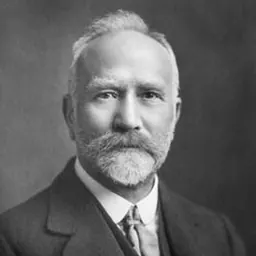
Paramasivan Subbarayan (11 September 1889 – 6 October 1962) was an Indian politician, freedom fighter and diplomat and was the First Minister of Madras Presidency, India's ambassador to Indonesia and Union Minister of Transport and Communications in Jawaharlal Nehru's government. He was the father of General P. P. Kumaramangalam, who served as India's Chief of Army staff, and of politician Mohan Kumaramangalam. He was also the grandfather of INC and BJP politician and Union Minister Rangarajan Kumaramangalam.
Subbarayan was born at the British Raj era on 11 September 1889 in the family estate at Kumaramangalam, Salem district and had his education at Presidency College, Trinity College Dublin, the University of London and Christ Church, Oxford. In 1922, he was nominated to the Madras Legislative Council. He served as the First Minister of Madras Presidency from 4 December 1926 to 27 October 1930.
In 1933, Subbarayan joined the Indian National Congress and served as the Minister of Law and Education in Rajaji's cabinet and the Minister of Police and Home in Ramaswamy Reddiar's cabinet. Subbarayan participated and was imprisoned in the Quit India Movement. He served as independent India's ambassador to Indonesia and as Union Minister from 1959 to 1962. Subbarayan died on 6 October 1962 at the age of 73. He was the Governor of Maharashtra until his death.
Early life and education Subbarayan was born under British Raj colonial rule to Paramasiva Gounder in the family estate of Kumaramangalam near Tiruchengode, Namakkal district on 11 September 1889. He belonged to the family of Zamindars. He graduated from the Presidency College and LLD from the Christ Church, Oxford and Trinity College Dublin respectively. He took the side of C. R. Reddy and the Swarajists and voted against the Raja of Pangal during the no-confidence motion of 1923. The Swaraj Party won 41 of the 98 seats and emerged as the single largest party while the Justice Party won 21. An independent ministry was formed with A. Ranganatha Mudaliar and R. N. Arogyaswamy Mudaliar as the second and third ministers. The Justice Party took the place of an opposition.
Subbarayan's Cabinet Portfolio Minister Education, Local Self-Government P. Subbarayan (also First Minister) (1926–1930)Public health, excise A. Ranganatha Mudaliar (1926–1928) S. Muthiah Mudaliar (1928–1930)Development R. N. Arogyasamy Mudaliar (1926–1928) M. R. Sethuratnam Iyer (1928–1930)Source: Encyclopaedia of Political Parties
Because Subbarayan's regime was appointed and largely controlled by the Governor, it became the target of strong criticism both from the Justicites as well as the Swarajists.
The Simon Commission was appointed by the British Parliament in 1927 to report on the working of the progress of the Montagu-Chelmsford reforms. Subbarayan opposed the resolution but his cabinet ministers Ranganatha Mudaliar and Arogyaswamy Mudaliar supported it. The Simon Commission visited Madras on 28 February 1928 and was boycotted by the Swarajya Party and the Indian National Congress. However, the Justicites and the Subbarayan Government accorded the commission a warm reception.
Policies The Raja of Panagal government had introduced the Communal Government Order (G. O. No. 613) in 1921 which introduced reservations in the Presidency. However, the provisions of this act were not implemented till 1927. The Subbarayan government, therefore, introduced the Communal G. O. Ms No. 1021 to implement the 1921 order. The act was introduced by S. Muthiah Mudaliar, the Education Minister in Subbarayan's cabinet on 11 April 1927. At the same time, it reduced the reservations for Brahmins from 22% to 16% and non-Brahmins from 48% to 42%. The Annamalai University is the first residential university in Madras Presidency. On 1 November 1932, Subbarayan proposed the Temple Entry Bill which permitted low-caste Hindus and Dalits enter Hindu temples and made their prohibition illegal and punishable. He also passed a copy of the resolution and the proceedings of the council to Mahatma Gandhi who was in jail. The Viceroy, however, refused permission explaining that temple entry was an all-India problem and should not be dealt with in a provincial basis even while clearing Ranga Iyer's bill. The Temple Entry Bill was not passed until the Indian National Congress came to power in 1937. Subbarayan resigned along with other members of the Rajaji cabinet when war was declared in 1939.
Subbarayan actively participated in the Quit India Movement and was arrested along with other Congress leaders as Sathyamurthy and M. Bakthavatsalam.
In 1947, he served as a Minister for Home and Police in the Ramaswamy Reddiar Cabinet in Madras He served as a member of the Provincial Constitution Committee.
Foreign service (1949-1951) From 1949 to 1951, Subbarayan served as independent India's first ambassador to Indonesia. He was instrumental in the signing of a mutual treaty of friendship with the Indonesian Foreign Minister Mohammad Roem on 3 March 1951. Subbarayan's tenure came to an end in 1951 and he was succeeded by Alagappan. He also served as a member of Rajya Sabha from 1954 to 1957. Later when the Indian President Rajendra Prasad sought his opinion on making Hindi as the sole official language, Subbarayan advised against it.
In 1957, Subbarayan was elected to the Lok Sabha from Tiruchengode and served as a member till 1962. He served as the Minister of Transport and Communications in the Government of India union cabinet from 1959 to 1962. He was elected again in 1962 but was instead made Governor of Maharashtra. and was the Founder-president of the Indian Cricket Federation, the first association in the Madras Presidency to represent Indian cricketing interests. He also served as the president of the Board of Control for Cricket in India (BCCI) during the Second World War.
Death Subbarayan died at the age of 73 on 6 October 1962.
Family and legacy
Subbarayan married Kailash Radhabai Kulmud, who was his colleague in Presidency College, by Brahmo rites despite opposition from family members. Radhabai Subbarayan was an active campaigner for women's rights and served as a member of the Indian parliament.
Subbarayan's eldest son Mohan Kumaramangalam was a minister in Indira Gandhi's cabinet.
A portrait of Subbarayan was unveiled in the central hall of the Indian Parliament on 16 October 1989.
Don’t just read it —
keep it.
Full-length biographies made to live with: read them, listen on the way to work, watch them tonight.
- E-book
- Audio
- Video
Instant download · yours to keep · every purchase keeps this site free
Important facts
Family & relationships
People in P. Subbarayan's life
Named in this biography and alive at the same time

Related people
Same field, nearest in time






Contemporaries
People whose lives overlapped P. Subbarayan's




Frequently asked questions
Who was P. Subbarayan?
Indian politician (1889–1962)
When was P. Subbarayan born?
P. Subbarayan was born on 11 September 1889 in Salem district.
When did P. Subbarayan die?
P. Subbarayan died on 6 October 1962 in Chennai.
What was P. Subbarayan's occupation?
P. Subbarayan was a politician, diplomat and lawyer.
What nationality was P. Subbarayan?
P. Subbarayan was Indian.
Sources & further reading
Cite this page
APA: Biography.guide. (2026). P. Subbarayan. https://biography.guide/p-subbarayan/
MLA: "P. Subbarayan." Biography.guide, https://biography.guide/p-subbarayan/.
Chicago: "P. Subbarayan." Biography.guide. https://biography.guide/p-subbarayan/.
Data last updated: 2026-09-26 · Spot an error? Report a correction.
Page generated 2026-09-27 05:16 UTC