
About P. G. Wodehouse
Lived 1881 – 1975 (aged 93). P. G. Wodehouse was a British and American writer, novelist, playwright, librettist, lyricist and humorist.
Sir Pelham Grenville Wodehouse ( ; 15 October 1881 – 14 February 1975) was an English writer and one of the most widely read humorists of the 20th century. His creations include the feather-brained Bertie Wooster and his sagacious valet, Jeeves; the immaculate and loquacious Psmith; Lord Emsworth and the Blandings Castle set; the Oldest Member, with stories about golf; and Mr. Mulliner, with tall tales on subjects ranging from bibulous bishops to megalomaniac movie moguls.
Born in Guildford, the third son of a British magistrate based in Hong Kong, Wodehouse spent happy teenage years at Dulwich College, to which he remained devoted all his life. After leaving school he was employed by a bank but disliked the work and turned to writing in his spare time. His early novels were mostly school stories, but he later switched to comic fiction. Most of Wodehouse's fiction is set in his native United Kingdom, although he spent much of his life in the US and used New York and Hollywood as settings for some of his novels and short stories. He wrote a series of Broadway musical comedies during and after the First World War, together with Guy Bolton and Jerome Kern, that played an important part in the development of the American musical. He began the 1930s writing for MGM in Hollywood. In a 1931 interview, his naive revelations of incompetence and extravagance in the studios caused a furore. In the same decade, his literary career reached a new peak.
In 1934 Wodehouse moved to France for tax reasons; in 1940 he was taken prisoner at Le Touquet by the invading Germans and interned for nearly a year. After his release he made five broadcasts from German radio in Berlin to the US, which had not yet entered the war. The talks were comic and apolitical, but his broadcasting over enemy radio prompted anger and strident controversy in Britain, and a threat of prosecution. Wodehouse never returned to England. From 1947 until his death he lived in the US; he took US citizenship in 1955 while retaining his British one. He died in 1975, at the age of 93, in Southampton, New York, one month after he was awarded a knighthood of the Order of the British Empire (KBE).
Wodehouse was a prolific writer throughout his life, publishing more than ninety books, forty plays, two hundred short stories and other writings between 1902 and 1974. He worked extensively on his books, sometimes having two or more in preparation simultaneously. He would take up to two years to build a plot and write a scenario of about thirty thousand words. After the scenario was complete he would write the story. Early in his career Wodehouse would produce a novel in about three months, but he slowed in old age to around six months. He used a mixture of Edwardian slang, quotations from and allusions to numerous poets, and several literary techniques to produce a prose style that has been compared to comic poetry and musical comedy. Some critics of Wodehouse have considered his work flippant, but among his fans are former British prime ministers and many of his fellow writers.
Life and career
Early years Wodehouse was born in Guildford, Surrey, the third son of Henry Ernest Wodehouse, a magistrate resident in the British colony of Hong Kong, and his wife, Eleanor, daughter of John Bathurst Deane. The Wodehouses belonged to a cadet branch of the family of the earls of Kimberley. Eleanor Wodehouse was also of ancient aristocratic ancestry. She was visiting her sister in Guildford when Wodehouse was born there prematurely.
The boy was baptised at the Church of St Nicolas, Guildford, and was named after his godfather, Pelham von Donop. Wodehouse wrote in 1957, "If you ask me to tell you frankly if I like the name Pelham Grenville Wodehouse, I must confess that I do not.... I was named after a godfather, and not a thing to show for it but a small silver mug which I lost in 1897." (P.) G. von Donop's middle name was George. It is unclear why Grenville was chosen for Wodehouse. The academic Sophie Ratcliffe speculates that Eleanor Wodehouse chose it because of her liking for literary heroes. Sir Richard Grenville is the hero of Tennyson's The Revenge; among the names Eleanor gave her other sons were Peveril from Scott's Peveril of the Peak and Lancelot from Tennyson's Idylls of the King.
Mother and son sailed for Hong Kong, where for his first two years Wodehouse was raised by a Chinese amah (nurse), alongside his elder brothers Philip Peveril John (1877–1951) and Ernest Armine (1879–1936). When he was two, the brothers were brought to England, where they were placed under the care of an English nanny in a house adjoining that of Eleanor's father and mother. The lack of parental contact, and the harsh regime of some of those in loco parentis, left permanent emotional scars on many children from similar backgrounds, including the writers Thackeray, Saki, Kipling and Walpole. Wodehouse was more fortunate; his nanny, Emma Roper, was strict but not unkind, and both with her and later at his different schools Wodehouse had a generally happy childhood. His recollection was that "it went like a breeze from start to finish, with everybody I met understanding me perfectly". Another biographer, Frances Donaldson, writes, "Deprived so early, not merely of maternal love, but of home life and even a stable background, Wodehouse consoled himself from the youngest age in an imaginary world of his own." sea air was prescribed, and the three boys were moved to Elizabeth College on the island of Guernsey. In 1891 Wodehouse went on to Malvern House Preparatory School in Kent, which concentrated on preparing its pupils for entry to the Royal Navy. His father had planned a naval career for him, but the boy's eyesight was found to be too poor for it. He was unimpressed by the school's narrow curriculum and zealous discipline; he later parodied it in his novels, with Bertie Wooster recalling his early years as a pupil at a "penitentiary... with the outward guise of a prep school" called Malvern House.
Cheney Court, Ditteridge, a large 17th-century house near Box in Wiltshire, was one of Wodehouse's homes while his parents were living in Hong Kong. His grandmother died in 1892, after which he was largely brought up by his aunts, including the writer Mary Bathurst Deane, the original of Bertie Wooster's fictional Aunt Agatha. In 1955 Wodehouse wrote "Aunt Agatha is definitely my Aunt Mary, who was the scourge of my childhood."
Throughout their school years the brothers were sent to stay during the holidays with various uncles and aunts from both sides of the family. In the Oxford Dictionary of National Biography, Iain Sproat counts twenty aunts and considers that they played an important part not only in Wodehouse's early life, but, thinly disguised, in his mature novels, as the formidable aunts who dominate the action in the Wooster, Blandings, and other stories. The boys had fifteen uncles, four of whom were clergymen. Sproat writes that they inspired Wodehouse's "pious but fallible curates, vicars, and bishops, of which he wrote with friendly irreverence but without mockery".
At the age of twelve in 1894, to his great joy, Wodehouse was able to follow his brother Armine to Dulwich College. He was entirely at home there; Donaldson comments that Dulwich gave him, for the first time, "some continuity and a stable and ordered life". He loved the camaraderie, distinguished himself at cricket, rugby and boxing, and was a good, if not consistently diligent, student. The headmaster at the time was A. H. Gilkes, a respected classicist, who was a strong influence on Wodehouse. Usborne cites as an example a sentence from Money in the Bank (1942): "With the feeling, which was his constant companion nowadays, for the wedding was fixed for the fifth of July and it was already the tenth of June, that if anybody cared to describe him as some wild thing taken in a trap, which sees the trapper coming through the woods, it would be all right with him, he threw a moody banana skin at the loudest of the sparrows, and went back into the room." In addition to his sporting achievements he was a good singer and enjoyed taking part in school concerts; his literary leanings found an outlet in editing the school magazine, The Alleynian. For the rest of his life he remained devoted to the school. The biographer Barry Phelps writes that Wodehouse "loved the college as much as he loved anything or anybody".
Reluctant banker; budding writer: 1900–1908
Wodehouse expected to follow Armine to the University of Oxford, but the family's finances took a turn for the worse at the crucial moment. Ernest Wodehouse had retired in 1895, and his pension was paid in rupees; fluctuation against the pound reduced its value in Britain. Wodehouse recalled, "The wolf was not actually whining at the door and there was always a little something in the kitty for the butcher and the grocer, but the finances would not run to anything in the nature of a splash". Instead of a university career, in September 1900 Wodehouse was engaged in a junior position in the London office of the Hongkong and Shanghai Bank. He was unsuited to it and found the work baffling and uncongenial. He later wrote a humorous account of his experiences at the bank, but at the time he longed for the end of each working day, when he could return to his rented lodgings in Chelsea and write. At first he concentrated, with some success, on serious articles about school sports for Public School Magazine. In November 1900 his first comic piece, "Men Who Missed Their Own Weddings", was accepted by Tit-Bits. A new magazine for boys, The Captain, provided further well-paid opportunities, and during his two years at the bank, Wodehouse had eighty pieces published in a total of nine magazines.
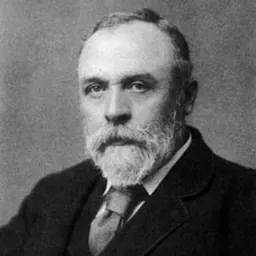
alt=Black and white photograph of Wodehouse's head and shoulders. He is wearing a suit and looking at the camera In 1901, with the help of a former Dulwich master, William Beach Thomas, Wodehouse secured an appointment—at first temporary and later permanent—writing for The Globes popular "By the Way" column. He held the post until 1909. At around the same time his first novel was published – a school story called The Pothunters, serialised incomplete in Public School Magazine in early 1902, and issued in full in hardback in September. He resigned from the bank that month to devote himself to writing full-time.
Between the publication of The Pothunters 1902 and that of Mike in 1909, Wodehouse wrote eight novels and co-wrote another two. The critic R. D. B. French writes that, of Wodehouse's work from this period, almost all that deserves to survive is the school fiction. Looking back in the 1950s Wodehouse viewed these as his apprentice years: "I was practically in swaddling clothes and it is extremely creditable to me that I was able to write at all."
From his boyhood Wodehouse had been fascinated by America, which he conceived of as "a land of romance"; he "yearned" to visit the country, and by 1904 he had earned enough to do so. In April he sailed to New York, which he found greatly to his liking. He noted in his diary: "In New York gathering experience. Worth many guineas in the future but none for the moment." This prediction proved correct: few British writers had first-hand experience of the US, and his articles about life in New York brought him higher than usual fees. He later recalled that "in 1904 anyone in the London writing world who had been to America was regarded with awe and looked upon as an authority on that terra incognita.... After that trip to New York I was a man who counted.... My income rose like a rocketing pheasant."
Wodehouse's other new venture in 1904 was writing for the stage. Towards the end of the year the librettist Owen Hall invited him to contribute an additional lyric for a musical comedy, Sergeant Brue. Wodehouse had loved theatre since his first visit, aged thirteen, when Gilbert and Sullivan's Patience had made him "drunk with ecstasy". His lyric for Hall, "Put Me in My Little Cell", was a Gilbertian number for a trio of comic crooks, with music by Frederick Rosse; it was well received and launched Wodehouse on a career as a theatre writer that spanned three decades.
Although it made little impact on its first publication, the 1906 novel Love Among the Chickens contained what French calls the author's first original comic creation: Stanley Featherstonehaugh Ukridge. The character, an amoral, bungling opportunist, is partly based on Wodehouse's Globe colleague Herbert Westbrook. The two collaborated between 1907 and 1913 on two books, two music hall sketches, and a play, Brother Alfred. (The two books were Not George Washington (1907) and The Globe By the Way Book (1908).)
In early 1906 the actor-manager Seymour Hicks invited Wodehouse to become resident lyricist at the Aldwych Theatre, to add topical verses to newly imported or long-running shows. Hicks had already recruited the young Jerome Kern to write the music for such songs. The first Kern-Wodehouse collaboration, a comic number for The Beauty of Bath titled "Mr Joseph Chamberlain", was a show-stopper and was briefly the most popular song in London.
Psmith, Blandings, Wooster and Jeeves: 1908–1915 Psmith, drawn by T. M. R. Whitwell for first edition of Mike (1909) Wodehouse's early period as a writer came to an end in 1908 with the serialisation of The Lost Lambs, published the following year in book form as the second half of the novel Mike. whose creation both Evelyn Waugh and George Orwell regarded as a watershed in Wodehouse's development. Wodehouse said that he based Psmith on the hotelier and impresario Rupert D'Oyly Carte—"the only thing in my literary career which was handed to me on a silver plate with watercress around it". Psmith featured in three more novels: Psmith in the City (1910), a burlesque of banking; Psmith, Journalist (1915) set in New York; and Leave It to Psmith (1923), set at Blandings Castle.
In May 1909 Wodehouse made his second visit to New York, where he sold two short stories to Cosmopolitan and Collier's for a total of $500, a much higher fee than he had commanded previously. He resigned from The Globe and stayed in New York for nearly a year. He sold many more stories, but none of the American publications offered a permanent relationship and guaranteed income.
Wodehouse was in New York when the war began. Ineligible for military service because of his poor eyesight, he remained in the US throughout the war, detached from the conflict in Europe and absorbed in his theatrical and literary concerns.
Wodehouse experimented with different genres of fiction in these years; Psmith, Journalist, mixing comedy with social comment on slum landlords and racketeers, was published in 1915. In the same year The Saturday Evening Post paid $3,500 to serialise Something New, the first of what became a series of novels set at Blandings Castle. It was published in hardback in the US and the UK in the same year (the British edition being retitled Something Fresh). It was Wodehouse's first farcical novel; it was also his first best-seller, and although his later books included some gentler, lightly sentimental stories, it was as a farceur that he became known. Later in the same year "Extricating Young Gussie", the first story about Bertie and Jeeves, was published. These stories introduced two sets of characters about whom Wodehouse wrote for the rest of his life. The Blandings Castle stories, set in an English stately home, depict the attempts of the placid Lord Emsworth to evade the many distractions around him, which include successive pairs of young lovers, the machinations of his exuberant brother Galahad, the demands of his domineering sisters and super-efficient secretaries, and anything detrimental to his prize sow, the Empress of Blandings. The Bertie and Jeeves stories feature an amiable young man-about-town, regularly rescued from the consequences of his idiocy by the benign interference of his valet.
Broadway: 1915–1919 Morris Gest, Wodehouse, Guy Bolton, F. Ray Comstock and Jerome Kern, c. 1917 A third milestone in Wodehouse's life came towards the end of 1915: his old songwriting partner Jerome Kern introduced him to the writer Guy Bolton, who became Wodehouse's closest friend and a regular collaborator. Bolton and Kern had a musical, Very Good Eddie, running at the Princess Theatre in New York. The show was successful, but they thought the song lyrics weak and invited Wodehouse to join them on its successor. This was Miss Springtime (1916), which ran for 227 performances—a good run by the standards of the day. The team produced several more successes, including Leave It to Jane (1917), Oh, Boy! (1917–18) and Oh, Lady! Lady!! (1918), and Wodehouse and Bolton wrote a few more shows with other composers. In these musicals Wodehouse's lyrics won high praise from critics as well as fellow lyricists such as Ira Gershwin.
Unlike his original model, Gilbert, Wodehouse preferred the music to be written first, fitting his words into the melodies. Donaldson suggests that this is the reason why his lyrics have largely been overlooked in recent years: they fit the music perfectly, but do not stand on their own in verse form as Gilbert's do. Nonetheless, Donaldson adds, the book and lyrics for the Princess Theatre shows made the collaborators an enormous fortune and played an important part in the development of the American musical. In the Grove Dictionary of American Music Larry Stempel writes, "By presenting naturalistic stories and characters and attempting to integrate the songs and lyrics into the action of the libretto, these works brought a new level of intimacy, cohesion, and sophistication to American musical comedy." The theatre writer Gerald Bordman calls Wodehouse "the most observant, literate, and witty lyricist of his day". The composer Richard Rodgers wrote, "Before Larry Hart, only P. G. Wodehouse had made any real assault on the intelligence of the song-listening public."
1920s In the years after the war, Wodehouse steadily increased his sales, polished his existing characters and introduced new ones. Bertie and Jeeves, Lord Emsworth and his circle, and Ukridge appeared in novels and short stories; Psmith made his fourth and last appearance; two new characters were the Oldest Member, narrating his series of golfing stories, and Mr Mulliner, telling his particularly tall tales to fellow patrons of the bar at the Angler's Rest. Various other young men-about-town appeared in short stories about members of the Drones Club.
The Wodehouses returned to England, where they had a house in London for some years, but Wodehouse continued to cross the Atlantic frequently, spending substantial periods in New York. He also wrote non-musical plays, including The Play's the Thing (1926), adapted from Ferenc Molnár, and A Damsel in Distress (1928), a dramatisation of his 1919 novel.
Though never a naturally gregarious man, Wodehouse was more sociable in the 1920s than at other periods. Donaldson lists among those with whom he was on friendly terms writers including A. A. Milne, Ian Hay, Frederick Lonsdale and E. Phillips Oppenheim, and stage performers including George Grossmith Jr., Heather Thatcher and Dorothy Dickson.
Hollywood: 1929–1931 There had been films of Wodehouse stories since 1915, when A Gentleman of Leisure was based on his 1910 novel of the same name. Further screen adaptations of his books were made between then and 1927, but it was not until 1929 that Wodehouse went to Hollywood where Bolton was working as a highly paid writer for Metro-Goldwyn-Mayer (MGM). Ethel was taken with both the financial and social aspects of Hollywood life, and she negotiated a contract with MGM on her husband's behalf under which he would be paid $2,000 a week. This large salary was particularly welcome because the couple had lost considerable sums in the Wall Street crash of 1929.
Wodehouse's family and friends had not had any news of his location after the fall of France, but an article from an Associated Press reporter who had visited Tost in December 1940 led to pressure on the German authorities to release the novelist. This included a petition from influential people in the US; Senator W. Warren Barbour presented it to the German ambassador. Although his captors refused to release him, Wodehouse was provided with a typewriter and, to pass the time, he wrote Money in the Bank. Throughout his time in Tost, he sent postcards to his US literary agent asking for $5 to be sent to various people in Canada, mentioning his name. These were the families of Canadian prisoners of war, and the news from Wodehouse was the first indication that their sons were alive and well. Wodehouse risked severe punishment for the communication, but managed to evade the German censor.
On 21 June 1941, while he was in the middle of playing a game of cricket, Wodehouse received a visit from two members of the Gestapo. He was given ten minutes to pack his things before he was taken to the Hotel Adlon, a top luxury hotel in Berlin. He stayed there at his own expense; royalties from the German editions of his books had been put into a special frozen bank account at the outset of the war, and Wodehouse was permitted to draw upon this money he had earned while staying in Berlin. He was thus released from internment a few months before his sixtieth birthday—the age at which civilian internees were released by the Nazis. Shortly afterwards Wodehouse was, in the words of Phelps, "cleverly trapped" into making five broadcasts to the US via German radio, with the Berlin-based correspondent of the Columbia Broadcasting System. The broadcasts—aired on 28 June, 9, 23 and 30 July and 6 August—were titled How to be an Internee Without Previous Training, and comprised humorous anecdotes about Wodehouse's experiences as a prisoner, including some gentle mocking of his captors. The German propaganda ministry arranged for the recordings to be broadcast to Britain in August. The day after Wodehouse recorded his final programme, Ethel joined him in Berlin, having sold most of her jewellery to pay for the journey.
Aftermath: reactions and investigation The reaction in Britain to Wodehouse's broadcasts was hostile, and he was "reviled ... as a traitor, collaborator, Nazi propagandist, and a coward", In the House of Commons Anthony Eden, the Foreign Secretary, regretted Wodehouse's actions. Several libraries removed Wodehouse novels from their shelves. Wodehouse's biographer, Joseph Connolly, thinks the broadcast "inaccurate, spiteful and slanderous"; Phelps calls it "probably the most vituperative attack on an individual ever heard on British radio". The broadcast was made at the direct instruction of Duff Cooper, the Minister of Information, who overruled strong protests made by the BBC against the decision to air the programme. The Wodehouses remained in Germany until September 1943, when, because of the Allied bombings, they were allowed to move back to Paris. They were living there when the city was liberated on 25 August 1944; Wodehouse reported to the American authorities the following day, asking them to inform the British of his whereabouts. He was subsequently visited by Malcolm Muggeridge, recently arrived in Paris as an intelligence officer with MI6. The young officer quickly came to like Wodehouse and considered the question of treasonable behaviour as "ludicrous"; he summed up the writer as "ill-fitted to live in an age of ideological conflict". On 9 September Wodehouse was visited by an MI5 officer and former barrister, Major Edward Cussen, who formally investigated him, a process that stretched over four days. On 28 September Cussen filed his report, which states that in regard to the broadcasts, Wodehouse's behaviour "has been unwise", but advised against further action. On 23 November Theobald Matthew, the Director of Public Prosecutions, decided there was no evidence to justify prosecuting Wodehouse. He continued to hanker after a revival of his theatrical career. A 1959 off-Broadway revival of the 1917 Bolton-Wodehouse-Kern Leave It to Jane was a surprise hit, running for 928 performances, but his few post-war stage works, some in collaboration with Bolton, made little impression.
Although Ethel made a return visit to England in 1948 to shop and visit family and friends, Wodehouse never left America after his arrival in 1947. It was not until 1965 that the British government indicated privately that he could return without fear of legal proceedings, and by then he felt too old to make the journey. The biographers Benny Green and Robert McCrum both take the view that this exile benefited Wodehouse's writing, helping him to go on depicting an idealised England seen in his mind's eye, rather than as it actually was in the post-war decades. During their years in Long Island, the couple often took in stray animals and contributed substantial funds to a local animal shelter. (The Wodehouses contributed $35,000 to the "Bide-a-Wee" shelter, and it would have received $300,000 in Wodehouse's will had it not been for a change in its managerial regime of which the Wodehouses disapproved.) though he remained a British subject, and was therefore still eligible for UK state honours. He was considered for the award of a knighthood three times from 1967, but the honour was twice blocked by British officials. In 1974 the British prime minister, Harold Wilson, intervened to secure a knighthood (KBE) for Wodehouse, which was announced in the January 1975 New Year Honours list.
The following month Wodehouse entered Southampton Hospital, Long Island, for treatment of a skin complaint. While there, he suffered a heart attack and died on 14 February 1975 at the age of 93. He was buried at Remsenburg Presbyterian Church four days later. Ethel outlived him by more than nine years; Leonora had predeceased him, dying suddenly in 1944.
Writing
Technique and approach
Before starting a book Wodehouse would write up to four hundred pages of notes bringing together an outline of the plot; he acknowledged that "It's the plots that I find so hard to work out. It takes such a long time to work one out." He always completed the plot before working on specific character actions. For a novel the note-writing process could take up to two years, and he would usually have two or more novels in preparation simultaneously. After he had completed his notes, he would draw up a fuller scenario of about thirty thousand words, which ensured plot holes were avoided, and allowed for the dialogue to begin to develop. When interviewed in 1975 he revealed that "For a humorous novel you've got to have a scenario, and you've got to test it so that you know where the comedy comes in, where the situations come in ... splitting it up into scenes (you can make a scene of almost anything) and have as little stuff in between as possible." He preferred working between 4 and 7 pm—but never after dinner—and would work seven days a week. In his younger years, he would write around two to three thousand words a day, although he slowed as he aged, so that in his nineties he would produce a thousand. The reduced speed in writing slowed his production of books: when younger he would produce a novel in about three months, while Bachelors Anonymous, published in 1973, took around six months. Although studies of language production in normal healthy ageing show a marked decline from the mid-70s on, a study of Wodehouse's works did not find any evidence of a decline in linguistic ability with age.
Wodehouse believed that one of the factors that made his stories humorous was his view of life, and he stated that "If you take life fairly easily, then you take a humorous view of things. It's probably because you were born that way." The literary critic Edward L. Galligan considers Wodehouse's stories to show his mastery in adapting the form of the American musical comedy for his writings. The critic Anthony Lejeune describes the settings of Wodehouse's novels, such as the Drones Club and Blandings Castle, as "a fairyland". Although some critics thought Wodehouse's fiction was based on a world that had never existed, Wodehouse affirmed that "it did. It was going strong between the wars", The novels showed a largely unchanging world, regardless of when they were written,
When dealing with the dialogue in his novels, Wodehouse would consider the book's characters as if they were actors in a play, ensuring that the main roles were kept suitably employed throughout the storyline, which must be strong: "If they aren't in interesting situations, characters can't be major characters, not even if you have the rest of the troop talk their heads off about them." Many of Wodehouse's parts were stereotypes, and he acknowledged that "a real character in one of my books sticks out like a sore thumb".
Much of Wodehouse's use of slang terms reflects the influence of his time at school in Dulwich, and partly reflects Edwardian slang. As a young man he enjoyed the literary works of Arthur Conan Doyle and Jerome K. Jerome, and the operatic works of Gilbert and Sullivan. Wodehouse quotes from and alludes to numerous poets throughout his work. The scholar Clarke Olney lists those quoted, including Milton, Byron, Longfellow, Coleridge, Swinburne, Tennyson, Wordsworth and Shakespeare. Another favoured source was the King James Bible.
Language alt=book illustration showing two men squaring up aggressively and a young woman, concealed, watching them. A caption reads: "He had gone to sleep thinking of this girl, and here she was." In 1941 the Concise Cambridge History of English Literature opined that Wodehouse had "a gift for highly original aptness of phrase that almost suggests a poet struggling for release among the wild extravagances of farce", while McCrum thinks that Wodehouse manages to combine "high farce with the inverted poetry of his mature comic style", particularly in The Code of the Woosters; Robert A. Hall Jr., in his study of Wodehouse's style and technique, describes the author as a master of prose, Hall identifies several techniques used by Wodehouse to achieve comic effect, including the creation of new words through adding or removing prefixes and suffixes, so when Pongo Twistleton removes the housemaid Elsie Bean from a cupboard, Wodehouse writes that the character "de-Beaned the cupboard". Wodehouse created new words by splitting others in two, thus Wodehouse divides "hobnobbing" when he writes: "To offer a housemaid a cigarette is not hobbing. Nor, when you light it for her, does that constitute nobbing." His opinion is shared by the academic Stephen Medcalf, who deems Wodehouse's skill is to "bring a cliché just enough to life to kill it", although Pamela March, writing in The Christian Science Monitor, considers Wodehouse to have "an ability to decliché a cliché". Medcalf provides an example from Right Ho, Jeeves in which the teetotal Gussie Fink-Nottle has surreptitiously been given whisky and gin in a punch prior to a prize-giving:
'It seems to me, Jeeves, that the ceremony may be one fraught with considerable interest.' 'Yes, sir.' 'What, in your opinion, will the harvest be?' 'One finds it difficult to hazard a conjecture, sir.' 'You mean imagination boggles?' 'Yes, sir.' I inspected my imagination. He was right. It boggled.
"I balanced a thoughtful lump of sugar on the teaspoon." —Joy in the Morning, Chapter 5
"As I sat in the bath-tub, soaping a meditative foot ..." —Jeeves and the Feudal Spirit, Chapter 1
"The first thing he did was to prod Jeeves in the lower ribs with an uncouth forefinger." —Much Obliged, Jeeves, Chapter 4
Wordplay is a key element in Wodehouse's writing. This can take the form of puns, such as in Jeeves and the Feudal Spirit, when Bertie is released after a night in the police cells, and says that he has "a pinched look" about him. Bertie Wooster's half-forgotten vocabulary also provides a further humorous device. In Jeeves and the Feudal Spirit Bertie asks Jeeves "Let a plugugly like young Thos loose in the community with a cosh, and you are inviting disaster and ... what's the word? Something about cats." Jeeves replies, "Cataclysms, sir?" At the outbreak of the Second World War he was earning £40,000 a year from his work, which had broadened to include novels and short stories.
Wodehouse received great praise from many of his contemporaries, including Max Beerbohm, Rudyard Kipling, A. E. Housman There are dissenters to the praise. The writer Alan Bennett thinks that "inspired though his language is, I can never take more than ten pages of the novels at a time, their relentless flippancy wearing and tedious", while the literary critic Q. D. Leavis writes that Wodehouse had a "stereotyped humour ... of ingenious variations on a laugh in one place". In a 2010 study of Wodehouse's few relatively serious novels, such as The Coming of Bill (1919), Jill the Reckless (1920) and The Adventures of Sally (1922), David Heddendorf concludes that though their literary quality does not match that of the farcical novels, they show a range of empathy and interests that in real life—and in his most comic works—the author seemed to lack. "Never oblivious to grief and despair, he opts in clear-eyed awareness for his timeless world of spats and woolly-headed peers. It's an austere, almost bloodless preference for pristine artifice over the pain and messy outcomes of actual existence, but it's a case of Wodehouse keeping faith with his own unique art."
The American literary analyst Robert F. Kiernan, defining "camp" as "excessive stylization of whatever kind", brackets Wodehouse as "a master of the camp novel", along with Thomas Love Peacock, Max Beerbohm, Ronald Firbank, E. F. Benson and Ivy Compton-Burnett. The literary critic and writer Cyril Connolly calls Wodehouse a "politicians' author"—one who does "not like art to be exacting and difficult". (Alongside Wodehouse, Connolly listed light music, Mickey Mouse, the Oxford Book of Verse and the works of Edgar Wallace and Mary Webb.) His jibe that Wodehouse was "English literature's performing flea" provided his target with the title of his collected letters, published in 1953.
Honours and influence
The proposed nominations of Wodehouse for a knighthood in 1967 and 1971 were blocked for fear that such an award would "revive the controversy of his wartime behaviour and give currency to a Bertie Wooster image of the British character which the embassy was doing its best to eradicate". After his death six weeks later, the journalist Michael Davie, writing in the same paper, observed that "Many people regarded ... [Wodehouse] as he regarded Beachcomber, as 'one, if not more than one, of England's greatest men, while in the view of the obituarist for The Times Wodehouse "was a comic genius recognized in his lifetime as a classic and an old master of farce". In September 2019 Wodehouse was commemorated with a memorial stone in Westminster Abbey; the dedication was held two days after it was installed.
Since Wodehouse's death there have been numerous adaptations and dramatisations of his work on television and film; Wodehouse himself has been portrayed on radio and screen numerous times. There are several literary societies dedicated to Wodehouse. The P. G. Wodehouse Society (UK) was founded in 1997 and has over 1,000 members as at 2015. Alexander Armstrong became president of the society in 2017; past presidents have included Terry Wogan and Richard Briers. There are also groups of Wodehouse fans in Australia, Belgium, France, Finland, India, Italy, Russia, Sweden and the US. Voorhees, while acknowledging that Wodehouse's antecedents in literature range from Ben Jonson to Oscar Wilde, writes:
Notes, references and sources
Don’t just read it —
keep it.
Full-length biographies made to live with: read them, listen on the way to work, watch them tonight.
- E-book
- Audio
- Video
Instant download · yours to keep · every purchase keeps this site free
Important facts
People in P. G. Wodehouse's life
Named in this biography and alive at the same time





Related people
Same field, nearest in time



Contemporaries
People whose lives overlapped P. G. Wodehouse's



Frequently asked questions
Who was P. G. Wodehouse?
English author (1881–1975)
When was P. G. Wodehouse born?
P. G. Wodehouse was born on 15 October 1881 in Guildford.
When did P. G. Wodehouse die?
P. G. Wodehouse died on 14 February 1975 in Southampton Hospital.
What was P. G. Wodehouse's occupation?
P. G. Wodehouse was a writer, novelist, playwright, librettist, lyricist and humorist.
What nationality was P. G. Wodehouse?
P. G. Wodehouse was British and American.
Sources & further reading
Cite this page
APA: Biography.guide. (2026). P. G. Wodehouse. https://biography.guide/p-g-wodehouse/
MLA: "P. G. Wodehouse." Biography.guide, https://biography.guide/p-g-wodehouse/.
Chicago: "P. G. Wodehouse." Biography.guide. https://biography.guide/p-g-wodehouse/.
Data last updated: 2026-09-20 · Spot an error? Report a correction.
Page generated 2026-09-27 05:22 UTC