
Owen Harding Wangensteen
Surgeon, university teacher and medical writer
About Owen Harding Wangensteen
Lived 1898 – 1981 (aged 82). Owen Harding Wangensteen was an American surgeon, university teacher and medical author, known for Wangensteen suction.
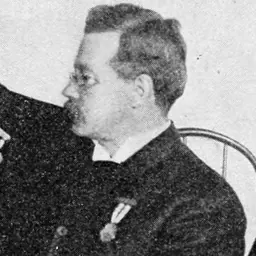
Owen Harding Wangensteen (September 21, 1898 – January 13, 1981) was an American surgeon who developed the Wangensteen tube, which used suction to treat small bowel obstruction, an innovation estimated to have saved a million lives by the time of his death. He founded the Surgical Forum at the American College of Surgeons (ACS) and was renowned for his surgical teaching. Amongst his most notable students were Walton Lillehei, Christiaan Barnard, K. Alvin Merendino, Norman Shumway and Edward Eaton Mason. He made contributions to surgical practices in other areas, including appendicitis, peptic ulcers and particularly gastric cancer. In his later life, he showed a keen interest in the history of medicine and co-wrote a number of books on the subject with his wife.
Early life Wangensteen on his graduation from the University of Minnesota, 1919. Owen Harding Wangensteen was born in 1898 to Ove Wangensteen and his wife Hannah and brought up on the family farm in Lake Park, Minnesota. He was the second of four siblings, having an older brother Charles, a younger sister Marian, and a younger brother Theodore; all were born at home.
As a child, Wangensteen had aspired to become a farmer, but two events led him to change his mind. After the veterinary physician recommended the slaughter of the family's 30 sows that could not farrow, Wangensteen missed three weeks of school to deliver over 300 piglets by manually extracting them. In addition, he once spent a hot summer hauling manure, and later was recalled telling his story about how his quest to study medicine arose "through the portals of pigs and manure."
Encouraged by his father, Wangensteen attended the University of Minnesota where he obtained his BA, MB, MD, and PhD degrees. He completed his surgical training at the University of Minnesota Hospitals.
Intestinal obstruction In the 1930s, Wangensteen attended to numerous cases of small bowel intestinal obstruction. In around 80% of cases adhesions resulting from previous abdominal operations were the cause of the obstruction. These could often present months to years after the original operation. The standard treatment was to divide the adhesions with further surgery and create a temporary enterostomy. When, as was usually the case, this was performed as an emergency, many patients died.
Maurice Visser estimated that by 1944 the technique had saved over 100,000 lives and by the time of Wangensteen's death in 1981, had saved over one million.
For this innovative work the Academy of Surgery awarded him one of the highest American surgical honours, the Samuel D. Gross prize. and clinical studies confirmed Wangensteen's suspicions that powdered surgical gloves could lead to adhesion formation. The use of such gloves was banned in Germany, then in the UK and banned by the Food and Drugs Administration in the US from January 2017.
Teaching and training Under Wangensteen's leadership the surgical training program at Minnesota gained a national and then an international reputation. He used the Socratic method of teaching, making his trainees enquire, question and engage in dialogue to find answers to some of the most challenging surgical problems of the day. He encouraged his trainees to observe and to trust their observations. His teaching ability earned him a Faculty Fellowship in his name, The Wangensteen Faculty Fellowship. and Frederick S. Cross who refined and popularized the rotating disk oxygenator. Two of Wangensteen's trainees pioneered the introduction of heart transplantation, Norman Shumway who developed the technique and Christiaan Barnard who performed the world's first heart transplant.
Wangensteen's commitment to surgical training was extended beyond Minnesota when in 1939 he founded the Society for University Surgeons. This allowed surgeons in training to present and discuss research results. It provided a forum where young surgeons could learn about the work of their peers in other institutions. This national society helped strengthen the scientific base of American clinical surgery. This brought together surgical trainees involved in research with one of the largest gatherings of surgeons in the world, encouraging communication and the sharing of ideas. The forum continues at each ACS annual meeting, now titled the Owen H. Wangensteen Scientific Forum.
Other contributions Amongst Wangensteen's other contributions to surgery were practices in cancer surgery and the understanding of gastrointestinal tract disorders including appendicitis. Other procedures he developed included those for the treatment of gastric cancer and ulcers.
A transcript of a series of interviews between Wangensteen and Peter Olch was issued in 1973 as part of the National Library of Medicine Oral History Program. A festschrift was issued in his honour.
The suction tube was featured the 173rd episode of the popular television series M*A*S*H. The Wangensteen Historical Library of Biology and Medicine is located at the University of Minnesota.
He was at home in Minneapolis when he died from a heart attack at the age of 82 years.
He and his first wife had a daughter, Mary, and two sons, Owen and Stephen. His second wife was named Sarah.
Selected publications Intestinal Obstructions: Physiological, pathological and clinical considerations with emphasis on therapy, including description of operative procedures. Charles C. Thomas, Springfield, 1955. Cancer of the Esophagus and the Stomach. American Cancer Society, New York, 1956. "Some Highlights in the History of Amputation Reflecting Lessons in Wound Healing", Bulletin of the History of Medicine, Vol. 41 (1967). (With Sarah D. Wangensteen) Reflections on the Blalock Papers. 1968. "Letters from a surgeon in the Crimean War", Bulletin of the History of Medicine, Vol. 43 (1969). (With Sarah D. Wangensteen) Lister, his Books, and Evolvement of his Antiseptic Wound Practices. 1974. (With Sarah D. Wangensteen) Lester Reynold Dragstedt: October 2, 1893 – July 16, 1975. National Academy of Sciences, Washington, D.C., 1980. (With Sarah D. Wangensteen) The Rise of Surgery: From Empiric Craft to Scientific Discipline. University of Minnesota Press, Minneapolis, 1981. (With Sarah D. Wangensteen)
Don’t just read it —
keep it.
Full-length biographies made to live with: read them, listen on the way to work, watch them tonight.
- E-book
- Audio
- Video
Instant download · yours to keep · every purchase keeps this site free
Important facts
People in Owen Harding Wangensteen's life
Named in this biography and alive at the same time



Related people
Same field, nearest in time

Contemporaries
People whose lives overlapped Owen Harding Wangensteen's



Frequently asked questions
Who was Owen Harding Wangensteen?
surgeon, university teacher and medical writer (1898–1981)
When was Owen Harding Wangensteen born?
Owen Harding Wangensteen was born on 21 September 1898 in Lake Park.
When did Owen Harding Wangensteen die?
Owen Harding Wangensteen died on 13 January 1981 in Minneapolis.
What was Owen Harding Wangensteen's occupation?
Owen Harding Wangensteen was a surgeon, university teacher and medical author.
What was Owen Harding Wangensteen known for?
Owen Harding Wangensteen was known for Wangensteen suction.
What nationality was Owen Harding Wangensteen?
Owen Harding Wangensteen was American.
Sources & further reading
· Wikipedia: Owen Harding Wangensteen
· DBpedia: Owen Harding Wangensteen
Cite this page
APA: Biography.guide. (2026). Owen Harding Wangensteen. https://biography.guide/owen-harding-wangensteen/
MLA: "Owen Harding Wangensteen." Biography.guide, https://biography.guide/owen-harding-wangensteen/.
Chicago: "Owen Harding Wangensteen." Biography.guide. https://biography.guide/owen-harding-wangensteen/.
Data last updated: 2026-09-20 · Spot an error? Report a correction.
Page generated 2026-09-27 05:31 UTC