
About Owen Bradley
Lived 1915 – 1998 (aged 82). Owen Bradley was an American record producer, songwriter, musician, bandleader and radio.
William Owen Bradley (October 21, 1915 – January 7, 1998) was an American musician, bandleader and record producer who, along with Chet Atkins, Bob Ferguson, Bill Porter, and Don Law, was a chief architect of the 1950s and 60s Nashville sound in country music and rockabilly.
Bradley started with piano at a young age, and began performing professionally as a teenager. At age 20, he joined WSM (AM) as an arranger and musician, and by 1942 had become the station's musical director. At the same time, Bradley led a dance band that enjoyed popularity in local society circles.
In 1947, Bradley was hired by the head of Decca Records' country music division, Paul Cohen, to assist with recording sessions and later establish the label's operations in Nashville. In 1954, Bradley established Bradley Studios, later commonly known as the Quonset Hut Studio, which was the first music industry-related business in what is now known as Music Row, and helping establish Nashville as a recording industry center.
In 1958, Bradley became vice president of Decca's Nashville division. This period marked the beginning of the Nashville sound, a movement that aimed to broaden country music's appeal by incorporating pop elements. Bradley's work extended to producing records for artists like Patsy Cline and Loretta Lynn, playing a key role in their career successes.
Bradley sold Bradley Studios to Columbia Records in 1962, and two years later established Bradley's Barn, a new recording studio that continued to attract a range of recording artists. He was inducted into the Country Music Hall of Fame in 1974, reflecting his impact on the industry. Bradley's later years saw him working on selected projects, including k.d. lang's Shadowland album.
Bradley's contributions have been recognized with various honors, including the dedication of a public park and a bronze likeness in Nashville. His legacy in the music industry is marked by his role in shaping the Nashville sound and influence on several generations of musicians.
Early life Bradley was born in Westmoreland, Tennessee on October 21, 1915, and grew up in Nashville, Tennessee . His father was Vernon Bradley, and his mother was Letha Maie Owen. By the time he was fifteen he had learned to play several instruments and was playing piano in local nightclubs and roadhouses.
Career In 1935 at the age of 20, Bradley got a job at radio station WSM, home of the Grand Ole Opry, where he worked as a musician and arranger.
In 1947, Bradley was hired by the head of Decca Records' country music division, Paul Cohen. Bradley worked as a music arranger and songwriter during the Castle Studio recording sessions of some of the biggest talents of the day, including Ernest Tubb, Burl Ives, Red Foley and Kitty Wells.
In the early 1950s, Owen and his brother Harold, seeking to capitalize on the rising popularity of television, experimented with assembling a production studio, eventually establishing a studio near 21st Avenue South in the Hillsborough Village area, where they produced industrial films for Genesco and others. When Cohen told Bradley that he was considering moving Decca's country headquarters to Dallas, where Jim Beck had a recording studio, Bradley offered to build a new Nashville studio.
In 1954, Bradley and his brother purchased a house at 804 16th Avenue South in Nashville for $7500 and remodeled it to create Music City Recording, the first recording studio in what would become Music Row. They bought an Army surplus Quonset hut and attached it to the back of the house to use as a sound stage for filming musical performances, and changed the studios' name to Bradleys' Film & Recording Studios in 1957, though it was commonly referred to as the "Quonset hut studio." The Bradleys produced several Country Style, USA film programs in the Quonset hut studio, but the demand for recording music in the Quonset hut (which was much larger than the house's basement studio) eventually overtook the Bradley's film production business, and a handful of other record labels and music publishers soon followed, setting up shop on what would eventually become known as Music Row. and began pioneering what would become the "Nashville Sound".
The Nashville sound
Country music had long been looked on as unsophisticated and folksy, and was largely confined to listeners in the less affluent small towns of the American South and Appalachia. In the late 1950s, Bradley's home base of Nashville was positioning itself to be a center of the recording industry, and not just the traditional home of the Grand Ole Opry. Developed with the contributions of Owen Bradley's crew of hand-picked musicians, including Harold Bradley, Grady Martin, Bob Moore, Hank Garland and Buddy Harman, known collectively as Nashville's "A-Team". The success of Bradley and his contemporaries infused hokey melodies with more refined lyrics, and blended them with a refined pop music sensibility to create the "Nashville Sound", known later as "countrypolitan". Light, easy listening piano (as popularized by Floyd Cramer) replaced the clinky honky-tonk piano (ironically, one of the artists Bradley would record in the 1950s was honky tonk blues singer pianist, Moon Mullican - the Mullican sessions produced by Bradley were experimental in that they merged Moon's original blues style with the emerging Nashville Sound stylings). Lush string sections took the place of the mountain fiddle sound; steel guitars and smooth backing vocals rounded out the mix.
Starmaker The singers Bradley produced made unprecedented headway into radio, and Gene Vincent also recorded with Bradley in his Nashville studio. Bradley often tried to reinvent older country hitmakers; as previously mentioned, he tried to update Moon Mullican's sound and produced one of Moon's best performances "Early Morning Blues" where the blues and the Nashville sound complement each other surprisingly well. Also, he produced Bill Monroe in both bluegrass and decidedly non-bluegrass settings (Monroe's covers of Jimmie Rodgers' "Caroline Sunshine Girl" and Moon Mullican's "Mighty Pretty Waltz", for example, feature a standard country band rather than bluegrass). Many older artists recognized they needed to change as they saw former pure honky tonk singer, Jim Reeves, blend his own style with the newer styles with great success. However, not everyone was as successful as Reeves or Patsy Cline in these transformations. In addition to his production, Bradley released a handful of instrumentals under his own name, including the minor 1958 hit "Big Guitar".
Bradley's Barn studio
Bradley sold The Quonset Hut Studio to Columbia Records and bought a farm outside of Nashville in Mount Juliet, Tennessee in 1961, converting a barn into a demo studio which he named Bradley's Barn. At the time of his death, he and Harold were producing the album I've Got A Right To Cry for Mandy Barnett, who is best known for her portrayal of Patsy Cline in the original Nashville production of the stage play, Always... Patsy Cline.
His production of Cline's hits such as "Crazy", "I Fall to Pieces" and "Walkin' After Midnight" remain standards of the country music genre. It is his work with Cline and Loretta Lynn for which he is best known, and when the biopics Coal Miner's Daughter and Sweet Dreams were filmed, Bradley was chosen to direct their soundtracks.
In 1997, the Metro Parks Authority in Nashville dedicated a small public park between 16th Avenue South and Division Street to Owen Bradley, where his bronze likeness sits at a bronze piano. Owen Bradley Park is at the northern end of Music Row. Bradley also has a section of roadway named after him where Bradley's Barn once stood in Mt. Juliet, Tennessee, on Benders Ferry Road.
Bradley was inducted into the Musicians Hall of Fame and Museum upon receiving the 2019 Producer Award.
Legacy Owen Bradley is part of what is known as "The First Family of Music Row." His younger brother and business partner Harold Bradley became one of the world's most recorded session guitarists, and served as longtime president of the Nashville chapter of the American Federation of Musicians.
Owen's daughter Patsy worked over 40 years with BMI, eventually as assistant vice president of writer/publisher administration. His son Jerry worked for his Forest Hills Music music publishing company before becoming head of RCA Records' Nashville office in 1973, succeeding Chet Atkins. In his later career, he was head of the Opryland Music Group during its return to prominence following Gaylord Entertainment's acquisition of the Acuff-Rose Music catalog. Jerry's wife, Connie Bradley, worked with ASCAP's Nashville office for more than 30 years beginning in the mid-1970s, eventually as Senior Vice President. Jerry’s son, Clay Bradley, currently serves as the Vice President of Creative at BMI (Variety, 2020) (Source). His two grandchildren, John Owen Bradley and Lillian Grace Bradley, work in the music industry and have reopened Bradley’s Barn as of 2025. (MusicRow, 2024; MusicRow, 2025) (Source 1, Source 2).
Don’t just read it —
keep it.
Full-length biographies made to live with: read them, listen on the way to work, watch them tonight.
- E-book
- Audio
- Video
Instant download · yours to keep · every purchase keeps this site free
Important facts
People in Owen Bradley's life
Named in this biography and alive at the same time
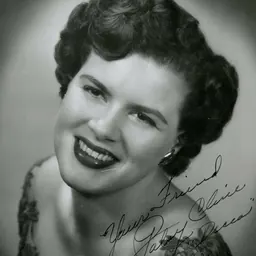


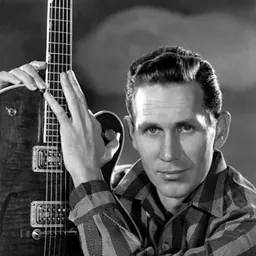

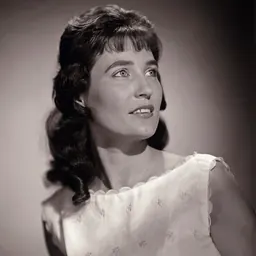


Related people
Same field, nearest in time
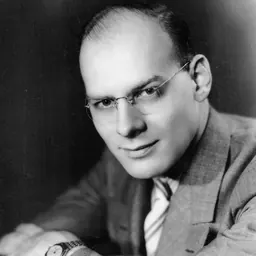


Contemporaries
People whose lives overlapped Owen Bradley's



Frequently asked questions
Who was Owen Bradley?
American record producer (1915–1998)
When was Owen Bradley born?
Owen Bradley was born on 21 October 1915 in Westmoreland.
When did Owen Bradley die?
Owen Bradley died on 7 January 1998 in Nashville.
What was Owen Bradley's occupation?
Owen Bradley was a record producer, songwriter, musician, bandleader and radio.
What nationality was Owen Bradley?
Owen Bradley was American.
Sources & further reading
Cite this page
APA: Biography.guide. (2026). Owen Bradley. https://biography.guide/owen-bradley/
MLA: "Owen Bradley." Biography.guide, https://biography.guide/owen-bradley/.
Chicago: "Owen Bradley." Biography.guide. https://biography.guide/owen-bradley/.
Data last updated: 2026-09-20 · Spot an error? Report a correction.
Page generated 2026-09-27 05:22 UTC