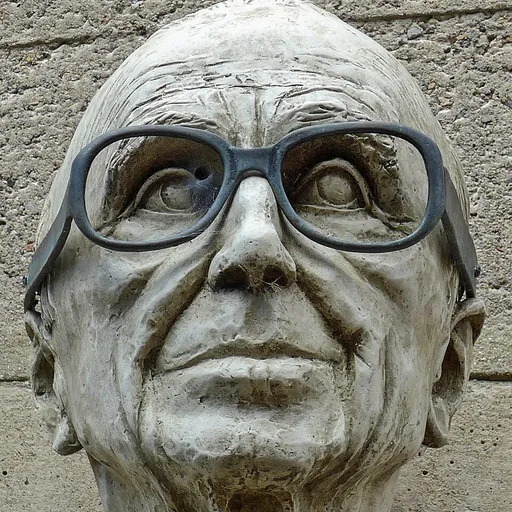
About Ove Arup
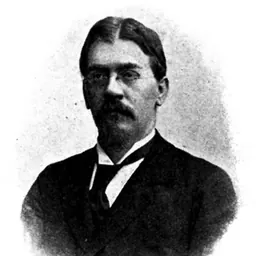
Lived 1895 – 1988 (aged 92). Ove Arup was a British engineer, entrepreneur, structural engineer and architect.
Sir Ove Nyquist Arup (16 April 1895 – 5 February 1988) was a British engineer with Danish heritage who founded Arup, a multinational corporation offering engineering, design, planning, project management, and consulting services for building systems. Ove Arup is considered to be among the foremost architectural structural engineers of his time.
Personal life and education Arup was born in Newcastle, England, in 1895, to the Danish veterinary surgeon Jens Simon Johannes Arup and his Norwegian wife, Mathilde Bolette Nyquist.
Arup attended the Sorø Academy in Denmark, a boarding school influenced by Thomas Arnold of Rugby School in the United Kingdom.
In 1913, he began studying philosophy at the University of Copenhagen and in 1918 enrolled in an engineering degree at the Technical University of Denmark, Copenhagen, specializing in reinforced concrete. He completed his studies in 1922. At this time, Ove Arup was influenced by Le Corbusier and his publication Vers une architecture, published that year, as well as by Walter Gropius, the founder of the Bauhaus movement.
Arup married Ruth Sørensen, known as Li, on 13 August 1925.
Working life
Before WWII In 1922, Ove Arup began working with the Danish firm Christiani & Nielsen in Hamburg, and in December 1923, he moved to their London office as chief engineer.
He designed the Labworth Café—a café with two integrated shelters located on the promenade of the Essex seaside resort of Canvey Island. The café remains the only building solely designed by Arup.
Arup then worked as a structural consultant for the Tecton partnership, notably on the Penguin Pool at London's Regent's Park Zoo, as well as on projects at Whipsnade Zoo, Dudley Zoo, a villa in Heath Drive, Romford, Essex, and Highpoint I in Highgate—a building he later criticized. The close working relationship that Arup developed with Tecton's senior partner Berthold Lubetkin proved highly significant in advancing both men's careers. was formed as a new partnership. This body included architects and engineers working on an equal basis as building designers, including the engineer Ove Arup, the architects Francis Pym and Philip Dowson, and the former partners of Arup and Partners. It was a multidisciplinary company providing engineering, architectural, and other services for the built environment. Arup himself noted that ultimately, all of the Arup entities resulted in a firm known simply as Arup.
Van Ginkel Footbridge The mid-century Van Ginkel Footbridge is located in Bowring Park, St. John's, Newfoundland and Labrador, Canada. It is a cantilever bridge, meaning it is anchored to the ground on one end, while the other end extends outward, unsupported. The bridge was granted heritage designation in 2020. The architect of the bridge was Blanche Lemco van Ginkel, who received the Royal Architectural Institute of Canada's Gold Medal for lifetime achievement. significantly bolstered Arup's reputation, as well as that of his firm, despite the extremely challenging working relationship with the architect, Jørn Utzon.
Honours 1953: Commander of the Order of the British Empire (CBE) 1965: Knight First Class of the Order of the Dannebrog 1966: Royal Gold Medal of the Royal Institute of British Architects 1971: Knight Bachelor 1973: Gold Medal of the Institution of Structural Engineers 1975: Knight Commander First Class of the Order of the Dannebrog 1976: Honorary Doctorate from Heriot-Watt University 1987: Royal Academician
Don’t just read it —
keep it.
Full-length biographies made to live with: read them, listen on the way to work, watch them tonight.
- E-book
- Audio
- Video
Instant download · yours to keep · every purchase keeps this site free
Important facts
People in Ove Arup's life
Named in this biography and alive at the same time






Related people
Same field, nearest in time


Contemporaries
People whose lives overlapped Ove Arup's

Frequently asked questions
Who was Ove Arup?
Anglo-Danish engineer (1895-1988)
When was Ove Arup born?
Ove Arup was born on 16 April 1895 in Newcastle upon Tyne.
When did Ove Arup die?
Ove Arup died on 5 February 1988 in London.
What was Ove Arup's occupation?
Ove Arup was an engineer, entrepreneur, structural engineer and architect.
What nationality was Ove Arup?
Ove Arup was British.
Sources & further reading
Cite this page
APA: Biography.guide. (2026). Ove Arup. https://biography.guide/ove-arup/
MLA: "Ove Arup." Biography.guide, https://biography.guide/ove-arup/.
Chicago: "Ove Arup." Biography.guide. https://biography.guide/ove-arup/.
Data last updated: 2026-09-22 · Spot an error? Report a correction.
Portrait: Wikimedia Commons · author & licence
Page generated 2026-09-27 05:01 UTC